
As the core benchmark carrier of gantry‑type precision equipment, granite gantries support the assembly and positioning of guide rails, linear encoders and sliding seats via their high‑precision reference surfaces. After prolonged high‑speed reciprocating motion, the equipment is continuously exposed to on‑site challenges such as dust accumulation, cutting‑fluid splashes, assembly friction, foreign‑object impact and alternating temperature‑humidity cycles. Unlike metals, stone materials do not rust, yet reference surfaces are not completely wear‑free. Foreign hard particles entering fitting gaps, chemical‑medium erosion, improper cleaning operations and collisions from cross‑site work can gradually damage the micron‑level ground benchmarks, resulting in positioning‑accuracy drift and deteriorated repeat‑positioning performance. Many granite gantries pass all factory‑acceptance tests, yet suffer accuracy degradation after years of operation. Such issues are usually not caused by stone‑body deformation, but by insufficient continuous protection and maintenance of reference surfaces. Based on abundant on‑site project operation‑and‑maintenance experience, ZHHIMG sorts out protection points and maintenance strategies for granite‑gantry reference surfaces under long‑term reciprocating conditions, so as to slow benchmark degradation and sustain long‑term accuracy stability of complete equipment.
Pre‑emptive protection takes priority over remedial maintenance. Protection mechanisms for reference surfaces shall be established at the equipment design and installation stages. The precision‑machined reference surfaces of granite gantries form the accuracy foundation of the whole machine. Direct exposure to external media shall be structurally minimized. For production environments with cutting fluid, emulsion and water mist, complete protective cover plates and telescopic dust‑proof bellows shall be equipped to block chips and liquid from directly spraying onto benchmark zones. Bellows shall be selected to match reciprocating travel strokes and avoid interference with moving sliding seats. Seals shall be arranged at joint positions to prevent fine‑dust particles from penetrating and accumulating on guide‑rail mounting reference surfaces. For open‑structure areas where full bellows cannot be fitted, liquid‑baffle and flow‑guiding structures may be deployed to drain liquid outward and reduce liquid retention and infiltration on granite surfaces. After installation, fixed protective cover plates shall be used to shield exposed reference surfaces during non‑assembly periods, preventing accidental dents from falling tools, fasteners and metal chips.
On‑site protection management during daily operation must not be neglected. Reciprocating motion continuously entrains workshop dust and abrasive debris. Once fine hard particles get into mating zones between sliding seats and granite gantries, repeated rolling will produce micro‑scratches and pits on reference surfaces. Ambient cleanliness shall be maintained to cut down generation and dispersion of abrasive dust and grit. Workshop humidity shall be kept within a reasonable range. In high‑humidity environments, airborne dust tends to absorb moisture, agglomerate and adhere to stone surfaces. Though granite itself resists corrosion, residues and precipitates from certain cutting‑fluid additives may form stubborn deposits after long‑term exposure, gradually impairing assembly‑fitting conditions. It is forbidden to place heavy objects such as tooling, workpieces and toolboxes directly on granite‑gantry reference surfaces. Knocking or correcting components on reference surfaces is also prohibited to avoid local impact damage. Isolation barriers shall be arranged for cross‑work operations. Welding sparks and grinding debris must be kept away from granite reference zones to prevent high‑temperature burns to stone micro‑structures.
Standardized cleaning is the most critical yet error‑prone maintenance procedure. Many reference‑surface damages stem from improper cleaning methods. For dust and debris removal, dry lint‑free soft brushes and dust‑free non‑woven fabrics are preferred for gentle sweeping and wiping. Steel brushes and hard scrapers shall never be used to scrape surfaces directly. For cutting‑fluid residues and oil stains, neutral detergents together with dust‑free cloth are adopted for wiping, followed by drying with clean dry cloth. Strong‑acid or strong‑alkali cleaners must not come into direct contact with granite surfaces, as chemical residues will gradually erode stone grain boundaries. High‑pressure water guns are not recommended for flushing assembly‑reference zones; high‑pressure water will push contaminants into assembly gaps, and trapped moisture will trigger dust scaling. Cleaning shall follow a mild‑to‑rigorous sequence: dry dust removal → decontamination with neutral solvent → wiping‑dry and air‑drying. Vigorous back‑and‑forth friction that abrades reference surfaces shall be avoided. Equipment reciprocating operation can only be resumed after reference surfaces are confirmed dry upon cleaning.
Implement periodic inspection routines. Inspection intervals shall be formulated according to on‑site working conditions: shorten cycles for production lines with heavy dust and cutting‑fluid contamination; extend appropriately for clean‑lab environments. Inspection items include scratches, chipping spots and deposit accumulation on reference surfaces, aging or damage of protective bellows and seals, and blockage of liquid‑drain structures. Beyond visual checks, metrological tools shall be used regularly to re‑verify flatness and contact status of key areas for early detection of invisible micro‑damages. If hard particles are trapped between guide‑rail bases and granite mating faces, equipment must be shut down for cleaning. Forcing particles away by equipment reciprocating motion is forbidden, otherwise irreversible scratches will be inflicted on reference surfaces. Bellows and seals are wearing parts and shall be replaced promptly upon aging or damage to prevent protection failure.
Standardized emergency response is required under fault conditions. In case of foreign‑object strikes or workpiece drops that hit granite‑gantry reference surfaces, shut down equipment immediately instead of continuing reciprocating movement. Clear scattered debris first, check visually for edge chipping and pits, and then test local dimensional accuracy with metrological instruments. Light surface deposits can be removed by cleaning. If chipping, pits or hidden‑crack risks occur, do not run equipment with defects. Damage scope shall be assessed and local re‑lapping repair shall be performed when necessary. In case of massive cutting‑fluid overflow soaking reference surfaces, thoroughly wipe and blow‑dry the areas. Re‑check accuracy after full air‑drying to avoid residual liquid trapped in assembly gaps.
Objectively, granite features high stability yet is not completely wear‑immune. Even premium granite blanks and superior factory‑ground accuracy will suffer gradual benchmark degradation under long‑term reciprocating service without on‑site protection and regular maintenance. Upon delivery of granite‑gantry assemblies, ZHHIMG provides complete operation‑and‑maintenance manuals. High‑density black granite (3100 kg/m³) is processed in constant‑temperature anti‑vibration workshops, and full‑set traceable metrological‑inspection equipment guarantees factory benchmark quality. Holding ISO triple‑system certifications, CE certification and multiple international patents and trademarks, the company controls not only manufacturing quality but also delivers on‑site operation‑and‑maintenance suggestions to extend component service life. 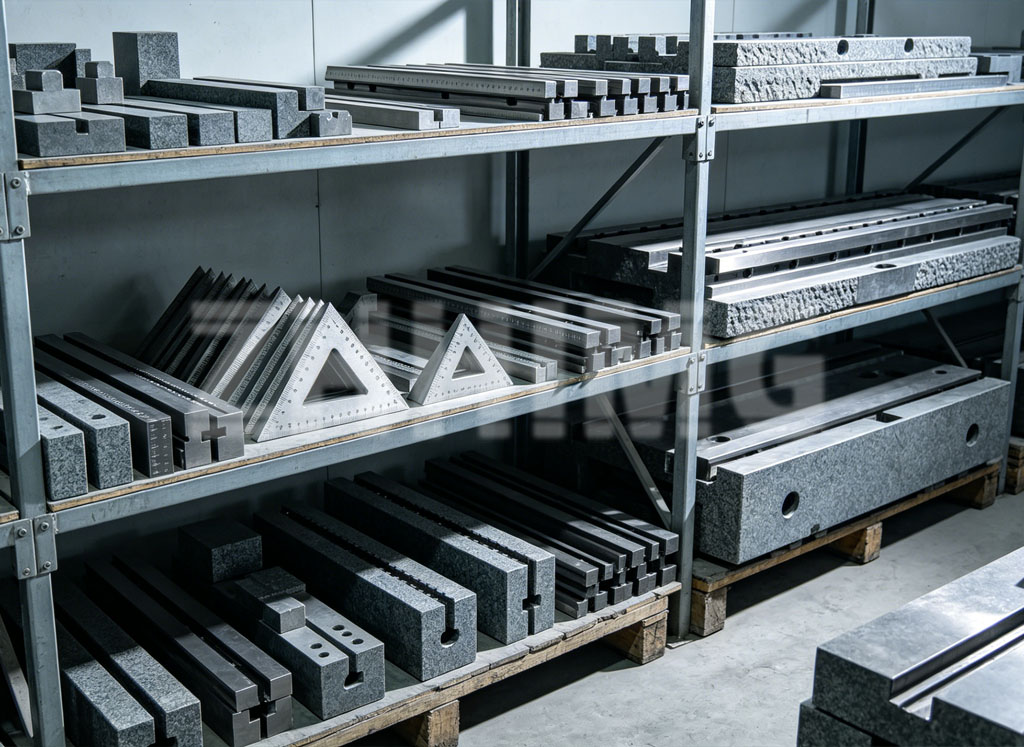
Practical project cases show that granite gantries of identical quality can maintain favorable benchmark accuracy for more than ten years with proper care, while some suffer accuracy deterioration within merely two to three years. The difference lies in whether on‑site protection and maintenance systems are well implemented. Protection for granite‑gantry reference surfaces focuses on full‑process standardized management covering installation, operation, cleaning and inspection, rather than post‑fault repair.
As gantry‑type precision equipment keeps evolving toward high‑speed and long‑cycle operation, emphasis on protection and maintenance strategies for granite‑gantry reference surfaces reduces man‑made and environmental benchmark losses. It enables granite components to consistently exert their precision advantages and guarantees reliability and yield of equipment under long‑term reciprocating operation.
Post time: Sep-03-2026