
Can a Machine Really Feel a Micron?
Honestly, no. CNC grinders are precise, but they are blind. Our master craftsmen have spent decades rubbing granite. Their hands are so sensitive they can detect surface variations that digital sensors sometimes miss. This tactile feedback is what creates the flawless “nanometer-level” finish our clients demand.
Why Do We Combine Hand Lapping with Lasers?
It’s the best of both worlds. The master grinder removes the bulk of the imperfections by feel. Then, we bring in the British Renishaw laser interferometer to verify the flatness to the exact micron. The human creates the art; the laser validates the science.
It’s the best of both worlds. The master grinder removes the bulk of the imperfections by feel. Then, we bring in the British Renishaw laser interferometer to verify the flatness to the exact micron. The human creates the art; the laser validates the science.
What Does a “Walking Electronic Level” Actually Do?
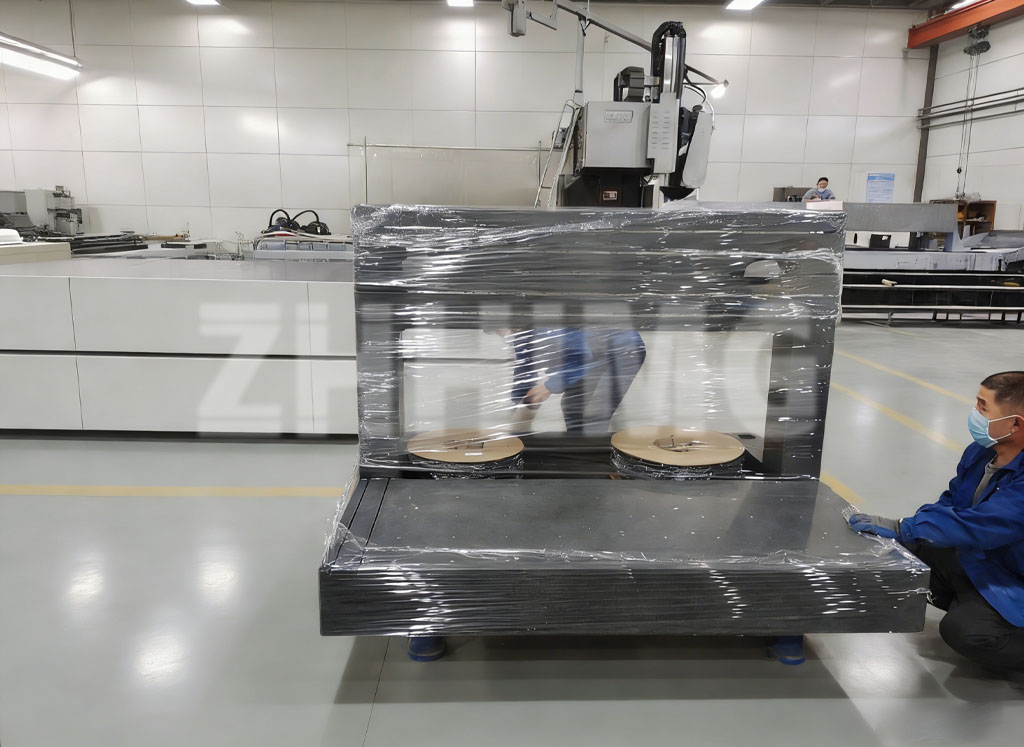
It’s a nickname our clients gave our grinders. When setting up a massive 6-meter granite bed, the grinder acts as a living, breathing sensor. They adjust their pressure and stroke based on the stone’s natural grain. You just can’t program that kind of adaptive intuition into a robot.
It’s a nickname our clients gave our grinders. When setting up a massive 6-meter granite bed, the grinder acts as a living, breathing sensor. They adjust their pressure and stroke based on the stone’s natural grain. You just can’t program that kind of adaptive intuition into a robot.
How Do We Train These Masters?
You can’t teach this in a week. It takes years of apprenticeship. They learn the German DIN876 standards, but more importantly, they learn the “language” of the stone. We protect this knowledge because it’s our ultimate competitive advantage in ultra-precision manufacturing.
You can’t teach this in a week. It takes years of apprenticeship. They learn the German DIN876 standards, but more importantly, they learn the “language” of the stone. We protect this knowledge because it’s our ultimate competitive advantage in ultra-precision manufacturing.
Frequently Asked Questions (FAQ)
1. Is hand-lapping faster than CNC machining?
For roughing out, no. But for achieving Grade 00 flatness on a massive block, hand-lapping is often more efficient. It eliminates the need for multiple CNC setups and prevents machine-induced thermal errors.
For roughing out, no. But for achieving Grade 00 flatness on a massive block, hand-lapping is often more efficient. It eliminates the need for multiple CNC setups and prevents machine-induced thermal errors.
2. How do you verify the grinder’s accuracy?
We cross-check their work daily. Every hand-lapped surface goes straight to our constant temp/humidity room for laser verification. If it’s off by even a micron, it goes back to the grinder.
We cross-check their work daily. Every hand-lapped surface goes straight to our constant temp/humidity room for laser verification. If it’s off by even a micron, it goes back to the grinder.
3. Can AI replace your master grinders?
AI can optimize tool paths, but it can’t replicate human intuition. The friction, the heat, and the microscopic feedback from the stone require human senses. We use AI to assist, not replace.
AI can optimize tool paths, but it can’t replicate human intuition. The friction, the heat, and the microscopic feedback from the stone require human senses. We use AI to assist, not replace.
4. What happens if a master grinder retires?
We have a strict mentorship program. Younger technicians work alongside the masters for years. The tactile knowledge is passed down physically, ensuring our quality never drops.
We have a strict mentorship program. Younger technicians work alongside the masters for years. The tactile knowledge is passed down physically, ensuring our quality never drops.
5. Does hand-lapping leave scratches?
Never. We use progressively finer abrasives. The final finish is a mirror-like lap that is incredibly smooth to the touch and provides zero friction for air bearings.
Never. We use progressively finer abrasives. The final finish is a mirror-like lap that is incredibly smooth to the touch and provides zero friction for air bearings.
6. Why is this important for semiconductor clients?
Semiconductor lithography requires zero vibration and perfect flatness. A microscopic scratch can scatter light or cause stage drift. Hand-lapping guarantees a flawless, defect-free surface.
Post time: Jun-16-2026