
In precision manufacturing and laboratory environments, the surface plate serves as a fundamental reference for dimensional inspection and calibration. Whether used in quality control on production lines or in metrology labs, its accuracy directly affects measurement reliability. However, over time, many users encounter a critical issue: the gradual loss of accuracy. Understanding the root causes of this problem—and the appropriate recovery methods—is essential for maintaining measurement integrity and avoiding costly errors.
One of the most common causes of accuracy degradation is surface wear. Frequent use, especially involving heavy components or repeated sliding of parts and instruments, leads to localized abrasion. This wear is typically uneven, forming low spots in high-contact areas, which compromises flatness. In granite plates, although the material offers excellent hardness and stability, it is not immune to long-term mechanical wear. In high-usage environments, this process can accelerate significantly if protective practices are not followed.
Another major factor is calibration failure or neglect. Surface plates require periodic calibration to ensure they remain within specified tolerances. When calibration intervals are extended or skipped entirely, small deviations accumulate and eventually exceed acceptable limits. Additionally, improper calibration methods or unqualified service providers can result in inaccurate correction data, further exacerbating the issue rather than resolving it.
Environmental conditions also play a critical role. Temperature fluctuations can cause slight expansion or contraction, while humidity and contamination—such as dust, oil, or coolant residues—can affect both the plate surface and the measurement instruments used on it. Even though granite has relatively low thermal expansion compared to metal, uncontrolled environments can still introduce measurable errors, particularly in high-precision applications.
Improper handling and support conditions are another often-overlooked source of inaccuracy. Surface plates must be supported at specific points (typically following Airy points principles) to maintain their geometric stability. Uneven support, vibration from nearby machinery, or accidental impacts can introduce stress and deformation over time. Once the structural equilibrium is disturbed, the flatness of the plate can no longer be guaranteed.
Given these common causes, recovery methods should be selected based on the severity of the accuracy loss. For minor wear and deviations, professional recalibration and lapping (reconditioning) can restore the surface to its original flatness grade. This process involves precision scraping or lapping using certified reference tools, followed by detailed calibration to verify compliance with standards such as ISO or DIN.
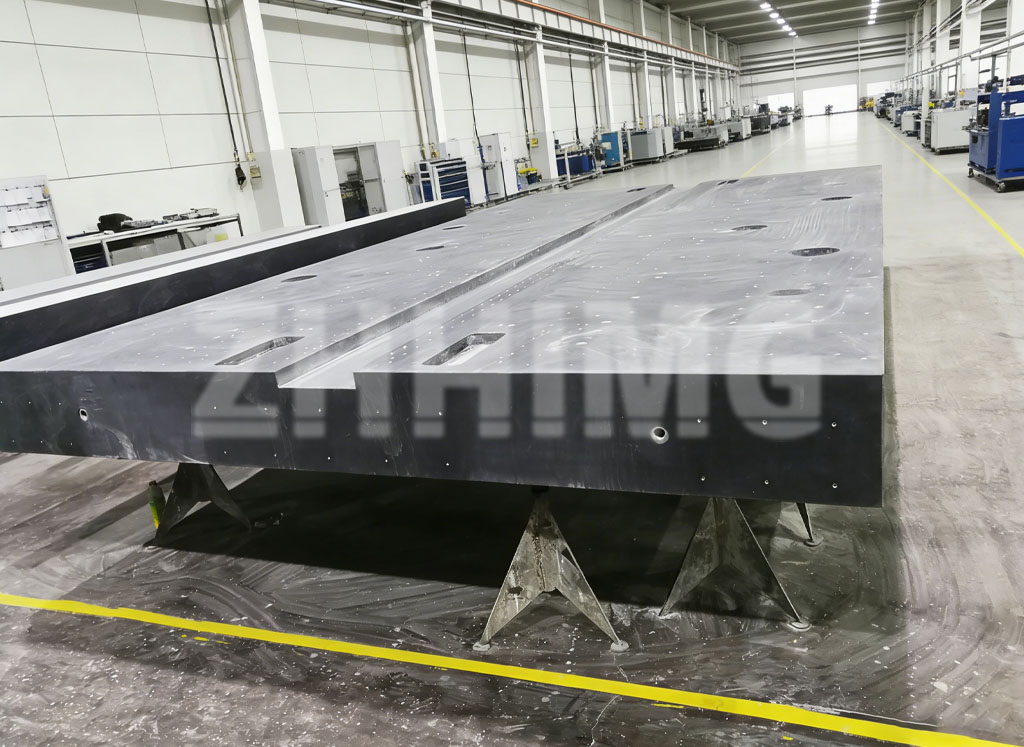
In cases where wear is more severe—such as deep surface damage, structural instability, or repeated calibration failures—complete resurfacing or replacement may be required. Attempting to continue using a compromised plate not only risks measurement errors but can also propagate defects throughout the production or inspection process, leading to significantly higher downstream costs.
Preventive maintenance is equally important in extending the service life of a surface plate. Regular cleaning with appropriate non-abrasive materials, controlled loading practices, periodic rotation of the plate to distribute wear, and adherence to a strict calibration schedule can significantly reduce the rate of degradation. For high-precision environments, maintaining stable temperature conditions and isolating the plate from vibration sources are also recommended best practices.
For production managers and laboratory technicians, the key takeaway is that surface plate accuracy loss is not a sudden failure but a gradual process driven by wear, environmental factors, and maintenance gaps. Early detection through routine inspection and timely intervention can prevent minor issues from escalating into major operational risks.
At ZHHIMG, we provide comprehensive solutions including granite maintenance, precision calibration, and surface plate refurbishment services, as well as high-grade replacement plates engineered for long-term stability. By combining advanced material expertise with precision metrology capabilities, we help customers restore and maintain the accuracy foundation of their measurement systems.
If your surface plate is showing signs of wear or failing calibration, addressing the issue promptly is not just a maintenance task—it is a critical step in protecting your overall measurement accuracy and production quality.
Post time: Mar-27-2026