
During the selection phase for high-speed gantry equipment, engineers often face a contradiction: granite beams feature excellent rigidity and thermal stability yet have high density and greater self-weight. Many clients raise a question: will the heavy self-weight of granite beams hinder acceleration and deceleration performance and reduce the overall dynamic response speed of the machine? A common simplistic view equates self-weight with inertial load, assuming lighter weight always delivers faster dynamic response. However, this judgment is incomplete. Drawing on simulation and measured data from numerous gantry equipment projects, ZHHIMG analyzes the balance among self-weight, rigidity and vibration attenuation of granite beams, and clarifies the real influence logic of self-weight on dynamic response.
1. Inertia Is Objective, But Cannot Be Viewed Separately From System Stiffness
According to basic dynamics, greater mass brings higher motion inertia, which theoretically restricts acceleration and deceleration under the same driving force. This is an objective physical law. With a density of approximately 3100kg/m³, granite is noticeably heavier than aluminum alloy under identical outer dimensions. Nevertheless, dynamic response speed is determined jointly by inertia and system stiffness instead of inertia alone.
Although aluminum alloy beams have light self-weight and low inertia, they lack sufficient rigidity for large-span gantry structures. Elastic deflection occurs instantly during high-speed acceleration. Structural deformation rebound leads to continuous oscillation upon deceleration and direction reversal. Even if linear motors provide adequate thrust, operators have to wait for vibration attenuation before the next machining or inspection action. While the acceleration value looks high on paper, the effective production cycle is prolonged by residual vibration, and the practical usable dynamic performance drops sharply.
When designing granite beams, ZHHIMG conducts comprehensive trade-off analysis through mechanical simulation. Leveraging granite’s high elastic modulus, the beam achieves much higher bending rigidity than aluminum alloy of the same weight with optimized cross-section design. We do not blindly thicken stone to add redundant weight. Instead, we optimize weight-reduction cavities while meeting bending and anti-vibration requirements, removing ineffective mass and retaining only solid material required to maintain high rigidity. In this way, inertia is controlled within the acceptable range of the transmission system.
2. Superior Internal Damping Converts The Inertia Drawback From Heavy Self-Weight Into Dynamic Advantages
Most people only focus on inertia caused by self-weight while ignoring granite’s unique internal damping property. After impact from high-speed direction reversal, metallic materials experience slow vibration decay. Even when the sliding table stops moving, the beam keeps trembling. In contrast, friction between mineral grains inside granite quickly dissipates vibration energy, and vibration triggered by impact settles within a short time.
For high-speed reciprocating motion of gantries with rapid start-stop and reversal, aluminum alloy beams are lightweight but suffer prolonged tremors. Granite beams carry larger inertia yet feature extremely fast vibration attenuation. In high-frequency, short-stroke scanning machining or inspection scenarios, the waiting time for vibration stabilization is usually longer than acceleration duration. Field tests from ZHHIMG projects show that models equipped with granite beams achieve better effective cycle time than aluminum alloy schemes in high-frequency short-stroke scanning machining or inspection, mainly because the long vibration waiting phase is eliminated. This characteristic is especially critical for semiconductor inspection and laser micro-machining, applications sensitive to positioning settling time.
3. Distinguish Two Dynamic Indicators: Theoretical Acceleration vs. Practical Dynamic Positioning Performance
Equipment manufacturers tend to confuse two sets of parameters: the theoretical acceleration achievable by the motor under no load, and the stable positioning response available for actual machining.
Lightweight aluminum alloy beams can reach high acceleration in no-load tests. Once loaded with sliding tables and optical components, elastic beam deformation occurs, and a settling wait for vibration convergence is required after positioning. Granite beams deliver slightly lower theoretical acceleration values but minimal deformation and fast residual vibration dissipation. Machining can start immediately once positioning completes.
At the preliminary evaluation stage, ZHHIMG carries out full-machine dynamic simulation according to customers’ actual travel range, load and acceleration demands, evaluating stable positioning time for both material solutions rather than merely comparing acceleration figures. For long-span gantry beams, granite suppresses dynamic deflection and ensures the straightness of guide rail and grating reference during acceleration, preventing positioning errors induced by reference deformation during movement. A high acceleration value becomes meaningless if the reference itself deforms during acceleration. 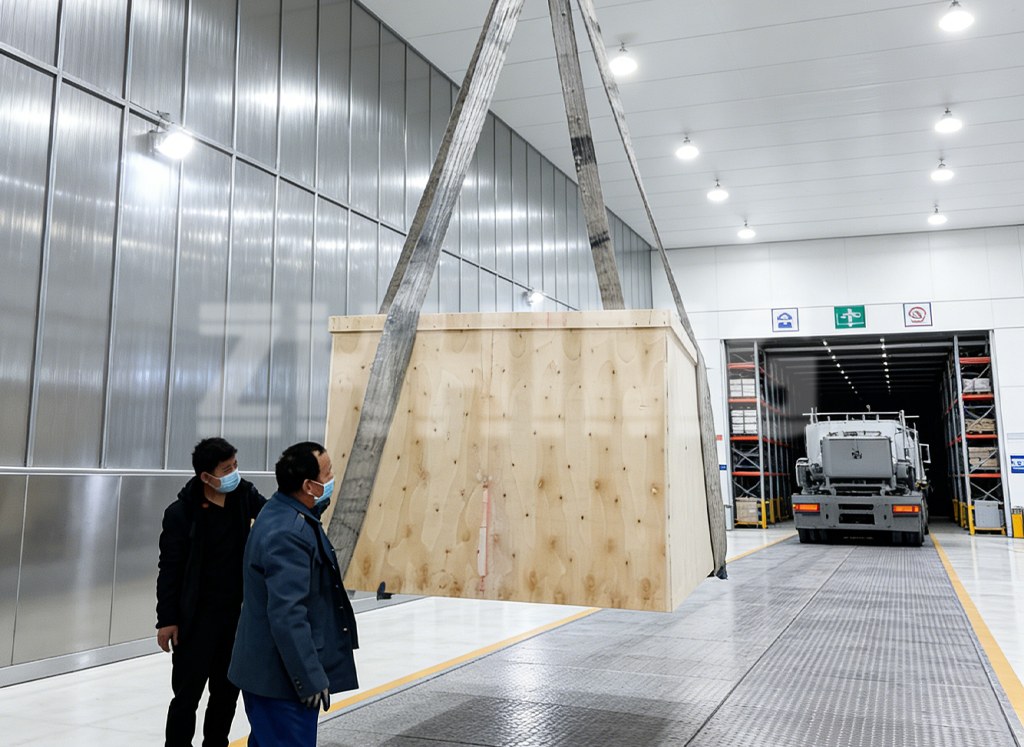
4. Optimized Supporting Drive Scheme Offsets Inertia Impact Brought By Heavy Self-Weight
Higher inertia introduced by granite beams can be compensated through proper selection of the driving system. At the project communication stage, ZHHIMG collaborates with equipment manufacturers to evaluate linear motor thrust specifications. Linear motors with matched thrust ratings are selected to boost driving output and offset acceleration and deceleration losses caused by beam inertia.
Meanwhile, structural layout lowers the beam’s center of gravity and optimizes support points to reduce overturning moment and minimize posture disturbance during movement. Combined with high-precision embedded sleeve technology, guide rails and gratings are rigidly fixed onto the granite reference surface without connection loosening under frequent acceleration, guaranteeing stable geometric reference of the transmission system under continuous dynamic motion.
A clear boundary needs to be defined: aluminum alloy is more suitable for compact high-speed equipment pursuing extreme lightweight, ultra-short stroke and low thrust. However, granite beams deliver superior comprehensive dynamic performance for long-span, high-precision gantry equipment requiring long-term stable operation.
5. Long-Term Perspective: Stability From Self-Weight Prevents Dynamic Performance Degradation
Under long-term high-frequency alternating loads, aluminum alloy beams are prone to creep and stress release. Structural rigidity declines after a period of service, and dynamic precision gradually deteriorates. Cast iron suffers from stress release and deforms over time.
Raw granite used by ZHHIMG beams has undergone natural aging over hundreds of millions of years. Static aging is performed in constant-temperature workshops before fine machining to eliminate processing stress. After years of high-speed reciprocating operation, the beam retains stable rigidity and geometry, and dynamic performance does not degrade with running time. Lightweight metallic beams show impressive dynamic parameters at the initial stage, yet structural deformation gradually emerges after long service and dynamic precision keeps dropping. From the perspective of the whole equipment lifecycle, granite beams sustain stable dynamic positioning performance.
Conclusion
The heavy self-weight of granite beams indeed brings higher motion inertia, which restricts theoretical acceleration and deceleration under identical motor thrust. However, evaluating machine tool dynamic response cannot rely solely on self-weight. Structural stiffness, vibration settling speed, reference stability and long-term dimensional retention must also be considered.
For long-span high-speed gantry applications, granite beams feature high rigidity and excellent internal damping, greatly shortening vibration settling time, suppressing dynamic deflection and maintaining stable reference for guide rails and gratings. With cross-section design optimized by structural simulation, ZHHIMG reasonably controls self-weight and matches suitable drive schemes to balance inertia and rigidity. This enables granite beams to achieve reliable comprehensive dynamic response on high-speed gantry equipment for continuous high-precision and high-cycle production.
Post time: Oct-10-2026