
In the sophisticated world of industrial metrology, the quest for the perfect measurement environment is a constant battle against physics. While granite has long been the industry standard for stability, the evolving demands of high-speed manufacturing, extreme temperature environments, and heavy-duty shop floor inspections have paved the way for a dual-material revolution. Today, the strategic combination of Advanced Ceramic & Cast Iron Measurement Tools represents the pinnacle of engineering, where rugged durability meets uncompromising precision. This synergy offers manufacturers a versatile toolkit capable of navigating the most challenging production landscapes.
The Renaissance of Cast Iron: Industrial Strength Reimagined
For over a century, cast iron was the undisputed king of the machine shop. However, as synthetic materials and stone gained popularity, some viewed iron as a relic of the past. That perspective has shifted dramatically. Modern metrology-grade cast iron, specifically high-density gray iron or ductile iron, has undergone a technological renaissance.
The primary appeal of cast iron lies in its structural integrity and vibration-damping characteristics. In environments where heavy machinery is operating nearby, the natural grain structure of cast iron acts as a buffer, absorbing micro-vibrations that could otherwise distort sensitive measurements. Furthermore, unlike stone, cast iron possesses a degree of elasticity. This makes it the ideal choice for heavy-duty applications such as motor block inspection or large-scale tool and die work, where the surface must withstand significant weight and the occasional impact without cracking.
To achieve the “precision” promised in our title, these tools undergo a rigorous seasoning process. Raw castings are often left to age naturally or subjected to thermal cycling to relieve internal stresses. This ensures that once the surface is scraped or ground to a Grade 0 or Grade 1 finish, it remains dimensionally stable for decades. The tactile feedback of a hand-scraped cast iron surface—characterized by the thousands of tiny oil-retaining pockets—is still considered by master machinists to be the gold standard for “wringing” parts and ensuring smooth, accurate movement of gauges.
Advanced Ceramics: The New Frontier of Metrology
On the other end of the spectrum, advanced ceramics (often Alumina or Silicon Carbide) represent the “high-tech” edge of modern measurement. If cast iron is the powerhouse of the shop floor, ceramics are the elite performers of the laboratory and the cleanroom.
Ceramics offer a set of physical properties that are almost alien compared to traditional metals. First and foremost is their extreme hardness. Advanced ceramic tools are nearly as hard as diamonds, making them virtually immune to scratches and wear. In a high-volume production environment where tools are used thousands of times a day, the longevity of a ceramic gauge is unparalleled.
Perhaps more importantly, ceramics address the Achilles’ heel of precision measurement: thermal expansion. Advanced ceramics have a coefficient of thermal expansion that is significantly lower than steel or iron, and in some cases, even lower than granite. This allows for hyper-accurate measurements in environments where temperature control is imperfect. Furthermore, ceramics are completely non-porous and chemically inert. They do not rust, they do not corrode, and they do not require the protective oiling that cast iron demands. This makes them the preferred choice for the semiconductor and medical device industries, where contamination is a critical concern.
The Synergy of Choice: Why Durability and Precision Must Coexist
The modern manufacturer no longer looks for a “one size fits all” solution. Instead, the focus has shifted to choosing the right material for the specific application. By offering both Advanced Ceramic & Cast Iron Measurement Tools, providers allow engineers to balance the scales of durability and precision.
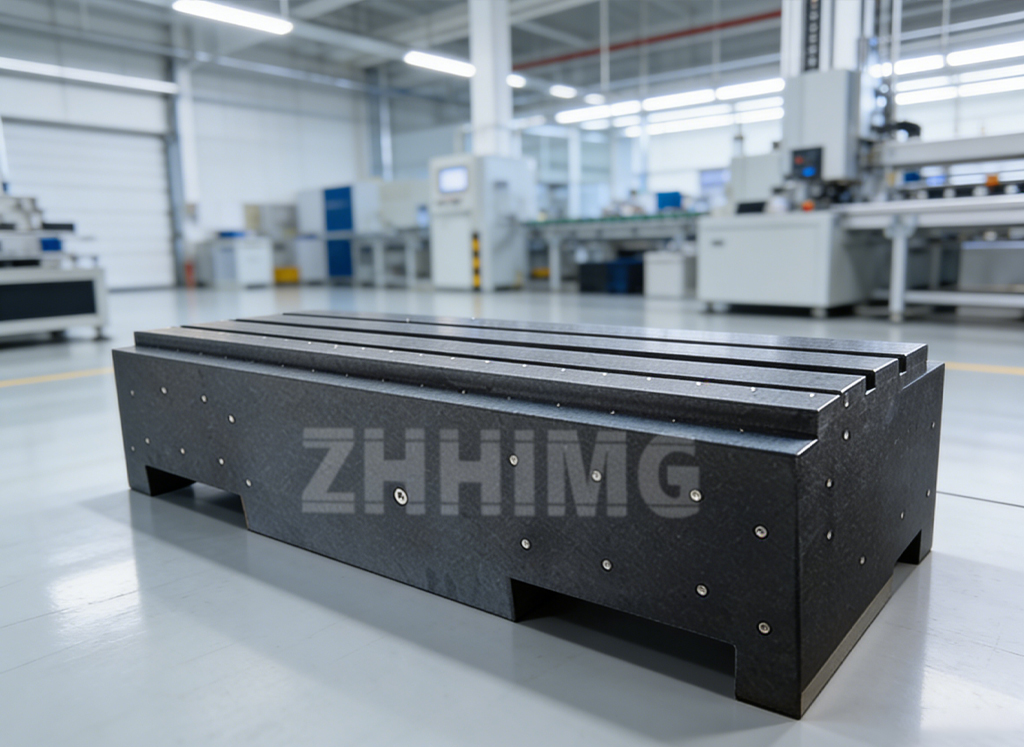
For instance, a shipyard or an automotive assembly plant might rely on massive cast iron surface plates and straight edges for their sheer mass and resistance to the rigors of heavy industrial use. Meanwhile, the calibration laboratory within that same facility will use ceramic master squares and cylinders to verify the accuracy of their portable gauges.
The durability of cast iron ensures that the foundation of the measurement is never compromised by structural failure, while the precision of ceramics provides a near-perfect reference point that remains unaffected by the environment. This “material-agnostic” approach to metrology is what defines the current era of quality control. It is no longer about which material is “better,” but rather how the unique properties of each can be leveraged to eliminate measurement uncertainty.
Meeting Global Demand for Material Innovation
As global supply chains become more complex, the demand for these specialized tools has gone international. Exporters are finding that markets in Europe and North America are increasingly looking for “alternative material” solutions. Whether it is a ceramic V-block that can be used inside a vacuum chamber or a modular cast iron marking plate for a new aerospace facility, the requirement for high-grade documentation and international certification remains paramount.
Every tool, whether iron or ceramic, must be accompanied by a rigorous pedigree. This includes laser interferometry reports that map the topography of the surface to within a fraction of a wavelength of light. For the global market, “precision” is not a claim—it is a documented fact.
Conclusion: The Future is Multi-Material
The headline “Advanced Ceramic & Cast Iron Measurement Tools: Durability Meets Precision” is more than a marketing slogan; it is a roadmap for the future of the industry. By moving away from the limitations of a single material, manufacturers can build inspection processes that are faster, more accurate, and significantly more resilient.
As we look toward the future of Industry 4.0, where automated sensors and robotics take over the heavy lifting of inspection, the physical tools—the master references—must be more reliable than ever. Whether it is the time-tested reliability of seasoned cast iron or the space-age performance of technical ceramics, these tools provide the “ground truth” for the digital world. In the pursuit of perfection, the world of metrology has found that the strongest foundations are built from a diverse range of materials, each playing its part in the global quest for accuracy.
Post time: Apr-22-2026