The selection of precision measurement equipment in ore processing operations represents a critical decision that impacts quality control, operational efficiency, and long-term maintenance costs. Among the fundamental tools required in mineral processing facilities, surface plates serve as the primary reference standard for dimensional inspection, equipment calibration, and quality assurance procedures. The choice between China cast iron surface plate options and granite alternatives has become increasingly significant as ore processing operations demand greater precision while operating in challenging environmental conditions. Understanding the distinct characteristics, advantages, and limitations of each material enables facility managers and quality engineers to make informed decisions aligned with their specific ore processing castable applications and operational requirements.
The landscape of precision metrology in mining and mineral processing has evolved considerably over recent decades, driven by advancing extraction technologies, tighter quality specifications, and increasing regulatory scrutiny. Where once rough measurements sufficed for bulk commodity production, today’s ore processing operations require precise dimensional control for equipment maintenance, product specification compliance, and process optimization. This evolution has elevated the importance of surface plate selection, as these reference standards directly influence the accuracy of every measurement performed upon them. The decision between cast iron and granite surface plates encompasses not only initial acquisition costs but also factors including thermal stability, corrosion resistance, load-bearing capacity, maintenance requirements, and compatibility with the harsh conditions characteristic of ore processing environments.
China has emerged as a significant manufacturer of cast iron surface plates, offering products that combine traditional metallurgical expertise with modern manufacturing capabilities. Chinese foundries produce cast iron surface plates using grades ranging from HT200 to HT300 gray iron, with some manufacturers offering ductile iron variants for enhanced strength and impact resistance. The competitive pricing of China cast iron surface plate products has made precision measurement equipment accessible to a broader range of ore processing operations, particularly in developing mining regions where budget constraints previously limited access to quality metrology tools. However, the selection decision must extend beyond price considerations to encompass the total cost of ownership, performance characteristics, and suitability for specific ore processing applications.
The fundamental properties of cast iron surface plates derive from their metallurgical structure. Cast iron consists primarily of iron with carbon content between two and four percent, present as graphite flakes or nodules dispersed throughout a ferritic or pearlitic matrix. This microstructure provides cast iron with inherent vibration damping characteristics that exceed those of many alternative materials, a property particularly valuable in ore processing facilities where heavy machinery generates continuous background vibration. The damping capacity of cast iron, measured by its ability to absorb and dissipate vibrational energy, contributes to measurement stability when surface plates are used in proximity to operating crushers, mills, and other processing equipment. A China cast iron surface plate manufactured to appropriate standards can leverage this inherent material advantage, providing a measurement reference that remains stable even in mechanically active environments.
The thermal behavior of cast iron surface plates presents both advantages and considerations for ore processing applications. Cast iron exhibits a coefficient of thermal expansion approximately 50 to 60 percent higher than granite, meaning dimensional changes in response to temperature variations are more pronounced. In ore processing operations where ambient temperature may fluctuate significantly between day and night shifts, or where equipment generates substantial localized heat, this thermal sensitivity can introduce measurement uncertainty if not properly managed. Quality procedures for ore processing facilities using cast iron surface plates must incorporate temperature monitoring and correction protocols, particularly when measurements involve tight tolerances or when surface plates are positioned near heat-generating equipment such as electric motors, hydraulic systems, or ore drying installations.
Granite surface plates offer contrasting thermal characteristics that may better suit certain ore processing applications. Natural granite, quarried from geological formations and precision-machined to specified flatness tolerances, exhibits a coefficient of thermal expansion approximately one-third that of cast iron. This superior thermal stability enables granite surface plates to maintain dimensional accuracy across a wider range of ambient conditions, reducing the frequency of temperature-related measurement corrections. For ore processing facilities operating in environments with significant temperature variation, or for applications requiring consistent measurement accuracy without continuous temperature compensation, granite surface plates may provide operational advantages despite their higher initial cost. The thermal mass of granite also contributes to temperature stability, as the substantial mass of typical granite surface plates resists rapid temperature changes from transient heat sources.
The corrosion resistance characteristics of cast iron and granite surface plates diverge significantly, with important implications for ore processing applications. Cast iron, as a ferrous material, is inherently susceptible to oxidation and corrosion when exposed to moisture, oxygen, and certain chemical compounds commonly present in ore processing environments. Sulfide minerals, acidic process water, and atmospheric humidity in underground or coastal operations can accelerate cast iron corrosion, potentially affecting both the cosmetic appearance and functional accuracy of surface plates. A China cast iron surface plate installed in such environments requires ongoing maintenance including regular cleaning, application of protective coatings or oils, and careful attention to storage conditions when not in active use. Neglect of these maintenance requirements can result in surface degradation, localized pitting, and progressive loss of measurement accuracy.
Granite surface plates offer inherent corrosion resistance that eliminates many maintenance concerns associated with cast iron. As a silicate-based natural stone, granite does not rust, oxidize, or react with most chemicals encountered in ore processing operations. This chemical inertness enables granite surface plates to perform reliably in humid environments, coastal locations, and facilities processing sulfide-bearing ores without the continuous maintenance vigilance required by cast iron alternatives. The non-porous nature of high-quality granite further enhances corrosion resistance, as the dense crystalline structure prevents penetration of liquids and dissolved compounds that might otherwise cause subsurface degradation. For ore processing operations seeking to minimize maintenance overhead and simplify quality procedures, the corrosion resistance of granite surface plates presents a compelling advantage, particularly when considered in the context of total ownership costs over the equipment lifecycle.
The mechanical strength and load-bearing capacity of cast iron surface plates provide distinct advantages in ore processing applications involving heavy components. Cast iron’s high compressive strength and structural rigidity enable surface plates to support substantial loads without deflection or permanent deformation, a critical consideration when measuring large equipment components, heavy castings, or assembled machinery common in ore processing facilities. A properly designed China
cast iron surface plate, incorporating appropriate rib structures and section thickness, can support loads measured in tons while maintaining surface flatness within specified tolerances. This load-bearing capacity enables cast iron surface plates to serve dual purposes as both measurement references and work surfaces for assembly, disassembly, and maintenance operations, maximizing the utility of floor space in facilities where space efficiency directly impacts operational productivity.
Granite surface plates exhibit lower load-bearing capacity compared to cast iron alternatives of equivalent size, primarily due to the brittle nature of stone and its limited capacity to absorb impact loads. While granite possesses excellent compressive strength, its lack of ductility means that localized impacts from dropped tools or components can cause chipping, spalling, or even structural fracture. Ore processing facilities handling heavy components must exercise careful discipline when using granite surface plates, ensuring that heavy items are placed gently using appropriate lifting equipment and that impact hazards are minimized through procedural controls and physical barriers. The lower load-bearing capacity of granite may necessitate larger plate sizes to distribute loads across greater surface areas, or the use of auxiliary support structures to reduce point loads on the granite surface.
The wear resistance and long-term dimensional stability of surface plates directly impact measurement accuracy over time, a consideration of particular importance in ore processing operations with extended production campaigns and limited maintenance windows. Cast iron surface plates, when manufactured from appropriate grades and properly heat-treated to relieve residual stresses, can maintain dimensional accuracy for extended periods under normal use conditions. However, cast iron surfaces are susceptible to wear from repeated contact with measuring instruments, workpieces, and abrasive particles common in ore processing environments. Progressive wear manifests as gradual deviation from original flatness, typically concentrated in areas receiving the most frequent use. Unlike granite, which tends to chip rather than deform under localized stress, cast iron surfaces can undergo plastic deformation that creates localized high spots or depressions affecting measurement accuracy across the entire plate.
Granite surface plates offer superior wear resistance due to the extreme hardness of natural stone, typically measuring 6 to 7 on the Mohs hardness scale compared to approximately 4 for cast iron. This hardness differential means that granite surfaces resist scratching, abrasion, and wear from routine contact with measuring instruments and workpieces, maintaining surface flatness over extended service periods. The crystalline structure of granite distributes contact loads across multiple mineral grains, preventing the localized deformation that can affect cast iron surfaces under repeated point loading. For ore processing operations seeking extended intervals between calibration and resurfacing, the wear resistance of granite surface plates can reduce maintenance costs and minimize operational disruptions associated with equipment downtime.
The repair and reconditioning characteristics of cast iron and granite surface plates differ fundamentally, with implications for lifecycle cost management in ore processing facilities. Cast iron surface plates can be restored to specification through machining operations including grinding, scraping, and lapping, enabling correction of surface deviations while preserving the underlying casting. The repairability of cast iron surface plates provides flexibility for ore processing operations, allowing in-house maintenance personnel to perform periodic reconditioning using standard machine shop equipment. This repair capability extends the service life of cast iron surface plates indefinitely, assuming the casting remains structurally sound and free from severe corrosion damage. A China cast iron surface plate, even after years of service in demanding ore processing applications, can be returned to original accuracy specifications through appropriate reconditioning procedures.
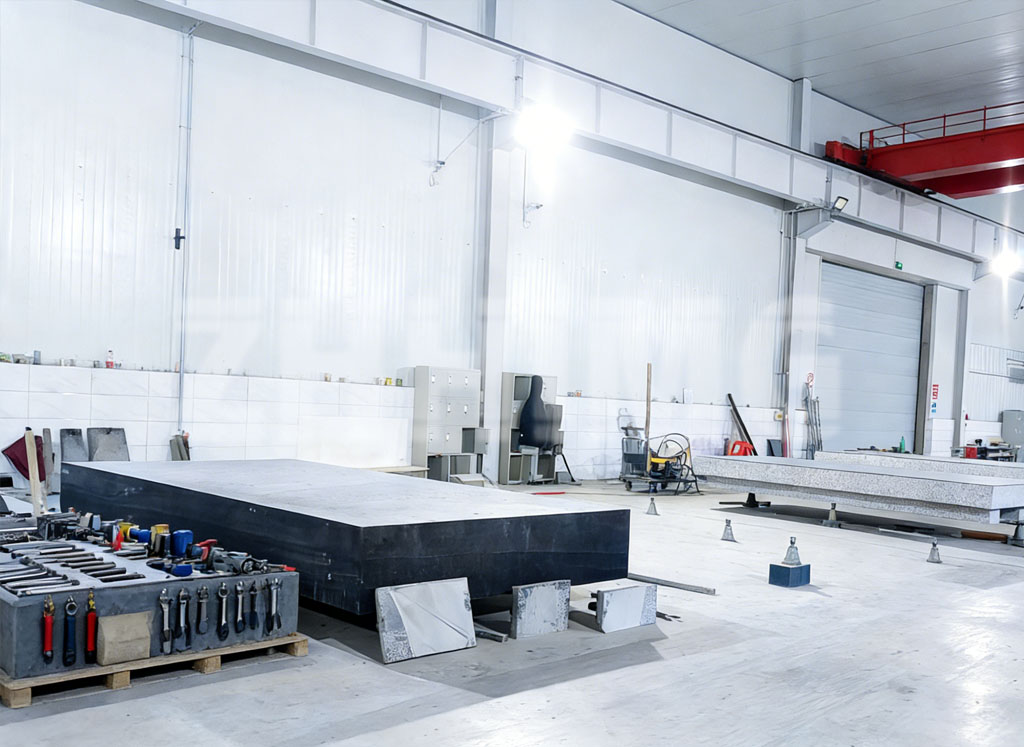
Granite surface plates present fundamentally different repair characteristics due to the nature of the material. Unlike cast iron, granite cannot be reconditioned through conventional machining operations, as the hardness and brittleness of stone prevent the scraping and lapping techniques used for metallic surface plates. When granite surface plates deviate from flatness specification due to wear, impact damage, or thermal effects, correction requires specialized grinding equipment operated by trained technicians. Minor surface imperfections can sometimes be addressed through localized grinding and polishing, but significant flatness deviations typically necessitate return to specialized facilities equipped with large-capacity precision grinding machinery. This repair limitation means that severely damaged granite surface plates may require complete replacement rather than reconditioning, potentially resulting in higher lifecycle costs compared to cast iron alternatives in applications where damage risk is elevated.
The integration of surface plates with ore processing castable applications requires consideration of both material compatibility and operational workflow requirements. Ore processing castable materials, used extensively in furnace linings, smelter construction, and high-temperature processing equipment, demand precise dimensional control during manufacturing and installation. Surface plates serve as the reference standard for verifying dimensions of castable forms, molds, and installation fixtures, directly influencing the accuracy of finished castable installations. The selection between cast iron and granite surface plates for ore processing castable applications must account for the specific requirements of castable work, including the typical workpiece sizes, accuracy requirements, handling methods, and environmental conditions present during measurement operations.
China cast iron surface plate manufacturers have developed specialized product configurations optimized for heavy industrial applications including ore processing and metallurgical operations. These configurations may include T-slot patterns for workholding, enhanced rib structures for improved load capacity, elevated stands with leveling provisions, and protective coatings designed for harsh environments. The availability of application-specific configurations from Chinese manufacturers enables ore processing facilities to acquire surface plates tailored to their operational requirements, potentially improving functionality and reducing customization costs compared to standard catalog products. When evaluating China cast iron surface plate options, ore processing facilities should consider both the dimensional specifications and the value-added features that address application-specific challenges.
The environmental and workplace safety considerations associated with surface plate selection extend beyond measurement accuracy to encompass broader operational concerns. Cast iron surface plates, particularly those with protective oil coatings, can create slip hazards and generate oil mist in certain conditions, requiring careful attention to housekeeping and ventilation. Granite surface plates eliminate these concerns, presenting dry, stable work surfaces that do not require chemical treatments for corrosion protection. Additionally, the natural appearance of granite surface plates may contribute to a cleaner, more professional workshop environment, potentially improving worker morale and supporting quality management initiatives. Ore processing facilities seeking to enhance workplace safety and environmental management programs may find granite surface plates advantageous despite their higher initial cost.
The calibration and certification requirements for surface plates in ore processing operations reflect the critical role these tools play in quality assurance systems. Both cast iron and granite surface plates require periodic calibration against traceable reference standards to verify continued conformance to flatness specifications. Calibration intervals depend on usage intensity, environmental conditions, and accuracy requirements, with typical intervals ranging from six months to two years for ore processing applications. The calibration process involves measurement of flatness at multiple points across the surface using precision instruments including electronic levels, autocollimators, or coordinate measuring machines. Calibration certificates document measured deviations and associated uncertainties, providing traceability to national measurement standards essential for quality management system compliance.
The economic analysis of surface plate selection for ore processing operations must encompass total cost of ownership rather than focusing exclusively on acquisition price. A China cast iron surface plate typically offers lower initial cost compared to granite alternatives of equivalent size and accuracy grade, making cast iron attractive for budget-constrained operations. However, the total ownership cost must include ongoing maintenance expenses, calibration frequency, repair and reconditioning costs, potential replacement costs, and operational impacts associated with surface plate downtime. Granite surface plates, despite higher initial investment, may prove more economical over extended service periods due to reduced maintenance requirements, longer calibration intervals, and superior resistance to environmental degradation. The optimal selection depends on specific application requirements, environmental conditions, and organizational preferences regarding capital versus operating expenditure.
The emerging trends in ore processing technology continue to influence surface plate requirements and selection criteria. Advanced automation, precision machinery, and tighter process controls demand measurement references capable of supporting increasingly stringent accuracy requirements. Both cast iron and granite surface plates have evolved to meet these demands, with manufacturers developing enhanced grades, improved production processes, and innovative features designed for modern ore processing applications. China cast iron surface plate producers have invested in quality management systems, precision manufacturing equipment, and international certification programs that enable competitive performance with established global manufacturers. These developments expand the options available to ore processing facilities, enabling more precise matching of surface plate characteristics to specific application requirements.
The decision between China cast iron surface plate options and granite alternatives ultimately requires comprehensive evaluation of application requirements, operational conditions, and organizational priorities. Cast iron surface plates offer advantages in load-bearing capacity, repairability, vibration damping, and initial cost, making them suitable for heavy-duty applications, facilities with maintenance capabilities, and operations where budget constraints predominate. Granite surface plates provide superior thermal stability, corrosion resistance, wear resistance, and reduced maintenance requirements, favoring applications in demanding environments, facilities seeking to minimize maintenance overhead, and operations where long-term dimensional stability is critical. Many ore processing facilities optimize their measurement capabilities by maintaining both cast iron and granite surface plates, reserving each type for applications that best leverage their respective advantages.
The future of precision measurement in ore processing will likely see continued evolution in both cast iron and granite surface plate technologies, along with emerging alternative materials and hybrid approaches designed to optimize performance characteristics. Advanced manufacturing techniques, including computer-controlled grinding and precision lapping, continue to improve the accuracy and consistency of surface plates from both material categories. Quality management systems and international standards provide frameworks for specifying, evaluating, and maintaining surface plates throughout their service life. Ore processing facilities that invest in appropriate surface plate technology, supported by rigorous maintenance and calibration programs, establish the measurement foundations essential for quality assurance, operational efficiency, and competitive positioning in increasingly demanding global markets.
Post time:
Apr-21-2026
