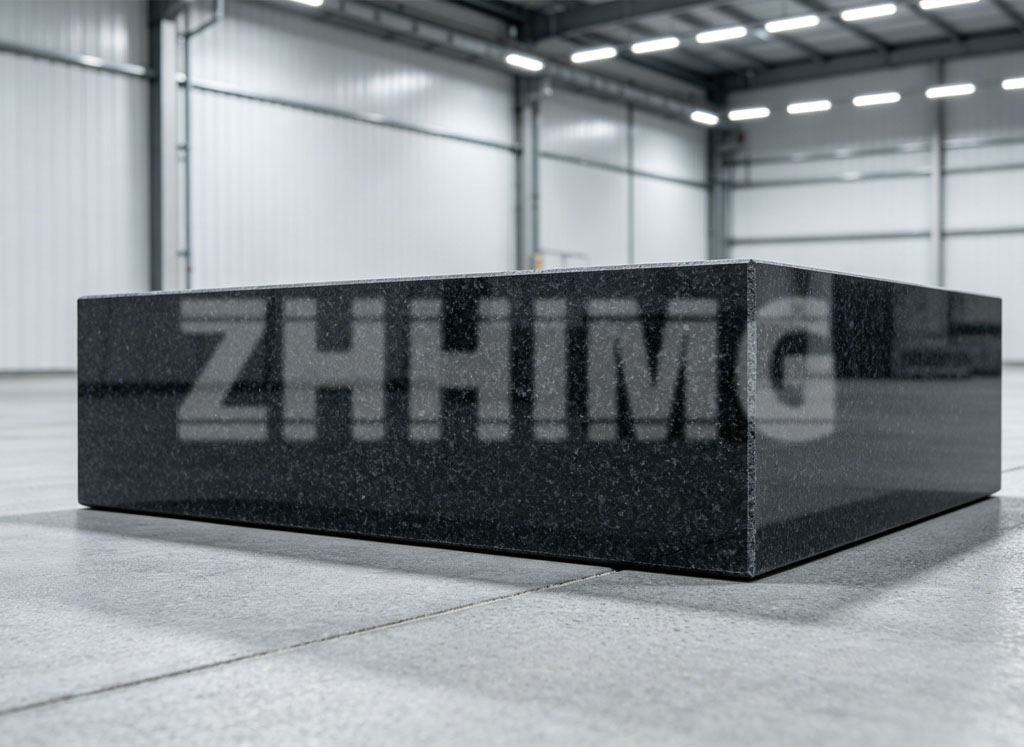
As the global semiconductor and optical industries push toward ever-smaller feature sizes and higher precision requirements, the foundational tools that enable measurement and alignment have become increasingly critical. In semiconductor manufacturing, where transistor dimensions now reach single-digit nanometers, and in optical systems where alignment tolerances approach fractions of a wavelength, the stability and accuracy of measuring tools directly determine product yield and performance. This article explores why granite measuring tools—including granite surface plates, precision granite bases, and metrology components—have become the industry standard for high-precision applications, outperforming traditional metal alternatives.
The demand for sub-micron accuracy has created a paradigm shift in metrology. Traditional cast iron and steel measuring tools, while adequate for conventional manufacturing, struggle to maintain stability under the stringent conditions required for semiconductor wafer inspection, lithography alignment, and optical assembly. Granite, with its unique combination of physical properties forged over millions of years beneath the Earth’s crust, offers a solution that addresses the most challenging precision requirements of modern industry.
Core Physical Properties: Why Granite Excels in Precision Applications
Thermal Stability: The Foundation of Consistent Measurement
One of the most significant advantages of granite measuring tools is their exceptional thermal stability. With a coefficient of thermal expansion of 6.5±0.5×10⁻⁶/℃, granite exhibits approximately one-third the thermal expansion of cast iron and one-tenth that of aluminum. This low thermal expansion means that granite-based measurement systems maintain their dimensional accuracy even when exposed to the temperature fluctuations common in manufacturing environments.
In semiconductor metrology applications, where a temperature change of just 1℃ can cause a 300mm silicon wafer to expand by approximately 7.5μm, the thermal stability of granite becomes critical. A granite surface plate subjected to the same temperature change would expand by only 1.95μm across the same diameter, providing a far more stable reference plane for critical measurements. This property is particularly valuable in 24/7 manufacturing operations where equipment generates continuous heat that can affect measurement accuracy.
Exceptional Hardness and Wear Resistance
Granite’s Mohs hardness rating of 6–7 places it among the hardest industrial materials used for precision measurement. This high hardness translates directly to exceptional wear resistance, ensuring that granite measuring tools maintain their accuracy over extended periods of use. Unlike metal surfaces that can develop scratches, dents, and wear patterns with repeated contact, granite’s crystalline structure resists surface degradation.
This wear resistance is quantified by industry data showing that precision granite surfaces experience less than 0.3μm of wear over ten years of regular use, compared to approximately 0.8μm per year for cast iron. For semiconductor and optical manufacturers, this means reduced recalibration frequency, lower maintenance costs, and consistent measurement accuracy throughout the tool’s operational life.
Superior Vibration Damping Capabilities
Vibration is the enemy of precision measurement. In semiconductor manufacturing facilities, where linear motors, robotic handling systems, and HVAC equipment generate constant mechanical vibrations, the ability to isolate and damp these disturbances is crucial. Granite’s natural crystalline structure provides inherent vibration damping properties that are 3–5 times more effective than cast iron.
The high mass and internal damping characteristics of granite create a natural mechanical low-pass filter, absorbing high-frequency vibrations before they can reach sensitive measurement sensors or optical components. This passive vibration isolation is particularly valuable for coordinate measuring machines (CMMs), laser interferometers, and wafer inspection systems, where even nanometer-scale vibrations can corrupt measurement data.
Non-Magnetic and Chemically Inert Properties
Granite’s non-metallic composition eliminates the risk of magnetic interference, a critical advantage in both semiconductor and optical measurement applications. Magnetic fields can disrupt sensitive electronic measurement equipment and cause alignment errors in optical systems. With granite measuring tools, there is no risk of magnetization affecting measurement accuracy or attracting ferromagnetic particles that could damage delicate wafers or optical components.
Additionally, granite is chemically inert, resisting the acids, alkalis, and cleaning chemicals commonly used in cleanroom environments. This chemical resistance ensures that granite surfaces maintain their precision finish and structural integrity even when exposed to the harsh chemicals used in semiconductor processing and optical component cleaning.
Semiconductor Industry Applications: Enabling the Nano-Revolution
Wafer Inspection and Metrology Systems
In semiconductor manufacturing, wafer inspection is a critical process that directly impacts yield and product quality. Granite measuring tools serve as the structural foundation for automated optical inspection (AOI) systems, wafer thickness measurement equipment, and critical dimension metrology tools.
The ultra-flat surfaces of precision granite bases provide the stable reference plane required for accurate wafer geometry measurements. Grade 000 granite surface plates, with flatness tolerances of ≤1.5μm/m, ensure that 300mm and even 450mm wafers are supported uniformly during inspection. This uniform support prevents wafer bowing or distortion that could lead to measurement errors and false defect detection.
Lithography Machine Stages and Alignment Systems
Semiconductor lithography represents the most demanding application for precision granite components. In extreme ultraviolet (EUV) and deep ultraviolet (DUV) lithography systems, the wafer and reticle stages must achieve sub-nanometer positioning accuracy and maintain alignment across exposure fields.
Granite’s combination of thermal stability, vibration damping, and dimensional permanence makes it the ideal material for these critical stage components. The low thermal expansion ensures that stage geometry remains constant as linear motors generate heat during high-speed positioning, preventing overlay errors that can ruin entire batches of chips. Industry data shows that granite-based lithography stages achieve positioning repeatability of less than 5nm, enabling the patterning of 2nm and smaller transistor nodes.
Probe Stations and Electrical Testing
Semiconductor wafer probing requires precise alignment between probe cards and wafer test pads. Granite measuring tools provide the rigid, stable base for probe stations, ensuring that the delicate alignment between probes and pads is maintained throughout testing sequences. The non-magnetic properties of granite eliminate any magnetic interference with electrical test signals, ensuring accurate current and voltage measurements.
Coordinate Measuring Machines (CMMs)
Coordinate measuring machines are essential for dimensional verification of semiconductor packaging components, MEMS devices, and equipment parts. Granite serves as both the base structure and reference surface for these machines, providing the geometric stability required for three-dimensional measurement accuracy. The combination of granite base, granite bridge, and granite air bearing ways creates a measurement system with exceptional thermal and mechanical stability, achieving measurement uncertainties in the sub-micron range.
Optical Industry Applications: Supporting Precision Light Manipulation
Optical Table Foundations and Platforms
The optical industry relies on granite measuring tools to provide stable platforms for laser systems, interferometers, and optical assembly workstations. While modern optical tables often use honeycomb steel tops, granite remains the preferred material for the base structures and for applications requiring the ultimate in thermal and mechanical stability.
Granite optical platforms offer exceptional flatness and rigidity, ensuring that optical components maintain their precise alignment over time. This is particularly critical for interferometric measurements, where path length differences of just a few nanometers can significantly affect measurement results. The vibration damping properties of granite also help isolate optical systems from building vibrations and equipment-generated disturbances.
Laser Interferometer Bases and Reference Structures
Laser interferometers represent the most demanding optical measurement application, requiring exceptional stability to maintain the precise alignment of mirrors, beam splitters, and optical components. Granite bases provide the rigid, thermally stable foundation necessary for these high-sensitivity instruments.
In semiconductor wafer flatness metrology systems, such as the XCALIBIR interferometer developed by the National Institute of Standards and Technology (NIST), granite tables serve as the stable platform supporting the entire optical system. Operating at temperature control of (20 ± 0.02)°C, these systems achieve measurement uncertainties of approximately 1nm RMS—levels of accuracy that would be impossible to achieve with metal-based structures.
Precision Optical Assembly and Alignment
The assembly of complex optical systems, including camera lenses, telescope optics, and laser beam delivery systems, requires precise alignment of multiple optical elements. Granite measuring tools—including surface plates, straightedges, and angle plates—provide the geometric references necessary to ensure proper alignment during assembly.
Optical technicians use granite surface plates as reference planes for aligning lens elements, ensuring that each component is precisely positioned relative to the optical axis. The excellent dimensional stability of granite ensures that these reference tools maintain their accuracy for decades, providing consistent alignment benchmarks throughout an optical system’s production lifecycle.
Comparative Advantages: Granite vs. Traditional Metal Materials
Extended Service Life
Granite measuring tools offer dramatically longer service life compared to metal alternatives. With an expected lifespan of 30+ years, granite tools can serve multiple generations of manufacturing equipment, providing an exceptional return on investment. In contrast, cast iron surface plates typically require resurfacing every 5–10 years and have a useful life of 10–15 years before replacement becomes necessary.
This extended service life translates to significant cost savings over the long term. A 2023 study by the American Society of Mechanical Engineers (ASME) found that granite structural components deliver 27% lower total ownership costs compared to steel or cast iron alternatives over a 10-year period. For semiconductor fabs and optical manufacturing facilities, this means reduced capital expenditure and fewer production disruptions from tool replacement.
Lower Maintenance Requirements
Granite measuring tools require significantly less maintenance than metal alternatives. Unlike cast iron surfaces that require regular oiling to prevent rusting and frequent scraping to restore flatness, granite surfaces are maintenance-free under normal operating conditions.
The non-porous, chemically inert nature of granite means it doesn’t rust, doesn’t require protective coatings, and resists contamination from workshop debris and chemicals. Annual accuracy decay rates of approximately 1% mean that granite tools maintain their calibration far longer than metal tools, which can experience 5–10% annual accuracy degradation from wear and environmental factors.
Long-Term Dimensional Stability
Perhaps the most significant advantage of granite measuring tools is their exceptional long-term dimensional stability. Having undergone millions of years of natural stress relief beneath the Earth’s surface, granite doesn’t experience the internal stress relaxation that causes metal structures to warp and deform over time.
This stability means that once a granite measuring tool is precision-ground to its final dimensions, it will maintain those dimensions for decades. Industry data shows that granite surface plates retain 95% of their original accuracy after 10 years of regular use, compared to 70–80% for high-quality cast iron plates. For semiconductor and optical manufacturers, this translates to consistent measurement accuracy year after year, reducing the risk of production errors caused by drifting tool calibration.
Real-World Performance: Case Studies and Data
Semiconductor Wafer Inspection Success
A leading European semiconductor manufacturer implemented granite-based wafer inspection platforms and reported significant improvements in measurement reliability. The switch from cast iron to granite reference surfaces resulted in:
- 40% reduction in measurement variability across temperature changes
- 60% reduction in recalibration frequency (from 6-month to 2-year intervals)
- 2.3% improvement in overall production yield due to more consistent inspection
The thermal stability of the granite platforms was particularly valuable in the company’s 24/7 manufacturing environment, where equipment-generated heat caused temperature fluctuations that previously affected measurement accuracy.
Optical Metrology Laboratory Performance
The National Institute of Standards and Technology (NIST) has documented the performance of granite-based interferometer systems in its wafer flatness metrology laboratory. The XCALIBIR interferometer, mounted on a precision granite table, achieves:
- Flatness measurement uncertainty of ~1nm RMS for 300mm wafers
- 0.01μrad angular stability for critical optical component alignment
- Consistent performance across 10+ years of continuous operation without structural degradation
This level of performance, enabled by granite’s exceptional properties, supports the development of next-generation semiconductor manufacturing technologies.
Long-Term Durability Verification
Independent testing by the UK’s National Physical Laboratory evaluated the long-term performance of granite measuring tools under industrial conditions. After 15 years of continuous use in a precision manufacturing environment, the tested granite surface plates showed:
- Less than 1.2μm flatness deviation from original specifications (well within Grade 000 tolerance)
- No measurable surface wear despite thousands of measurement cycles
- Consistent thermal expansion performance matching original material specifications
These results confirm the exceptional durability and long-term stability of granite measuring tools in demanding industrial applications.
Future Trends and Conclusion
As the semiconductor industry continues its progression toward sub-2nm transistor nodes and the optical industry pushes the boundaries of precision in laser systems, imaging, and quantum optics, the demand for stable, accurate measuring tools will only increase. Granite measuring tools, with their proven combination of thermal stability, wear resistance, vibration damping, and long-term dimensional stability, are well-positioned to meet these evolving requirements.
Emerging trends in hybrid material systems, combining granite with advanced composites or ceramics, promise to further enhance the performance of precision measuring tools while addressing specific application requirements such as weight reduction or enhanced thermal conductivity. However, the fundamental advantages of natural granite—forged over geological time scales and refined through precision manufacturing—will remain irreplaceable for the most demanding precision applications.
For semiconductor and optical manufacturers, the investment in granite measuring tools delivers returns through improved measurement accuracy, reduced maintenance costs, extended service life, and ultimately, higher product yields. As measurement tolerances continue to tighten and manufacturing processes become increasingly sophisticated, the value proposition of granite measuring tools becomes even more compelling.
In conclusion, the advantages of granite measuring tools in semiconductor and optical industries are clear and well-documented. From their exceptional thermal stability and wear resistance to their superior vibration damping capabilities and 30+ year service life, granite tools provide the foundation for the precision measurement that enables modern technological advancement. As industries continue to push the boundaries of what’s possible in nanomanufacturing and optical precision, granite measuring tools will remain the gold standard for metrology and alignment applications.
Post time:
May-08-2026