
In the intricate world of precision manufacturing and metrology, the surface plate is the silent sentinel of quality. Whether used for inspecting aerospace components, setting up CNC machinery, or calibrating sensitive gauges, the surface plate serves as the foundational reference plane—the “zero” against which all other dimensions are measured. However, the accuracy of this critical tool is not permanent; it is something that must be earned and preserved through rigorous maintenance. A damaged or poorly maintained surface plate does not just introduce measurement errors; it compromises the integrity of every part produced in the shop.
Maintaining a surface plate requires more than a casual wipe-down; it demands a disciplined approach tailored to the specific material—cast iron or granite. While both serve the same function, their physical and chemical properties differ vastly, necessitating distinct care regimens. This guide explores the best practices for preserving the accuracy, longevity, and utility of these essential metrological assets.
The Universal Rules of Surface Plate Care
Before delving into material-specific maintenance, there are fundamental operational protocols that apply to all surface plates, regardless of whether they are made of iron or stone. These practices form the bedrock of plate preservation.
1. The “Clean as You Go” Philosophy
Contamination is the enemy of precision. Dust, metal chips (swarf), and cutting fluids can wreak havoc on a surface plate’s flatness. Even microscopic particles of aluminum or steel can act as abrasive grit when a workpiece is slid across the plate, leading to scratches and localized wear. Therefore, the first rule of maintenance is immediate cleaning. After every use, the surface must be wiped down with a clean, lint-free cloth. For stubborn residues, a mild, non-corrosive solvent can be used, but harsh chemicals should be avoided as they can damage the surface finish or the plate’s paint.
Contamination is the enemy of precision. Dust, metal chips (swarf), and cutting fluids can wreak havoc on a surface plate’s flatness. Even microscopic particles of aluminum or steel can act as abrasive grit when a workpiece is slid across the plate, leading to scratches and localized wear. Therefore, the first rule of maintenance is immediate cleaning. After every use, the surface must be wiped down with a clean, lint-free cloth. For stubborn residues, a mild, non-corrosive solvent can be used, but harsh chemicals should be avoided as they can damage the surface finish or the plate’s paint.
2. Thermal Equilibrium
Temperature fluctuations are a silent killer of accuracy. Both cast iron and granite expand and contract with temperature changes, albeit at different rates. To maintain accuracy, surface plates should be kept in a temperature-controlled environment, ideally around 20°C (68°F). Furthermore, placing hot workpieces directly onto a cold plate—or vice versa—can cause immediate thermal distortion. Best practice dictates that parts should be allowed to acclimate to the room temperature before being placed on the inspection surface.
Temperature fluctuations are a silent killer of accuracy. Both cast iron and granite expand and contract with temperature changes, albeit at different rates. To maintain accuracy, surface plates should be kept in a temperature-controlled environment, ideally around 20°C (68°F). Furthermore, placing hot workpieces directly onto a cold plate—or vice versa—can cause immediate thermal distortion. Best practice dictates that parts should be allowed to acclimate to the room temperature before being placed on the inspection surface.
3. Load Management and Support
A surface plate is not a workbench. It should never be used as a hammering surface, a welding table, or a storage rack. Excessive loads, particularly concentrated ones, can cause the plate to deflect or permanently deform. When installing a large plate, proper support is critical. The plate should rest on support points (usually three for smaller plates, more for larger ones) that are leveled to ensure the plate does not twist under its own weight.
A surface plate is not a workbench. It should never be used as a hammering surface, a welding table, or a storage rack. Excessive loads, particularly concentrated ones, can cause the plate to deflect or permanently deform. When installing a large plate, proper support is critical. The plate should rest on support points (usually three for smaller plates, more for larger ones) that are leveled to ensure the plate does not twist under its own weight.
Maintaining Cast Iron Surface Plates: The Battle Against Rust
Cast iron has been the industry standard for over a century due to its excellent vibration-damping properties and durability. However, it is chemically reactive and prone to oxidation. Maintaining a cast iron plate is essentially a continuous battle against rust.
1. The Critical Importance of Oil
Unlike granite, cast iron cannot be left “dry.” To prevent rust, the surface must be coated with a thin film of rust-preventative oil or a specialized cosmoline compound after every use. The oil acts as a barrier against moisture in the air. However, the application must be precise; too much oil can attract dust and grit, creating an abrasive paste that damages the plate. The oil should be applied with a clean rag and then buffed until the surface is barely oily to the touch.
Unlike granite, cast iron cannot be left “dry.” To prevent rust, the surface must be coated with a thin film of rust-preventative oil or a specialized cosmoline compound after every use. The oil acts as a barrier against moisture in the air. However, the application must be precise; too much oil can attract dust and grit, creating an abrasive paste that damages the plate. The oil should be applied with a clean rag and then buffed until the surface is barely oily to the touch.
2. Dealing with Burrs and Nicks
Cast iron is a relatively soft metal compared to hardened steel gauges. Dropping a heavy part can cause a “nick” or a raised burr on the surface. If left untreated, this burr will act as a scraper, damaging other tools and parts that slide over it. Maintenance involves regularly checking for these high spots. If a burr is found, it should be carefully stoned down with a fine Arkansas stone or a ceramic deburring stone until it is flush with the surrounding surface.
Cast iron is a relatively soft metal compared to hardened steel gauges. Dropping a heavy part can cause a “nick” or a raised burr on the surface. If left untreated, this burr will act as a scraper, damaging other tools and parts that slide over it. Maintenance involves regularly checking for these high spots. If a burr is found, it should be carefully stoned down with a fine Arkansas stone or a ceramic deburring stone until it is flush with the surrounding surface.
3. Re-Scraping and Refurbishment
One of the distinct advantages of cast iron is that it can be repaired. Over years of use, the plate will naturally wear, often becoming concave in the center where most work is performed. When the flatness degrades beyond acceptable tolerances, a cast iron plate can be “re-scraped.” This is a skilled manual process where a technician uses a hand scraper to remove high spots, restoring the plate to its original flatness. This ability to be reconditioned makes high-quality cast iron plates a lifetime investment.
One of the distinct advantages of cast iron is that it can be repaired. Over years of use, the plate will naturally wear, often becoming concave in the center where most work is performed. When the flatness degrades beyond acceptable tolerances, a cast iron plate can be “re-scraped.” This is a skilled manual process where a technician uses a hand scraper to remove high spots, restoring the plate to its original flatness. This ability to be reconditioned makes high-quality cast iron plates a lifetime investment.
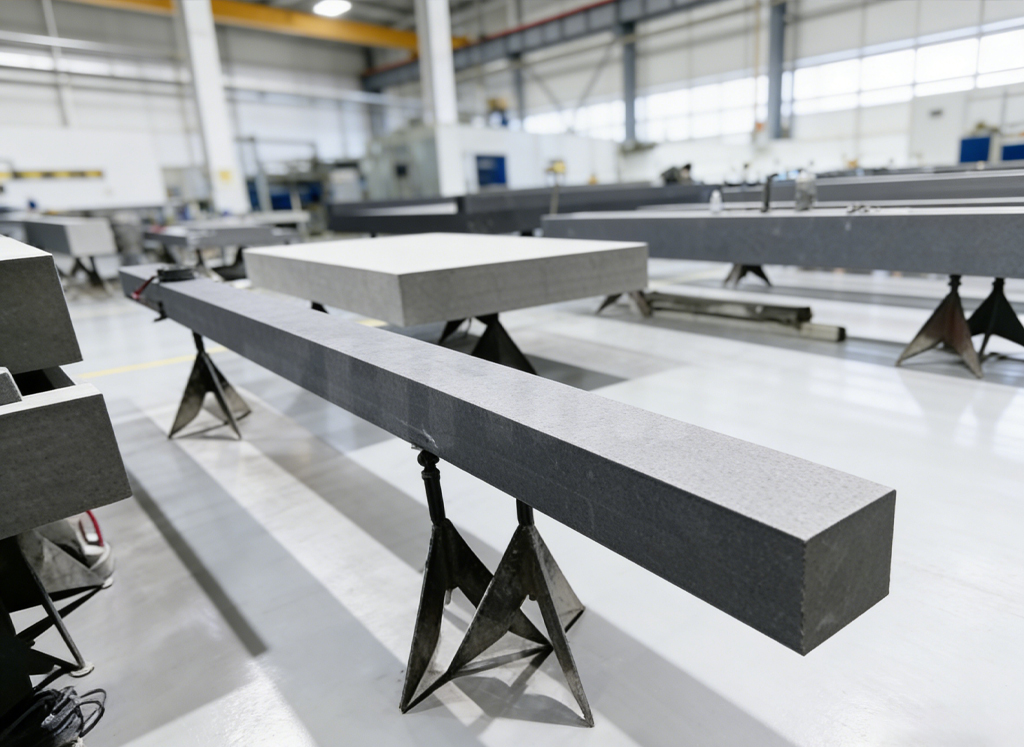
Maintaining Granite Surface Plates: Preserving the Stone
Granite surface plates, typically made from black diabase or pink granite, have largely replaced iron in many modern labs due to their resistance to rust and superior thermal stability. However, “maintenance-free” is a misnomer; granite requires specific care to maintain its precision.
1. Protection from Abrasive Wear
While granite is harder than cast iron, it is not impervious to wear. The primary threat to a granite plate is abrasive material—specifically carbide, cast iron chips, or hardened steel particles. Because these materials are nearly as hard as the minerals in the granite, dragging a workpiece with chips underneath it across the plate can cause deep scratches or “witness marks.” To prevent this, it is best practice to lift parts onto the plate rather than sliding them. If sliding is necessary, ensure the part and the plate are impeccably clean.
While granite is harder than cast iron, it is not impervious to wear. The primary threat to a granite plate is abrasive material—specifically carbide, cast iron chips, or hardened steel particles. Because these materials are nearly as hard as the minerals in the granite, dragging a workpiece with chips underneath it across the plate can cause deep scratches or “witness marks.” To prevent this, it is best practice to lift parts onto the plate rather than sliding them. If sliding is necessary, ensure the part and the plate are impeccably clean.
2. Managing Static and Cleanliness
Granite is non-magnetic and non-conductive, which is generally an advantage, but it can attract dust due to static electricity. Regular cleaning with a vacuum or a tack cloth is recommended to keep the surface free of fine particulate matter. Unlike cast iron, granite should never be oiled for storage, as the oil can seep into the microscopic pores of the stone and create a gummy residue that is difficult to remove.
Granite is non-magnetic and non-conductive, which is generally an advantage, but it can attract dust due to static electricity. Regular cleaning with a vacuum or a tack cloth is recommended to keep the surface free of fine particulate matter. Unlike cast iron, granite should never be oiled for storage, as the oil can seep into the microscopic pores of the stone and create a gummy residue that is difficult to remove.
3. The Danger of Impact
Granite is brittle. While it resists scratching well, it is susceptible to chipping if struck by a sharp, heavy object. A chipped edge or a divot in the surface cannot be easily fixed like a burr on cast iron. To mitigate this, many shops use protective covers—often made of wood or heavy plastic—when the plate is not in use. These covers protect the surface from accidental impacts from dropped tools or falling parts.
Granite is brittle. While it resists scratching well, it is susceptible to chipping if struck by a sharp, heavy object. A chipped edge or a divot in the surface cannot be easily fixed like a burr on cast iron. To mitigate this, many shops use protective covers—often made of wood or heavy plastic—when the plate is not in use. These covers protect the surface from accidental impacts from dropped tools or falling parts.
Calibration and Certification: The heartbeat of Accuracy
Maintenance is not just about cleaning; it is about verification. A surface plate that looks clean may still be geometrically inaccurate due to wear or temperature stress.
1. Establishing a Calibration Schedule
Best practices dictate a regular calibration schedule based on usage. A plate used heavily on a shop floor might need calibration every 6 to 12 months, while one in a pristine metrology lab might only need it every 2 to 3 years. Calibration involves using a precision level, an auto-collimator, or an electronic level to map the surface topography.
Best practices dictate a regular calibration schedule based on usage. A plate used heavily on a shop floor might need calibration every 6 to 12 months, while one in a pristine metrology lab might only need it every 2 to 3 years. Calibration involves using a precision level, an auto-collimator, or an electronic level to map the surface topography.
2. Understanding Wear Patterns
Regular calibration helps identify wear patterns. For example, if a plate is consistently used for checking small parts in the center, the center will wear faster than the edges. Recognizing this early allows the shop to rotate the usage area of the plate or schedule a re-surfacing before the error impacts production quality.
Regular calibration helps identify wear patterns. For example, if a plate is consistently used for checking small parts in the center, the center will wear faster than the edges. Recognizing this early allows the shop to rotate the usage area of the plate or schedule a re-surfacing before the error impacts production quality.
3. Documentation
Every maintenance action and calibration result should be documented. Keeping a “health record” for each surface plate helps in tracking its degradation over time and justifies the investment in re-scraping or replacement when necessary.
Every maintenance action and calibration result should be documented. Keeping a “health record” for each surface plate helps in tracking its degradation over time and justifies the investment in re-scraping or replacement when necessary.
Conclusion
The surface plate is the anchor of precision manufacturing. Whether you rely on the magnetic utility and vibration damping of cast iron or the thermal stability and rust resistance of granite, the longevity of these tools depends entirely on the care they receive. By adhering to strict cleaning protocols, managing environmental factors, and respecting the physical limitations of the material, manufacturers can ensure that their surface plates remain true references of flatness for decades. In the pursuit of perfection, the maintenance of the foundation is just as important as the precision of the tool.
Post time: May-09-2026