
Custom Mineral Casting Machine Beds: A Design and Purchasing Checklist
Material comparison articles explain why many equipment builders consider a mineral casting machine bed; far fewer explain how to actually order one. The step from “we want epoxy granite instead of cast iron” to a cast, machined and verified bed involves a set of design and purchasing decisions that determine cost, lead time and whether the part fits your machine on the first attempt. This checklist is written for equipment manufacturers developing beds, frames and bases — it covers what to provide, what to confirm about inserts and machining, and what verification and documentation to agree before the mould is made.
1. Our mineral casting products and supply forms, in brief
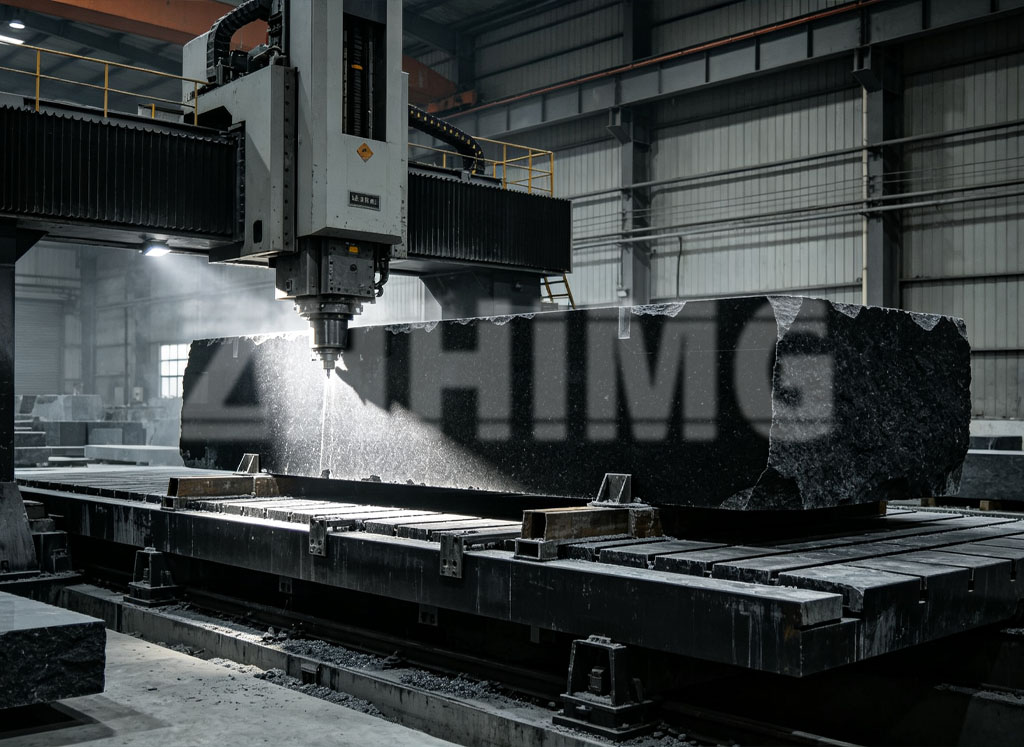
ZHHIMG produces machine beds and components in mineral casting — a composite of selected mineral aggregates bound in epoxy resin, often called epoxy granite or polymer concrete — and supplies them in several forms: near-net cast beds with post-casting machining on functional faces; fully machined components with inserts and cooling channels; and combined designs that pair mineral casting with granite or steel elements where each material does what it does best. The purpose here is not to repeat the material basics, which our mineral casting components page and material FAQ already cover — this article focuses on project execution.
2. What to provide: structure, loads and interfaces
A mineral casting project starts from your machine’s requirements, not from the material. Provide:
Structure: 3D model or 2D drawings of the bed, including wall thicknesses and the envelope. Mineral casting is cast into a mould, so the design should suit casting — uniform-ish walls, generous radii, and draft considerations — rather than imitating a welded-steel topology pocket by pocket.
Loads: static weight carried, moving masses, positions of guides and drives, and dynamic loads from acceleration or process forces. Casting with aggregates behaves differently from steel under concentrated loads, so bearing-pad and rail positions with their loads are the key inputs, not just total mass.
Interfaces: where rails, rotary tables, motors, cable chains and covers mount. Each interface becomes either a cast-in feature or a machined feature — and that classification drives both mould design and cost, so it must be settled early.
3. Inserts, mounting faces, channels and reserved features
These details are where mineral casting projects succeed or stall:
Threaded inserts: position, thread specification, embedment type (cast-in sleeves versus post-installed bonded inserts), and the loads or torques the joints must carry. Insert layout should be frozen before mould production — moving an insert after casting is not like moving a hole in steel.
Mounting and reference faces: which faces carry accuracy requirements, and what values. Cast surfaces are economical but not precise; functional faces are machined after casting. Your drawing should distinguish them clearly.
Channels and reserved structures: cooling or hydraulic channels, cable routing, sensor bores and lifting provisions. Channels can be formed with cores during casting or machined afterwards; the size, sealing requirements and pressure ratings decide which route is feasible.
4. Which faces need post-machining — and which requirements need separate verification
A practical rule: cast what the machine does not need to be precise, machine what it does, and verify both differently. Rail seats, reference faces and bearing mounts are machined after casting and measured with documented methods. As-cast faces meet cosmetic and clearance requirements only.
Be careful with requirements that post-machining alone cannot guarantee. Assembly-level accuracy, long-term dimensional stability under your load case, and dynamic behaviour of the complete machine are system properties — they are influenced by the bed but cannot be read from a material certificate or a single machined face. If your project needs such verification, it must be specified as a separate task with a method, an owner and acceptance values, not assumed to be covered by the material data sheet.
5. Prototype versus series: what to confirm in each case
| Item | Prototype project | Series project |
|---|---|---|
| Mould strategy | Low-cost mould or machined-from-block alternative for first articles | Production mould designed for repeatable cast quality |
| Design changes | Expected and planned for; change points identified | Frozen before mould production; changes priced formally |
| Insert layout | Verified on the prototype with real components | Locked from prototype learnings |
| Machining datums | Confirmed while fitting the machine | Standardised, with repeat-fixturing planned |
| Documentation | First-article inspection report | Per-batch reports and material traceability |
| Capacity | Not relevant | Annual volume, cure-cycle capacity and delivery slots agreed |
The most common series problem is a prototype that was quietly redesigned during fitting without updating the model. Freeze the as-built prototype before ordering the production mould.
6. Inspection, packaging, transport and delivery documents
Agree the documentation set before production starts:
Dimensional inspection report on machined faces, with method and instrument; material data sheet for the mix used; first-article report for prototypes or per-batch records for series; insert pull-test or torque records where the joints are load-bearing; photographs of the part in the crate; and shock or tilt indicators for heavy beds. Packaging for mineral casting is friendlier than for granite — the material is less brittle in handling — but a several-tonne bed still ships restrained in a custom crate with defined allowable transport loads.
Customer input and ZHHIMG review: who brings what
| Customer provides | ZHHIMG reviews and confirms |
|---|---|
| 3D model / drawings with envelope and walls | Casting suitability: radii, draft, wall transitions |
| Rail, drive and bearing-pad loads | Rib and support layout for those loads |
| Insert table with threads and loads | Insert type feasibility and layout confirmation before mould build |
| Accuracy values on functional faces | Machining plan: which faces machined, datum scheme |
| Channels with media and pressure data | Cast-core versus machined routing decision |
| Environment and installation data | Material mix selection and finishing recommendation |
| Acceptance criteria and required documents | Inspection plan and report formats |
This division keeps engineering time where it belongs: you own the machine requirements, we own the process that turns them into a castable, machinable, verifiable bed.
Send your 3D model, load data and interface list to ZHHIMG® for a manufacturability review and quotation — including for hybrid designs that combine mineral casting with granite or UHPC elements where the application calls for it.
Frequently asked questions
What files do you need to quote a custom mineral casting bed?
A 3D model or dimensioned drawings, the insert table, load positions (rails, drives, bearing pads), accuracy values on functional faces, and your environment data. A desensitised model is enough for the first review and quotation.
Can inserts be added after casting?
Yes — bonded or sleeved inserts can be post-installed, and this is common for lower-load joints. Cast-in sleeves are preferred where joints carry significant force or torque. Insert layout should still be finalised before the mould is built, because the two routes have different costs and lead times.
How accurate are as-cast surfaces?
As-cast surfaces serve clearance and cosmetic functions; functional accuracy comes from machining after casting. Specify which faces need accuracy and what values — those faces will be machined and inspected with documented methods.
Is mineral casting suitable for high-load machine beds?
It depends on the load distribution and the design around it. Concentrated loads call for appropriate rib and support layout, local reinforcement or hybrid designs with steel or granite elements. Provide the pad positions and loads so the design can be reviewed against them rather than answered with a generic claim.
What documents ship with a mineral casting bed?
Typically the dimensional inspection report on machined faces, the material data sheet, first-article or per-batch records, and insert torque or pull-test records where applicable. State any additional document requirements in the RFQ so they are planned rather than improvised.
Post time: Oct-19-2026