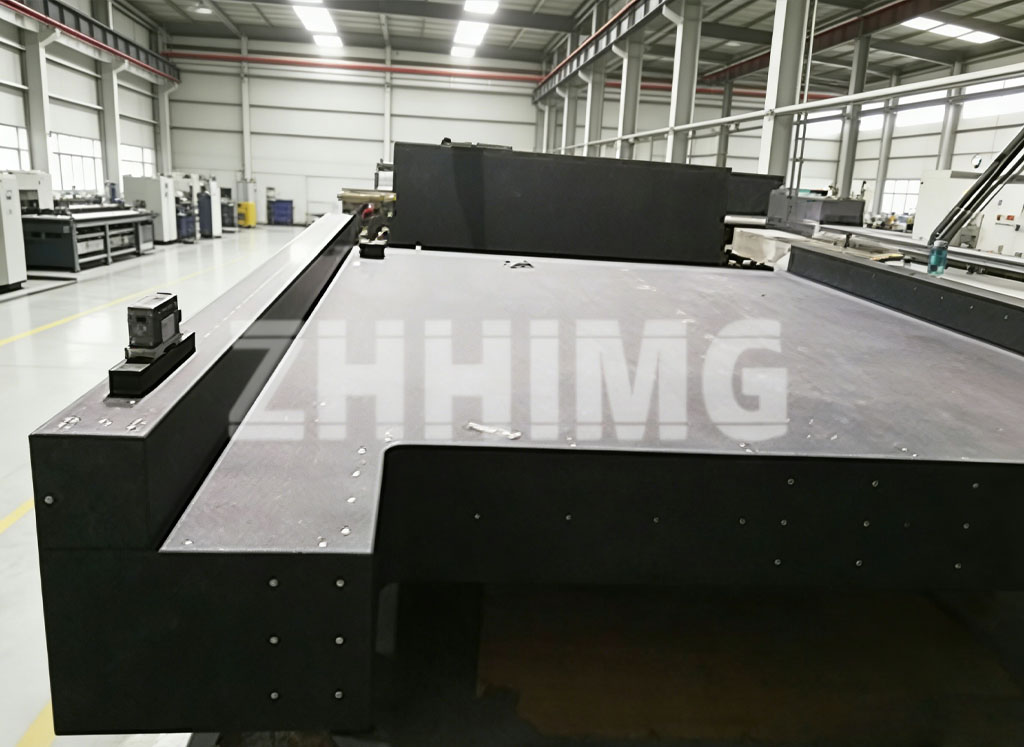
In the intricate ecosystem of modern manufacturing, where tolerances are measured in microns and repeatability is the currency of success, the foundation of quality often rests upon a material as ancient as the earth itself. Granite, once relegated to construction and monuments, has evolved into a critical engineering material, serving as the bedrock for the world’s most advanced Coordinate Measuring Machines (CMM), semiconductor lithography equipment, and high-speed laser cutters. As the demand for ultra-precision manufacturing grows globally, the export market for Granite Precision Components has surged, creating a complex international supply chain where quality, logistics, and standardization converge. This article explores the critical role of high-precision granite in the global market, the rigorous standards that govern its production, and why sourcing these components is a strategic imperative for industries demanding superior quality.
The Material Science of Stability: Why Granite Reigns Supreme
To understand the global demand for granite components, one must first understand the material’s unique physical properties. In the realm of precision engineering, stability is paramount. Metals, while strong, are susceptible to thermal expansion, corrosion, and magnetic interference. Granite, specifically high-quality black granite (often sourced from premier quarries in regions like Jinan, China, or specific formations in India and Europe), offers a natural advantage. It possesses an incredibly low coefficient of thermal expansion, meaning it remains dimensionally stable even when ambient temperatures fluctuate. For a CMM measuring a jet engine turbine blade, this stability ensures that the measurement data is accurate regardless of the workshop environment.
Furthermore, granite is non-magnetic and immune to rust. In the semiconductor industry, where magnetic fields can disrupt the delicate path of electrons during chip fabrication, the non-magnetic nature of granite is not just a benefit—it is a requirement. Its fine-grained, crystalline structure also provides superior vibration damping. It absorbs mechanical shocks and dissipates energy, preventing external vibrations from reaching the sensitive workpiece or measurement probe. This “quietness” is essential for achieving the surface finishes and geometric accuracies demanded by modern engineering. Consequently, High-Precision Granite Parts have become the silent guardians of accuracy in high-tech manufacturing, providing a stable datum that metals simply cannot match.
Navigating the Global Export Landscape
The market for granite precision components is truly global. Manufacturers in Europe and North America, home to many of the world’s leading machine tool builders, increasingly rely on specialized production hubs in Asia for the raw fabrication of these heavy stone components. This shift is driven by the availability of high-quality raw stone and the development of specialized machining capabilities that can handle the immense hardness of granite. However, exporting stone is not as simple as shipping steel. It requires a nuanced understanding of logistics, packaging, and material handling.
“Export-ready” is a term that carries significant weight in this industry. It implies that the manufacturer understands the rigors of international freight. A precision granite base for a laser cutter can weigh several tons and is brittle. It must be packaged in fumigated wooden crates with specialized shock-absorbing materials to prevent micro-fractures during ocean transit. The best exporters treat the logistics of their product with the same care as the manufacturing, ensuring that the precision achieved in the factory is preserved until the component reaches the customer’s floor thousands of miles away. This global supply chain efficiency allows machine builders to source high-quality components cost-effectively without compromising on the technical specifications required for their equipment.
The Benchmark of Excellence: ISO Standards and Calibration
In an industry where “precision” is a quantifiable metric, adherence to international standards is non-negotiable. The Global Export of granite components is governed by a strict framework of standards, primarily DIN 876 (Germany), ASME B89.3.1 (USA), and ISO 8512. These standards define the allowable flatness, parallelism, and surface finish for granite surface plates and components. For example, a Grade 00 (or AAA) plate is reserved for high-precision inspection and must adhere to flatness tolerances measured in microns over a square meter.
Meeting these ISO Standards requires more than just good machinery; it requires a culture of quality. Reputable manufacturers employ rigorous calibration processes, often using laser interferometers and electronic levels to map the surface of every component. This data is compiled into a calibration certificate that accompanies the product, providing a traceable record of its accuracy. For the international buyer, this certification is the guarantee of Superior Quality. It ensures that the granite component they are purchasing is not just a piece of stone, but a certified metrological instrument that integrates seamlessly into their quality control processes. Without this adherence to standards, the global trade of these components would be impossible, as there would be no common language of accuracy between buyer and seller.
Customization: The Shift from Commodity to Solution
While standard surface plates are a staple of the industry, the real growth in the export market lies in Custom Granite Parts. Modern manufacturing is rarely “one-size-fits-all.” Machine builders often require complex, bespoke granite structures that serve as the structural skeleton of their equipment. This could involve drilling and tapping holes for mounting, embedding metal inserts for adjustability, or creating hollow structures to reduce weight while maintaining rigidity.
The ability to provide these customized solutions is what separates a simple stone supplier from a true engineering partner. Advanced manufacturers utilize large-scale CNC machining centers capable of handling massive workpieces to mill granite into complex geometries. They can integrate T-slots, cooling channels, and vacuum pockets directly into the stone. For the semiconductor industry, this might mean a custom stage for a wafer inspection machine that requires specific mounting points and extreme flatness. For the automotive sector, it might be a large granite bridge for a vision inspection system. By offering these tailored solutions, exporters add significant value, transforming a raw material into a finished, high-tech component that is ready for immediate installation.
The Future of Stone in a Digital Age
As we look toward the future of manufacturing, the role of granite is poised to evolve alongside the technologies it supports. The rise of Industry 4.0 and the “Smart Factory” is driving a demand for components that are not only precise but also integrated. We are beginning to see the development of “smart” granite components, where sensors are embedded directly into the stone to monitor temperature, vibration, and structural health in real-time. This data can be fed into the factory’s central control system, allowing for predictive maintenance and ensuring that measurement accuracy is never compromised.
Furthermore, as manufacturing processes become faster and more automated, the dynamic stiffness of materials becomes even more critical. Granite’s ability to dampen vibration at high speeds makes it an ideal material for the moving parts of high-speed robotic arms and gantry systems. The global export market for these components is expected to grow as industries like aerospace and renewable energy (specifically wind turbine manufacturing) demand larger and more accurate inspection platforms. In this digital age, the humble block of granite remains a cornerstone of industrial progress, adapting and evolving to meet the ever-changing demands of the modern world.
Conclusion
The global export of granite precision components is a testament to the enduring value of natural materials in high-tech engineering. By combining the innate stability of stone with modern machining techniques and rigorous ISO standards, manufacturers are able to provide High-Precision Granite Parts that enable the production of the world’s most advanced technologies. For industries seeking superior quality and long-term stability, granite remains the ultimate solution, proving that sometimes, to move forward, we must stand on solid ground.
Post time:
Apr-30-2026