
For most ultra-precision applications, granite remains the superior choice over ceramic materials due to its exceptional thermal stability (<0.001mm/°C), superior vibration damping, easier machinability, and significantly lower cost. Ceramic components in silicon nitride (Si₃N₄) or zirconia (ZrO₂) grades offer advantages in specific scenarios—primarily where extreme hardness and wear resistance are paramount—but introduce challenges including brittleness, machining difficulty, and thermal expansion characteristics that complicate precision applications. For metrology instruments, CMM bases, and precision manufacturing equipment, granite’s balanced properties and proven track record make it the industry standard choice.
1. Fundamental Property Comparison: Granite vs. Engineering Ceramics
Understanding the material science differences between granite and engineering ceramics illuminates their respective strengths and limitations in precision applications. Both material classes offer hardness and thermal stability superior to metals, but their atomic structures and resulting macroscopic properties differ significantly.
Granite, a natural igneous rock, possesses an interlocked crystalline microstructure formed through millions of years of slow cooling beneath Earth’s surface. This microstructure creates natural pathways for energy dissipation—internal boundaries between mineral crystals that convert mechanical vibration energy into heat through friction. The result is excellent vibration damping across a wide frequency range, a property essential for precision measurement and manufacturing equipment.
Engineering ceramics including silicon nitride (Si₃N₄) and partially stabilized zirconia (ZrO₂) are manufactured through powder processing and high-temperature sintering. These processes produce extremely fine-grained, high-hardness materials with excellent wear resistance. However, ceramics’ atomic structure provides minimal energy dissipation pathways, meaning vibrations pass through ceramic components with limited attenuation.
The thermal expansion characteristics of these materials reveal important distinctions. Granite’s coefficient of thermal expansion is approximately <0.001mm/°C—among the lowest of any structural material. Ceramics exhibit variable thermal expansion depending on composition: zirconia has relatively high expansion (~10× granite), while silicon nitride approaches granite’s performance but with greater variability across temperature ranges.
|
Property |
Jinan Black Granite |
Silicon Nitride (Si₃N₄) |
Zirconia (ZrO₂) |
| Density | 3,100 kg/m³ | 3,200-3,300 kg/m³ | 6,000-6,100 kg/m³ |
| Thermal Expansion | <0.001mm/°C | 0.0025-0.003mm/°C | 0.008-0.010mm/°C |
| Young’s Modulus | 40-60 GPa | 300-320 GPa | 200-210 GPa |
| Fracture Toughness | High (fracture-resistant) | Low (brittle) | Moderate |
| Vibration Damping | Excellent | Poor | Moderate |
| Machinability | Good (traditional methods) | Difficult (requires diamond tools) | Difficult |
| Cost | Moderate | Very High | High |
2. Vibration Damping: The Critical Differentiator
Vibration damping capability represents the most significant practical advantage of granite over ceramic materials in precision applications. When CMMs, optical inspection systems, or precision machining equipment operate, environmental vibrations from building structures, HVAC systems, nearby machinery, and floor traffic must be isolated from sensitive measurement and processing zones.
Granite’s natural vibration damping converts mechanical energy into heat through its interlocked mineral crystal microstructure. This energy dissipation mechanism operates continuously and automatically, requiring no maintenance or adjustment throughout equipment lifetime. The damping performance is intrinsic to the material—neither designed in nor designed out through manufacturing choices.
Ceramic materials, by contrast, transmit vibrations with minimal attenuation. The covalent and ionic atomic bonds in ceramic crystal structures provide efficient sound transmission without energy loss. While specialized damping treatments exist for ceramics, these add cost, may degrade over time, and cannot match the intrinsic damping of properly selected natural materials.
Practical implications of this damping difference appear clearly in field performance. Equipment mounted on granite bases consistently demonstrates reduced measurement variability compared to ceramic-mounted alternatives under identical environmental conditions. This reduced variability translates directly to tighter process control, fewer measurement repeats, and improved quality assurance capability.
3. Machinability and Manufacturing Considerations
The machinability of precision components directly affects manufacturing cost, lead time, and achievable tolerances. Granite and ceramics present dramatically different machining requirements that influence their practical application in precision equipment.
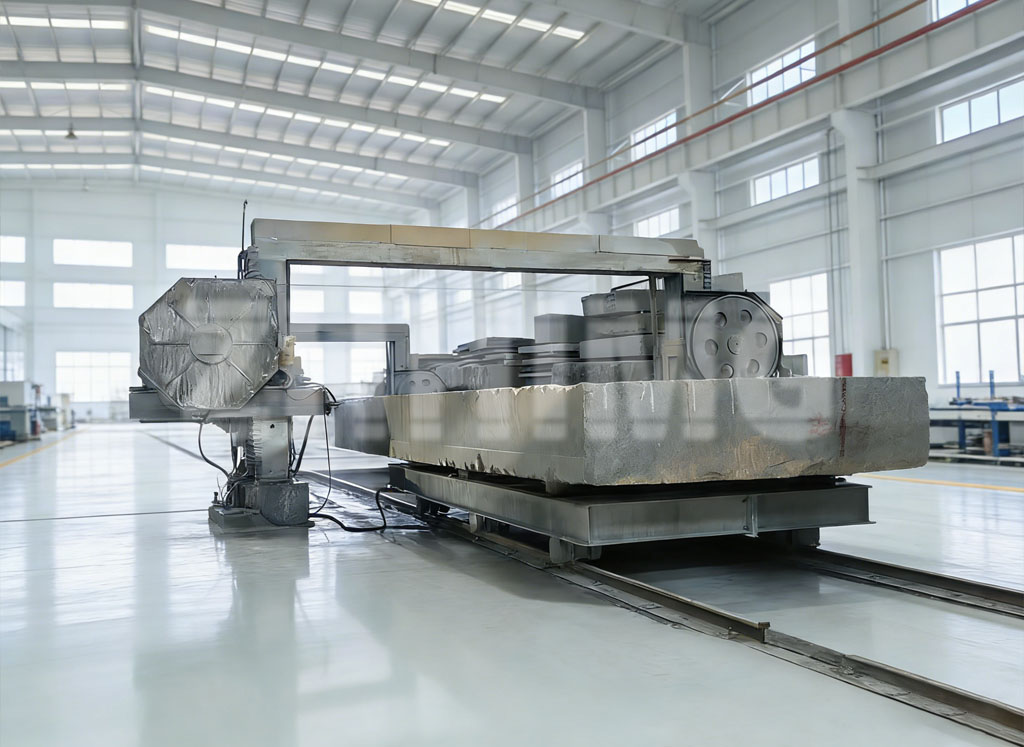
Granite machines using conventional abrasives including diamond grinding wheels and silicon carbide lapping compounds. The material’s Mohs hardness of 6-7 permits efficient material removal while avoiding the extreme wear rates associated with harder materials. Precision hand-lapping—the traditional method for achieving surface plate flatness—remains viable for granite, enabling experienced craftspeople to achieve tolerances measured in fractions of micrometers.
Ceramic materials require diamond tooling throughout machining operations. Diamond’s extreme hardness (Mohs 10) can cut ceramic materials, but diamond tool wear is significant, tooling costs are substantial, and chip formation characteristics differ from metal machining. Unlike metals, ceramics cannot be machined using cutting tools—only abrasive grinding processes apply, limiting achievable tolerances and surface finish options.
This machining difficulty translates directly to cost differences. A precision granite surface plate typically costs 5-10× less than a comparable ceramic component, with shorter lead times and greater manufacturing flexibility. For large-format components exceeding several square meters—which dominate metrology and manufacturing applications—ceramic becomes economically impractical.
Post-machining inspection and adjustment also favor granite. If a granite surface plate develops localized defects or minor flatness deviations, skilled technicians can often correct these issues through localized lapping. Ceramic components with similar issues typically require return to manufacturer or scrapping, as field repair is rarely viable.
4. Thermal Stability and Environmental Adaptation
Both granite and ceramics offer superior thermal stability compared to metallic materials, but their specific characteristics differ in ways that matter for precision applications.
Granite’s near-zero thermal expansion coefficient (<0.001mm/°C) means dimensional changes with temperature are negligible for virtually all practical applications. A granite surface plate maintained at room temperature (20-22°C) will maintain its specified flatness regardless of facility temperature fluctuations within normal operating ranges. This thermal stability eliminates a major source of measurement uncertainty that affects metallic components.
Ceramic materials exhibit variable thermal expansion depending on composition. Zirconia has relatively high thermal expansion (approximately 0.009mm/°C), meaning significant dimensional changes occur with temperature variations. While this can be compensated through thermal modeling and active temperature control, it adds complexity and potential error sources compared to granite’s inherent stability.
Silicon nitride offers better thermal expansion characteristics than zirconia, but the coefficient remains 2.5-3× higher than granite. Additionally, ceramics exhibit micro-cracking and phase transformation risks at temperature extremes or during thermal cycling—concerns that do not affect granite.
The practical significance of these differences appears in long-term stability documentation. Granite surface plates have documented service lives exceeding 50 years while maintaining specified tolerances. Ceramic components in precision applications show greater variability in long-term stability, with some compositions subject to gradual degradation through mechanisms including slow crack growth and thermal fatigue.
5. When Ceramic Components May Be Appropriate
Despite granite’s advantages for most precision applications, specific scenarios may favor ceramic materials. Understanding these scenarios enables informed material selection decisions.
Extreme wear environments benefit from ceramic’s superior hardness and wear resistance. Ceramic gauging components subject to continuous sliding contact may outlast granite alternatives. However, these wear advantages diminish significantly for static or low-contact applications where granite’s other properties provide greater value.
Corrosive environments may favor ceramics’ chemical inertness for certain applications. While granite demonstrates excellent chemical resistance for most industrial environments, highly acidic or caustic conditions may attack granite’s mineral constituents over extended exposures.
Weight-critical applications may benefit from zirconia’s high density if mass is desired for vibration damping, or from silicon nitride’s moderate density if lighter weight is required. However, for most precision equipment foundations, granite’s vibration damping characteristics outweigh density considerations.
Very small precision components where material costs are minor compared to manufacturing complexity may favor ceramics’ superior surface finish capabilities in certain specialized applications. However, for the vast majority of precision metrology and manufacturing applications, the cost-performance ratio strongly favors granite.
Frequently Asked Questions
Which material is better for CMM machine bases in temperature-variable facilities?
Granite is strongly preferred for temperature-variable facilities due to its <0.001mm/°C thermal expansion coefficient. Ceramic materials exhibit higher thermal expansion that introduces measurement errors as facility temperatures vary, requiring either climate control or accepting reduced accuracy.
Can ceramic surface plates achieve flatter surfaces than granite?
In theory, ceramics’ higher hardness could support flatter surfaces. In practice, granite surface plates consistently achieve tighter flatness tolerances through traditional hand-lapping techniques, and granite’s vibration damping maintains flatness better during use. The practical answer favors granite for flatness and stability.
Are ceramic gauges more accurate than granite reference surfaces?
Ceramic and granite gauges can both achieve comparable accuracy levels under controlled conditions. However, granite gauges maintain their accuracy better over time and across temperature variations, making them more reliable for sustained precision applications.
What is the cost difference between granite and ceramic precision components?
Ceramic components typically cost 5-10× more than comparable granite components, with longer lead times due to specialized machining requirements. For large-format precision components, cost differences can exceed 20:1, making ceramics impractical for most applications.
Do ceramic components require special handling or maintenance?
Ceramic components require careful handling to avoid impact damage due to their brittleness. Chipping or crack initiation can lead to catastrophic failure under load. Granite’s fracture toughness provides significantly better impact resistance, simplifying handling and reducing damage risk.
Which material is more sustainable for long-term precision equipment investment?
Granite offers superior long-term value through lower initial cost, minimal maintenance requirements, and documented multi-decade service life. The material’s natural origin and indefinite stability support sustainable equipment investment strategies.
Make the Proven Choice for Ultra-Precision Applications
The material science is clear: for the overwhelming majority of ultra-precision applications in metrology, manufacturing, and inspection, granite delivers superior performance at reasonable cost. ZHHIMG® manufactures precision granite components serving industries from semiconductor equipment to aerospace metrology, medical device manufacturing to precision machining.
Our ISO 9001:2015, ISO 45001, ISO 14001, and CE certified manufacturing facilities produce granite components with flatness tolerances down to 0.5μm/m (Grade 00) and maximum dimensions reaching 20,000mm. With 30+ years of hand-lapping expertise and monthly capacity exceeding 20,000 units, we provide the quality, consistency, and reliability that precision applications demand.
Contact our technical sales team to discuss your precision component material selection. We provide expert consultation and competitive pricing for both standard and custom granite configurations.
Post time: Jun-02-2026