
A granite surface plate is a reference plane for inspection, assembly and calibration. When choosing one, flatness grade is important, but it is not the only factor.
A reliable granite surface plate depends on:
● Correct flatness grade for your application
● High-density black granite with stable physical properties
● Precision lapping in a temperature-controlled environment
● Traceable calibration and clear inspection records
● A supplier with real metrology experience
For most precision inspection tasks, Grade 0 or Grade 00 is commonly used. For workshop assembly or tooling setup, Grade A or Grade B may be acceptable.
What Is a Granite Surface Plate?
A granite surface plate provides a stable, flat reference plane for:
● Precision measurement
● Part inspection
● Assembly alignment
● Calibration checks
● Tooling setup
● CMM and metrology support
Unlike metal plates, high-quality black granite does not rust, has low thermal sensitivity and offers good long-term stability. This makes it widely used in metrology rooms, inspection labs, precision assembly areas and manufacturing environments that require repeatable flatness.
Flatness Grades Explained
Flatness grade defines how much deviation is allowed across the surface plate. Different standards use different naming systems, but the principle is similar: the smaller the allowed deviation, the higher the precision grade.
Common Grade Levels
|
Grade
|
Typical use
|
|
Grade 00 / Laboratory grade
|
Reference inspection, calibration labs, high-precision metrology
|
|
Grade 0 / Inspection grade
|
Precision inspection, CMM support, gauge room use
|
|
Grade A / Toolroom grade
|
Workshop inspection, assembly, setup
|
|
Grade B / Reference grade
|
General workshop use, less critical layout tasks
|
Exact tolerance values depend on plate size and the applicable standard. Always confirm the grade, size and tolerance formula with your supplier before ordering.
DIN 876 and GGG-P-463C: What Buyers Should Know
DIN 876
DIN 876 is a widely referenced German standard for granite surface plates. It is commonly used in European metrology environments and by buyers who require clearly defined flatness grades.
When DIN 876 is specified, the supplier should confirm:
● Plate size
● Grade requirement
● Allowed flatness tolerance
● Inspection method
● Calibration documentation
GGG-P-463C
GGG-P-463C is a U.S. federal specification historically used for surface plates. Many buyers still reference it when defining inspection requirements.
Because standards may be updated or replaced over time, always confirm the current applicable version with your quality team or metrology department.
Practical tip: Do not only ask “Which grade?” Also ask “Which standard, which size, and what is the maximum allowed flatness deviation?”
Why Material Quality Matters More Than Many Buyers Expect
Not all black granite surface plates are equal.
Some low-cost suppliers use marble or lower-density stone to reduce cost. Marble may look similar, but it is generally softer, less stable and more sensitive to environmental changes. For precision metrology, this can increase long-term risk.
ZHHIMG uses high-density black granite with stable physical properties. Typical density is around 3,100 kg/m³, which helps improve mass stability and long-term flatness retention.
Key material factors to check:
● Density and grain structure
● Hardness and wear resistance
● Absence of cracks, voids or weak layers
● Stability after machining and lapping
● Suitability for temperature-controlled inspection environments
A good surface plate starts with good stone, not just final polishing.
How Granite Surface Plates Are Made
Precision lapping is the core process that determines flatness stability.
At ZHHIMG, granite surface plates are processed in temperature-controlled workshops to reduce environmental influence during measurement and lapping. Our experienced technicians use precision lapping methods combined with calibrated inspection equipment to achieve stable surface accuracy.
Important manufacturing controls include:
● Stable material storage before processing
● Temperature- and humidity-controlled lapping environment
● Precision lapping by experienced technicians
● Multi-point flatness verification
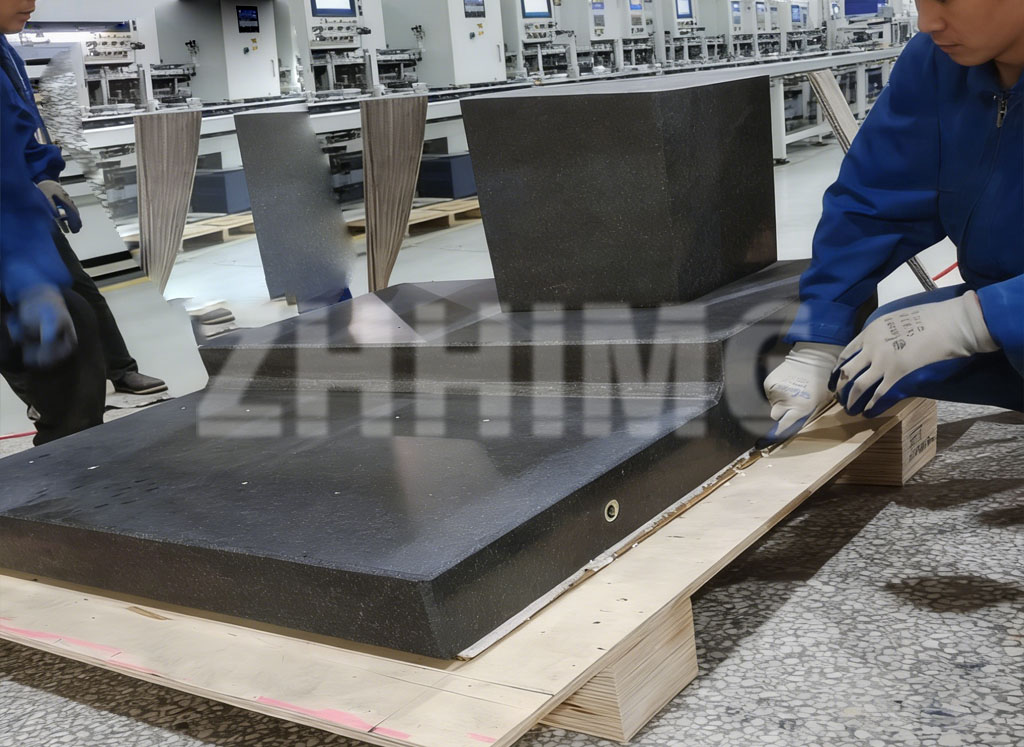
● Final cleaning, packaging and protection
Large plates and custom granite components require even stricter process control, because thermal change, vibration and handling can all affect final accuracy.
How Surface Plates Are Inspected and Calibrated
A surface plate is only as reliable as its inspection process.
Common inspection items include:
● Flatness across the working surface
● Surface quality
● Edge condition
● Stability after lapping
● Compliance with the agreed grade or standard
ZHHIMG supports inspection and calibration with precision instruments such as electronic levels, dial indicators, digital calipers and laser interferometers. Calibration certificates can be supported through recognized metrology institutions, and measurement traceability can be arranged according to customer requirements.
For buyers: Always ask whether the supplier can provide inspection records, calibration support and clear acceptance criteria before shipment.
How to Choose the Right Grade for Your Application
|
Application
|
Recommended grade
|
|
Calibration lab / reference inspection
|
Grade 00 or Grade 0
|
|
CMM support / metrology room
|
Grade 0
|
|
Precision assembly / tooling setup
|
Grade A
|
|
General workshop use
|
Grade B
|
|
Custom granite base or inspection fixture
|
Confirm by drawing and function
|
If you are unsure which grade to choose, share your application, environment and required accuracy with your supplier. A professional manufacturer should help you match the plate to your real use case.
Common Mistakes When Buying Granite Surface Plates
1. Choosing grade without considering plate size
Flatness tolerance is related to size. A small plate and a large plate cannot be judged by the same number.
2. Ignoring material quality
A low price may mean marble, lower-density stone or insufficient lapping time.
3. Asking only for “micron-level accuracy”
“Micron-level” is not a complete specification. You need grade, standard, size and inspection method.
4. Forgetting environmental conditions
Temperature, vibration and installation surface affect real-world performance.
5. Not confirming calibration requirements
If you need traceable calibration, confirm it before production, not after delivery.
How to Evaluate a Granite Surface Plate Supplier
When comparing suppliers, check:
● Material source and density control
● Processing capacity for required size and grade
● Temperature-controlled manufacturing environment
● Inspection equipment and calibration support
● Experience in metrology, CMM, semiconductor or laser applications
● Quality certifications and export experience
● Clear technical communication and after-sales support
ZHHIMG manufactures precision granite components, granite surface plates, granite measuring tools and granite bases in temperature-controlled workshops. Our team is trained in international metrology standards and supports precision inspection requirements for global customers.
You can review our capabilities on the Granite Surface Plates and Precision Granite Components pages.
Maintenance Tips for Longer Service Life
To keep a granite surface plate stable:
● Place it on a solid, level support frame.
● Avoid strong vibration and direct sunlight.
● Keep the working area clean and dry.
● Use gentle cleaning methods; avoid corrosive chemicals.
● Rotate usage areas to reduce local wear.
● Schedule regular recalibration based on usage frequency.
● Handle edges carefully to prevent chipping.
A well-maintained surface plate can remain a reliable reference for many years.
FAQ
What is the best grade for a granite surface plate? For precision inspection and calibration, Grade 00 or Grade 0 is commonly used. For workshop assembly, Grade A may be sufficient.
Is DIN 876 still used? DIN 876 is widely referenced in many metrology environments. Always confirm the current applicable version and tolerance requirements with your quality department.
Can granite surface plates replace metal plates? In many precision applications, yes. Granite offers good stability, low thermal sensitivity and no rust risk. However, the final choice depends on application and environment.
How often should a surface plate be recalibrated? It depends on usage, environment and accuracy requirements. Many users recalibrate annually or after heavy use, impact or relocation.
Post time: Nov-16-2026