
A granite surface plate is the reference surface for inspection and calibration. Its grade tells you how flat it is allowed to be. Buyers in different regions use different standards, so the same plate can be labeled “Grade 00″, “Grade AA” or “Grade 0″. This guide explains the main grading systems and how to choose the right one.
Why Surface Plate Grades Matter
The grade sets the maximum allowed deviation from perfect flatness. A tighter grade costs more because it needs more lapping time and a better measurement environment. Choosing too low a grade hurts measurement accuracy. Choosing too high a grade wastes budget.
The Main Standards
| Standard | Region | Grade names | Finest to coarsest |
|---|---|---|---|
| DIN 876 | Germany, Europe, widely used in Asia | 00, 0, 1, 2 | 00 → 2 |
| ASME B89.3.7 | USA | AA, A, B | AA → B |
| GGG-P-463C | USA (older federal specification, replaced by ASME B89.3.7) | AA, A, B | AA → B |
| ISO 8512-2 | International | Tabulated grades by plate size | See the standard |
| JIS, GB | Japan, China | Own grade systems | See the standards |
Note that DIN 876 and ASME grades do not map one-to-one. Their tolerances are calculated in different ways, so always check the actual numbers.
How ASME and GGG-P-463C Grades Work
The US standards use letter grades:
- • Grade AA is the laboratory grade.
- • Grade A is the inspection grade.
- • Grade B is the toolroom grade.
Under GGG-P-463C, the Grade AA overall flatness tolerance is calculated as 40 + D²/25 microinches, where D is the plate’s diagonal or diameter in inches. Grade A is twice the Grade AA tolerance, and Grade B is four times. ASME B89.3.7 revises GGG-P-463C and adds SI units, traceability and measurement uncertainty requirements.
For example, a common 24 × 36 inch plate has these overall flatness tolerances:
| Grade | Overall flatness |
|---|---|
| AA | 100 µin (about 2.5 µm) |
| A | 200 µin (about 5 µm) |
| B | 400 µin (about 10 µm) |
Published tables list rounded commercial values, so they do not always match the formula exactly.
How DIN 876 Grades Work
DIN 876 grades granite plates as 00, 0, 1 and 2, from finest to coarsest. The flatness tolerance depends on plate size, and a larger plate of the same grade has a larger allowed deviation. Check the current standard text or ask your supplier for the exact value for your plate size before you order.
Overall Flatness vs Local Flatness
A good specification covers more than one number:
- • Overall flatness is the deviation across the whole working surface.
- • Local flatness (repeat reading) is the deviation within a small area, which affects repeatability.
- • Surface condition and edges affect wear and handling.
How to Choose the Right Grade
| Application | Typical grade level |
|---|---|
| Calibration lab, master reference | Finest grade (DIN 00, ASME AA) |
| Quality inspection room | Mid-high grade (DIN 0, ASME A) |
| Shop floor, marking out, fixtures | Standard grade (DIN 1, ASME B) |
Also consider:
- • The accuracy of the parts you inspect. The plate should be clearly more accurate than your tolerance.
- • The temperature and vibration level of your room. A very fine grade is wasted in an unstable environment.
- • Plate size and thickness, which affect rigidity.
- • Whether you need a calibration certificate with traceability.
What to Ask Your Supplier
- 1.Which standard and grade does the plate meet?
- 2.What are the flatness values for my exact plate size?
- 3.Do you provide an inspection report and calibration certificate?
- 4.What instruments are used (electronic levels, laser interferometers, autocollimators)?
- 5.What is the material and its density?
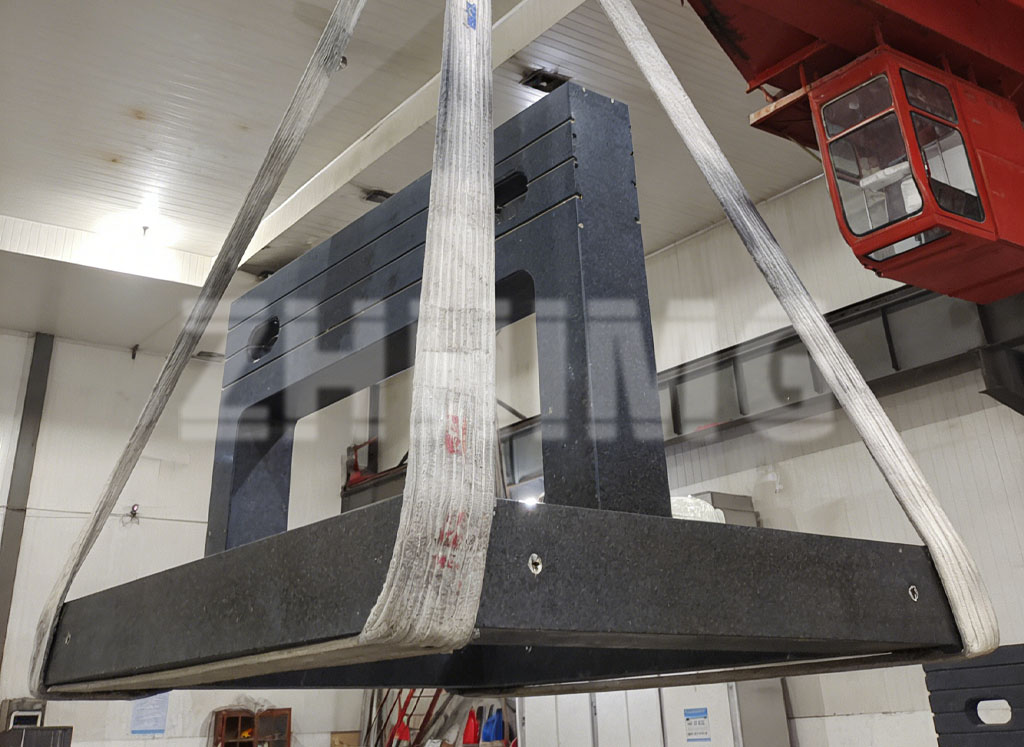
ZHHIMG® makes granite surface plates, square rulers, straight rulers, V blocks and parallels from high-density black granite (approx. 3,100 kg/m³). Our plates are measured with calibrated instruments, with traceability to national standards, and finished by experienced lapping craftsmen.
FAQ
What is the difference between Grade AA and Grade 00?
Both are the finest grade in their own standards, but their tolerance calculations differ. Compare the actual micrometer values.
Is GGG-P-463C still used?
Many buyers still cite it, but ASME B89.3.7 revises it.
How often should a surface plate be calibrated?
It depends on usage and environment. Many labs calibrate at regular intervals, such as once a year. Follow your quality system.
Can I request a custom size or grade?
Yes. Send us your size, grade, quantity and standard.
Request a Quote
Tell us the standard, grade and size you need, and we will quote a granite surface plate with an inspection report.
Post time: Nov-25-2026