
In precision manufacturing, quality control and accuracy are non-negotiable. Inspection tables, often referred to as surface plates, are critical tools in ensuring dimensional accuracy, alignment, and proper calibration of parts and equipment. Among the most common materials used for inspection tables are granite and cast iron. While both materials provide excellent stability and durability, understanding their properties, advantages, and limitations is essential to selecting the right option for your specific application.
This article will explore granite vs cast iron inspection tables, highlighting their differences, benefits, and applications to help manufacturers, engineers, and quality assurance professionals make informed decisions.
What Is an Inspection Table?
An inspection table is a flat, stable surface used as a reference for precision measurement and inspection tasks. These tables provide a foundation for tools such as height gauges, dial indicators, coordinate measuring machines (CMMs), and other precision instruments.
The primary function of an inspection table is to ensure a rigid, vibration-free, and flat surface that maintains dimensional accuracy over time. Any deviation in flatness can lead to inaccurate measurements and compromised product quality, making the choice of material critical.
Key Materials for Inspection Tables
Inspection tables are commonly made from two materials:
- Granite – a natural stone known for its hardness, stability, and resistance to corrosion.
- Cast Iron – a man-made metal alloy celebrated for its strength, durability, and load-bearing capacity.
Both materials have been used in industrial applications for decades, but they differ significantly in terms of performance, maintenance, and suitability for different environments.
Physical Properties Comparison: Granite vs Cast Iron
Granite
Granite inspection tables are manufactured from high-density natural stone, often with precise machining and surface grinding to achieve exceptional flatness.
Key properties of granite include:
- Hardness and Wear Resistance: Granite’s mineral composition makes it extremely hard, resisting scratches, dents, and deformation.
- Thermal Stability: Granite has a low coefficient of thermal expansion, meaning temperature changes have minimal impact on its dimensions.
- Corrosion Resistance: Granite does not rust or corrode, making it ideal for humid or chemically aggressive environments.
- Vibration Damping: The dense structure of granite absorbs vibrations effectively, improving measurement accuracy.
Cast Iron
Cast iron inspection tables are produced by casting iron alloys into precise molds, followed by machining and grinding.
Key properties of cast iron include:
- High Strength and Load-Bearing Capacity: Cast iron can support heavy components without bending or sagging.
- Good Vibration Damping: Cast iron is also excellent at damping vibrations, although slightly less than granite.
- Machinability: Cast iron can be machined to high precision and can be repaired or resurfaced if necessary.
- Sensitivity to Environment: Cast iron is susceptible to corrosion if not properly coated or maintained in humid conditions.
Advantages of Granite Inspection Tables
Granite inspection tables have become increasingly popular in modern metrology due to their low maintenance and high performance.
- Exceptional Flatness and Long-Term Accuracy
Granite naturally maintains flatness over time. Unlike cast iron, it does not deform easily under continuous use, providing long-term measurement reliability. - Minimal Thermal Expansion
Granite’s thermal stability ensures that temperature fluctuations in a factory environment do not significantly affect measurement results. - Corrosion-Free Surface
In contrast to cast iron, granite is impervious to rust and many chemicals, reducing the need for protective coatings or frequent maintenance. - Ease of Handling and Installation
Granite tables are generally lighter than equivalent cast iron tables, making them easier to transport and install, especially for medium-sized laboratories or workshops. - Vibration Absorption
For precision measurement, especially when using sensitive instruments, granite’s vibration damping properties provide more stable readings.
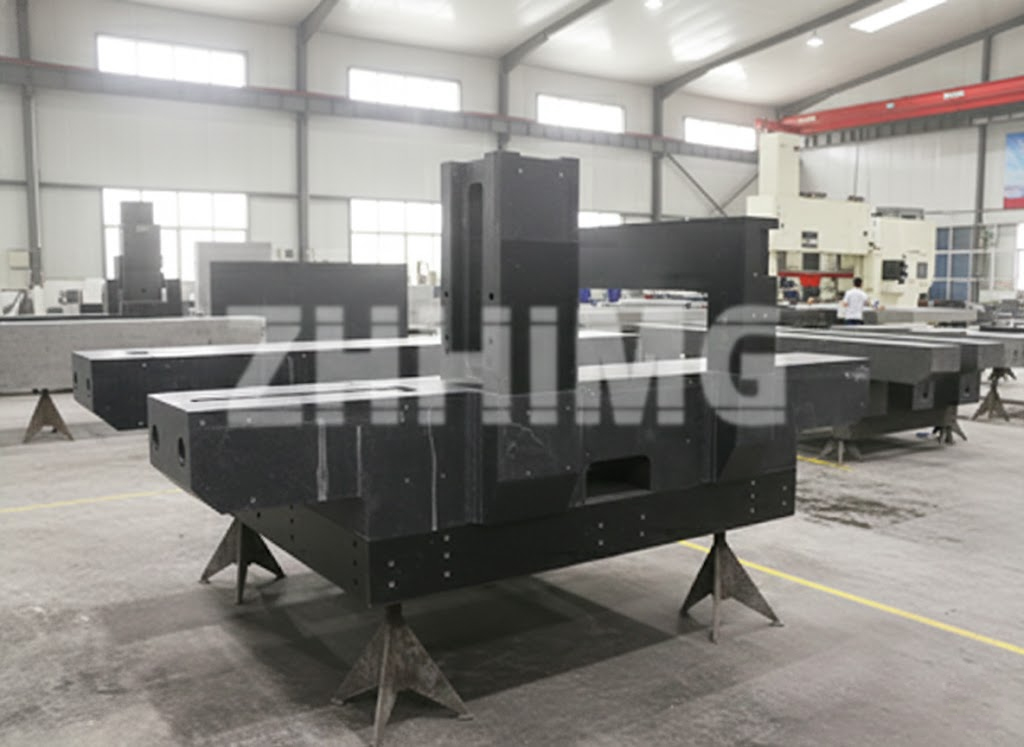
Advantages of Cast Iron Inspection Tables
Despite granite’s rise, cast iron remains a reliable choice in certain industrial settings.
- High Load-Bearing Capacity
Cast iron inspection tables can handle extremely heavy components, making them suitable for large-scale manufacturing, machining centers, and metal fabrication industries. - Repairability
If a cast iron table suffers surface wear or minor damage, it can often be resurfaced or re-ground, extending its usable life. Granite, once damaged, is much harder to repair. - Cost-Effectiveness for Large Tables
For very large inspection tables, cast iron may offer a more economical solution compared to massive granite slabs. - Machinability and Adaptability
Cast iron tables can be customized with holes, slots, and fixtures for specialized applications without compromising overall stability.
Limitations and Considerations
No material is perfect, and both granite and cast iron have limitations that should be considered.
Granite Limitations
- Brittleness: Granite can chip or crack if subjected to heavy impact.
- Size Restrictions: Extremely large granite tables can be heavy and difficult to transport.
- Limited Load Capacity: While stable, granite is not as strong as cast iron for very heavy components.
Cast Iron Limitations
- Corrosion Susceptibility: Requires protective coatings and regular maintenance to prevent rust.
- Thermal Expansion: More sensitive to temperature changes, potentially affecting measurement precision in environments with high thermal fluctuation.
- Weight: Extremely heavy, complicating installation and relocation.
Applications: Which Material Suits Your Needs?
Choosing between granite and cast iron inspection tables depends largely on application requirements, environmental conditions, and budget constraints.
When to Choose Granite
- High-Precision Measurement: Ideal for metrology labs, calibration centers, and electronics assembly.
- Corrosive or Humid Environments: Perfect for laboratories or workshops where rust or chemical exposure is a concern.
- Vibration-Sensitive Applications: When precision instruments are highly sensitive to vibrations, granite provides superior damping.
When to Choose Cast Iron
- Heavy Load Applications: Suitable for large machinery, heavy fabrication, and metalworking.
- Large-Scale Manufacturing: Economical for massive inspection tables where cost efficiency is crucial.
- Customizable Fixtures: When tables require drilling, slots, or specialized mounting options.
Maintenance Tips for Longevity
Regardless of material, proper maintenance extends the lifespan and preserves the accuracy of inspection tables.
Granite Maintenance
- Clean with mild soap and water; avoid harsh chemicals.
- Periodically check flatness using gauge blocks or laser measurement.
- Handle carefully to prevent chipping.
Cast Iron Maintenance
- Apply anti-rust coatings and lubricants regularly.
- Resurface the table if minor wear affects flatness.
- Avoid prolonged exposure to moisture.
Future Trends in Inspection Table Materials
Emerging materials and manufacturing techniques are shaping the future of inspection tables. Some manufacturers are exploring composite materials, mineral castings, and engineered stone to combine the benefits of granite and cast iron—offering high stability, corrosion resistance, and vibration damping in one solution.
Additionally, automation and smart metrology systems increasingly require surfaces that maintain stability under continuous operational stress, further driving innovation in material selection.
Conclusion
When comparing granite vs cast iron inspection tables, there is no one-size-fits-all answer. The decision hinges on your specific application:
- Choose granite for high-precision measurement, corrosion resistance, and superior vibration damping.
- Choose cast iron for heavy-duty industrial use, load-bearing requirements, and customizable surfaces.
By understanding the properties, advantages, and limitations of each material, engineers and quality managers can select inspection tables that maximize accuracy, durability, and operational efficiency.
In today’s precision-driven manufacturing environment, the right inspection table can significantly impact product quality, process reliability, and overall productivity. Whether you prioritize precision, strength, or maintenance efficiency, understanding the nuances of granite and cast iron surfaces ensures your investment delivers lasting value.
Post time: May-06-2026