
In the world of precision manufacturing and dimensional metrology, few tools carry the importance of a surface plate. Whether you operate a calibration laboratory, manage a quality control department, or run a busy machine shop, the flatness and stability of your measurement surface directly determines the reliability of every inspection result you produce. Among the various options available, granite surface plates and cast iron surface plates stand out as the two dominant choices for professionals seeking dependable reference planes for measurement, layout, and calibration work.
This comprehensive comparison examines both materials in depth, helping engineers, quality managers, and manufacturing professionals make informed decisions about which surface plate best suits their specific operational requirements. The goal is not to declare a universal winner, but to understand the distinct strengths and limitations each material brings to precision measurement applications.
The Foundation of Precision: Why Surface Plate Selection Matters
A surface plate serves as the primary reference from which virtually all dimensional measurements originate. When a technician places a precision instrument on its surface or uses the plate as a reference for checking part flatness, the inherent qualities of that plate become inseparable from the measurement itself. This relationship between the reference surface and the measurement result is why surface plate selection deserves careful consideration rather than casual indifference.
Modern manufacturing tolerances have reached levels that were unimaginable just a few decades ago. Where once measurements in hundredths of a millimeter were considered exceptional precision, today’s aerospace, semiconductor, and medical device industries routinely require accuracy measured in micrometers or even smaller increments. In this environment, the performance characteristics of your measurement surface can no longer be treated as secondary concerns. Thermal stability, vibration response, wear resistance, and long-term dimensional consistency all play critical roles in maintaining the integrity of your measurement processes.
The choice between granite and cast iron represents more than a simple material selection. It reflects an engineering philosophy regarding how to achieve and maintain measurement accuracy under the specific conditions of your workplace. Understanding these philosophies requires examining both materials from multiple perspectives, including their fundamental properties, practical advantages, maintenance requirements, and suitability for different industrial applications.
Understanding Granite Surface Plates: Nature’s Precision Instrument
Granite surface plates have emerged as the preferred choice for precision metrology applications over the past several decades, and for good reason. High-quality black granite, the material of choice for these plates, is a natural igneous rock formed under immense geological pressure over millions of years. This formation process creates a dense crystalline structure with exceptional dimensional stability that artificial materials struggle to match.
The most significant advantage of granite lies in its remarkable thermal stability. Granite exhibits a coefficient of thermal expansion that is approximately one-third that of cast iron, typically ranging between 4.5 and 8 x 10^-6 per degree Celsius compared to cast iron’s 10 to 12 x 10^-6 per degree Celsius. This inherent property means that granite surface plates maintain their flatness far more reliably in environments where temperature fluctuations are unavoidable. For facilities where full thermal control proves impractical or prohibitively expensive, this characteristic alone can make granite the superior choice for maintaining measurement consistency throughout the workday.
Beyond thermal stability, granite offers a combination of properties that collectively support precision measurement. The material is inherently non-magnetic, meaning it will not interfere with magnetic measurement tools or attract ferromagnetic debris that could affect measurement accuracy. Granite also resists corrosion completely, unlike metallic alternatives that require protective coatings or regular oiling to prevent rust. This chemical inertness extends the service life of granite plates significantly while reducing maintenance requirements and associated costs.
Granite’s vibration damping characteristics deserve particular attention from professionals working in environments with nearby machinery. Unlike metals, which tend to transmit vibrations throughout their structure, granite absorbs and dissipates vibrational energy effectively. This damping property creates a more stable platform for sensitive inspection tasks, reducing measurement noise and improving repeatability. For quality control departments operating alongside production equipment, this characteristic can meaningfully improve measurement confidence.
When properly manufactured from carefully selected raw materials, granite surface plates can maintain their accuracy for extended periods without intervention. Many calibration laboratories report that high-quality granite plates remain within specification for five to eight years or longer under normal use conditions. This long-term stability supports the traceability requirements essential for ISO 17025 compliance and other quality management standards that govern modern metrology operations.
However, granite is not without limitations. The material’s hardness, while contributing to its wear resistance, also means that granite cannot be resurfaced through traditional scraping methods. When a granite surface plate develops significant wear, scratches, or damage from impact, the only solution is typically complete replacement. Additionally, granite’s brittle nature means that heavy impact from dropped tools or workpieces can cause chips or cracks that compromise the plate’s integrity. These factors suggest that granite surface plates require careful handling and a controlled working environment to maximize their service life and measurement performance.
Understanding Cast Iron Surface Plates: Traditional Strength for Demanding Environments
Cast iron surface plates have served industrial measurement applications for well over a century, and they remain relevant in many manufacturing contexts today. The material’s long history reflects genuine strengths that continue to make cast iron the appropriate choice for certain applications, particularly those involving heavy loads, rough handling, or cost-sensitive procurement decisions.
The primary advantage of cast iron lies in its exceptional toughness and load-bearing capacity. Cast iron can withstand substantial impact and mechanical stress without chipping or cracking, making it suitable for environments where surface plates may be subject to less careful treatment. When equipped with T-slots or mounting provisions, cast iron plates can accommodate heavy workpieces and facilitate efficient clamping and positioning operations that would be impractical on smoother granite surfaces.
Cast iron offers good rigidity and can be precision-scraped to achieve excellent flatness. Skilled craftsmen can manually scrape cast iron surfaces to achieve Grade 00 or even higher accuracy levels, creating reference surfaces of remarkable precision. This repairability represents a meaningful advantage over granite, as worn or damaged cast iron plates can often be restored to specification through professional scraping rather than replacement.
The vibration damping properties of cast iron, while different from granite, also prove beneficial in certain contexts. The graphite flakes within gray cast iron structure create natural vibration absorption pathways that reduce resonant amplification. For layout and marking operations where some vibration transmission is acceptable, this characteristic supports effective work without the need for specialized vibration isolation measures.
From a procurement perspective, cast iron surface plates typically offer lower initial costs compared to equivalent granite plates of the same size and accuracy grade. For organizations with budget constraints or those outfitting multiple workstations, this cost advantage can be significant. Additionally, cast iron’s familiarity and established supply chain mean that replacement plates and accessories are readily available from numerous manufacturers and distributors.
The maintenance requirements for cast iron surface plates, however, demand ongoing attention and resource allocation. Cast iron is inherently susceptible to corrosion, and unprotected surfaces will develop rust within hours when exposed to humid air or workshop environments. Preventing corrosion requires regular oiling with protective compounds, careful cleaning to remove moisture and debris, and periodic inspection to identify developing problems before they affect measurement accuracy. These maintenance activities consume time and materials that might be otherwise devoted to production work.
Thermal sensitivity presents another consideration for cast iron surface plates. The material’s higher coefficient of thermal expansion means that temperature changes produce more noticeable dimensional variations compared to granite. In environments without temperature control, this can introduce measurement uncertainties that require compensation or correction. Additionally, cast iron’s thermal conductivity means that localized heating from hands, warm workpieces, or nearby heat sources can create thermal gradients across the plate surface, further complicating precision measurement.
Comparing Core Performance Characteristics
When evaluating these two materials for specific applications, several key performance dimensions merit detailed comparison.
Thermal Stability: Granite demonstrates substantially superior thermal stability, maintaining flatness across a wider temperature range with less dimensional change. Cast iron, while functional in controlled environments, requires more stringent temperature management to achieve equivalent precision. For applications in uncontrolled factory floors or facilities without precision climate control, granite’s thermal advantages become particularly pronounced.
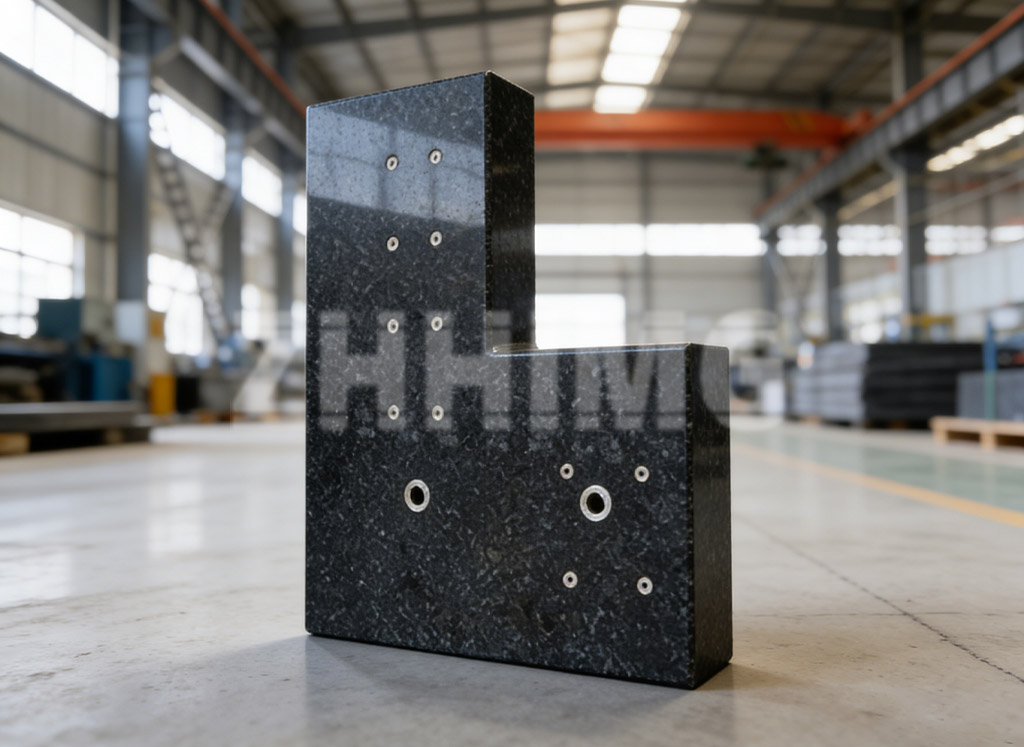
Dimensional Stability Over Time: Both materials can achieve excellent initial flatness, but their long-term stability trajectories differ. Granite maintains its machined geometry with minimal drift when protected from physical damage. Cast iron may develop localized wear patterns, surface irregularities, or dimensional changes that gradually affect measurement accuracy, necessitating periodic inspection and potential resurfacing.
Wear Resistance: Granite’s hardness provides excellent resistance to scratches and surface wear from normal measurement activities. When wear does occur on granite, it tends to be distributed evenly rather than concentrated in high-use areas. Cast iron surfaces, while initially hard, can develop scratches and wear patterns more readily, and the material’s susceptibility to corrosion compounds wear-related surface degradation over time.
Maintenance Requirements: Granite surface plates require only routine cleaning with soft materials and mild cleaning agents. No protective coatings or regular oiling are necessary. Cast iron demands a consistent maintenance regimen including cleaning, drying, and oiling to prevent corrosion, along with periodic professional inspection and potential resurfacing. The maintenance burden for cast iron is substantially higher.
Repairability: Cast iron’s ability to be scraped and resurfaced by skilled technicians represents a meaningful advantage when long-term maintenance costs are evaluated. Damaged cast iron plates can often be restored to original accuracy specifications multiple times over their service life. Granite, once damaged beyond acceptable limits, typically requires complete replacement.
Load Capacity: Cast iron demonstrates superior impact resistance and can support heavier static loads without damage. For applications involving heavy workpieces, rough handling, or potential tool drops, cast iron’s toughness provides practical advantages that offset other considerations.
Environmental Resistance: Granite is completely immune to corrosion, chemical attack, and moisture damage. Cast iron requires active protection against these factors. In humid climates, outdoor applications, or environments with corrosive substances, granite’s environmental robustness becomes a decisive advantage.
Practical Selection Guidance for Different Industries
The choice between granite and cast iron ultimately depends on the specific context of each application. Different industries and operational requirements favor different materials based on their priorities and constraints.
Calibration Laboratories and Metrology Centers: These facilities, where measurement traceability and long-term accuracy are paramount, almost universally prefer granite surface plates. The material’s excellent thermal stability, minimal maintenance requirements, and exceptional long-term flatness retention align perfectly with the demands of precision calibration work. Organizations operating ISO 17025 accredited laboratories typically specify granite as their standard surface plate material.
Quality Control Departments in Manufacturing: Where measurement accuracy must be balanced against production pace and environmental conditions, granite surface plates offer compelling advantages. Their resistance to corrosion eliminates concerns about workshop humidity or coolant contamination, while their vibration damping properties help maintain measurement consistency despite nearby machinery. Many modern quality control departments have transitioned entirely to granite for these reasons.
Machine Shops and Toolrooms: For layout work, marking operations, and general inspection where robustness may be valued alongside accuracy, cast iron surface plates remain practical choices. The ability to repair worn surfaces through scraping and the material’s tolerance for heavy use make cast iron suitable for environments where surface plates face less careful treatment. T-slotted cast iron plates facilitate efficient workpiece positioning that benefits many shop floor operations.
Aerospace and Medical Device Manufacturing: These industries, with their demanding accuracy requirements and stringent quality standards, consistently specify granite surface plates. The material’s precision, stability, and traceability support compliance with regulatory requirements and customer specifications that leave little margin for measurement uncertainty.
Heavy Manufacturing and Fabrication: Where surface plates support large weldments, castings, or other heavy workpieces, cast iron’s load capacity and impact resistance may outweigh other considerations. However, even in these environments, organizations increasingly recognize the long-term benefits of granite for precision measurement tasks, reserving cast iron for layout and positioning operations where ultimate accuracy is less critical.
Cost Considerations Beyond Initial Purchase Price
Evaluating surface plate costs requires looking beyond initial procurement prices to consider total cost of ownership over the expected service life. While cast iron surface plates often carry lower purchase prices, the ongoing maintenance requirements for corrosion prevention, periodic inspection, and potential resurfacing accumulate to meaningful amounts over years of operation. Additionally, downtime associated with maintenance activities and the measurement uncertainty that degraded surfaces introduce represent hidden costs that may exceed apparent maintenance expenses.
Granite surface plates typically command higher initial prices, but their minimal maintenance requirements and extended service intervals often result in lower total cost of ownership over five to ten year periods. For organizations that calculate actual cost per measurement rather than simple procurement cost, granite frequently proves more economical despite the higher upfront investment.
Environmental and Workplace Considerations
Modern organizations increasingly consider the environmental and workplace safety implications of their equipment choices. Cast iron surface plates require regular oiling with protective compounds that can introduce slippery residues, unpleasant odors, and potential skin irritation concerns. The solvents and cleaning agents sometimes needed to remove old oil deposits or corrosion products add further workplace health considerations.
Granite surface plates eliminate these concerns entirely. No hazardous coatings or chemical treatments are necessary, and cleaning requires only mild detergents and soft materials. The absence of oil-based residues contributes to cleaner work surfaces and improved air quality in inspection areas. For organizations pursuing sustainability objectives or seeking to minimize chemical use, granite’s environmental profile offers meaningful advantages.
Conclusion: Making an Informed Decision
The comparison between granite and cast iron surface plates reveals two materials with genuinely different characteristics suited to different applications. Neither material is universally superior; the appropriate choice depends entirely on specific operational requirements, environmental conditions, and organizational priorities.
Granite surface plates offer exceptional precision, thermal stability, corrosion resistance, and minimal maintenance requirements that make them the preferred choice for calibration laboratories, quality control departments, and precision manufacturing applications. Their long-term dimensional stability and accuracy retention support the traceability and consistency that modern metrology demands.
Cast iron surface plates provide practical advantages in toughness, repairability, and initial cost that continue to make them relevant for shop floor applications, heavy manufacturing, and cost-sensitive procurement situations. Their ability to withstand impact and support heavy loads, combined with traditional scraping repair methods, suits environments where surface plates face demanding physical conditions.
For most precision measurement applications, however, the evidence increasingly favors granite. The material’s combination of dimensional stability, thermal performance, and minimal maintenance requirements delivers better long-term value in applications where measurement accuracy truly matters. As manufacturing tolerances continue to tighten and quality expectations rise, granite surface plates have become the benchmark against which other measurement reference options are evaluated.
Professionals selecting surface plates should carefully assess their specific requirements, consult with experienced suppliers, and consider not just immediate needs but long-term operational implications. The right surface plate, properly selected and maintained, will serve as a reliable measurement foundation for years to come, supporting the quality and precision that modern manufacturing demands.
In precision measurement, the quality of your reference surface defines the quality of every result you build upon it. Choose wisely, and your measurement capabilities will serve your organization well for many years of productive service.
Post time: Apr-24-2026