
In any precision laboratory, the surface plate is more than just a flat platform—it is the fundamental reference for measurement accuracy. Whether used for calibration, inspection, or assembly, the reliability of your results depends heavily on the stability and performance of this critical piece of lab equipment.
When evaluating options, professionals often face the same question: Granite vs Cast Iron—Which is better? This is not simply a matter of preference, but a technical decision that affects accuracy, maintenance, and long-term operational efficiency.
This article provides a detailed and practical surface plate comparison, helping you make an informed choice based on real-world lab requirements.
Understanding the Role of Surface Plates in Modern Labs
Surface plates are essential in industries where precision is non-negotiable. From semiconductor manufacturing to aerospace inspection, they provide a stable datum for dimensional verification.
In modern metrology environments, even micron-level deviations can lead to costly errors. As a result, the material of the surface plate plays a decisive role in ensuring consistent measurement results over time.
The two dominant materials—granite and cast iron—have evolved alongside industrial needs, but their performance characteristics differ significantly under real operating conditions.
Granite vs Cast Iron: A Material Perspective
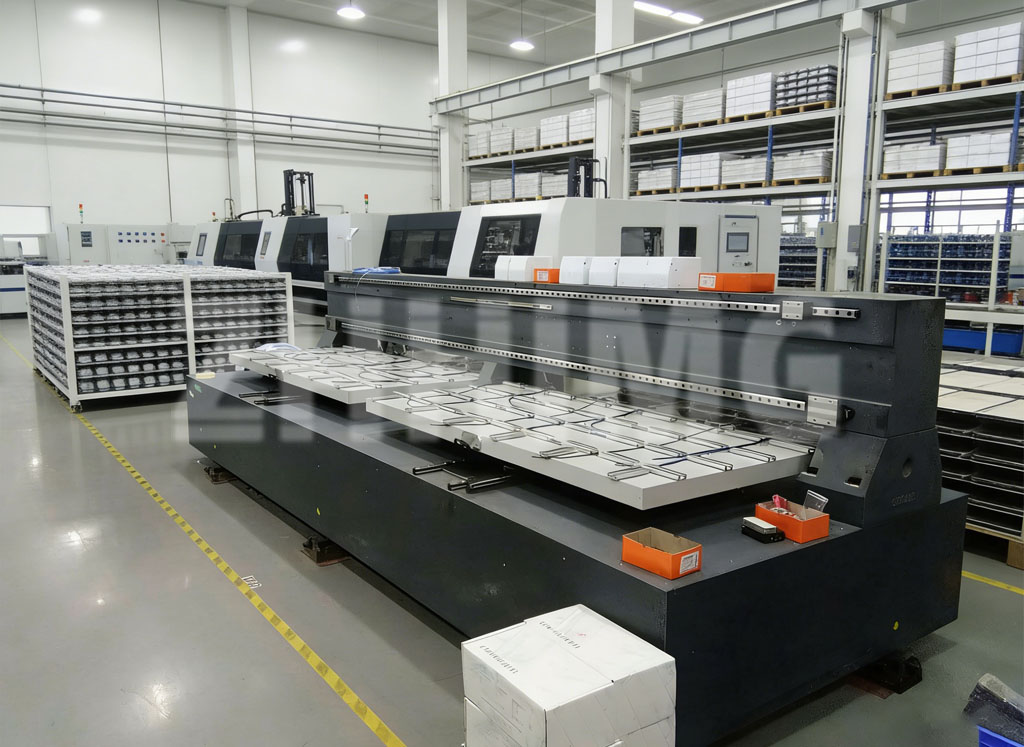
Granite surface plates are manufactured from dense natural stone, typically selected for its fine grain structure and uniform composition. This material is inherently stable, non-metallic, and resistant to environmental influences. Through precision lapping processes, granite plates achieve extremely high levels of flatness and surface integrity.
Cast iron surface plates, on the other hand, are produced through casting and machining processes. Historically, they have been widely used in workshops due to their mechanical strength and ease of modification. Their metallic nature, however, introduces certain limitations when used in high-precision lab environments.
The distinction between these materials becomes clearer when examined through their performance in real applications.
Accuracy Stability in Real Working Conditions
Accuracy is the primary reason for using a surface plate, and stability over time is what determines its true value. Granite excels in maintaining its flatness because it is free from internal stresses that often affect metals. It does not warp easily and remains dimensionally stable even after prolonged use.
Cast iron, by contrast, can gradually deform due to residual stresses from the casting process. Temperature changes and mechanical loads can accelerate this effect, requiring more frequent recalibration. In high-precision labs where consistency is critical, even slight deformation can compromise measurement reliability.
For laboratories focused on repeatability and long-term precision, granite provides a more dependable reference surface.
Wear Resistance and Surface Integrity
In daily operation, surface plates are subjected to continuous contact with gauges, components, and measuring instruments. Over time, this interaction leads to wear, which directly affects accuracy.
Granite has a naturally high hardness and resists wear exceptionally well. When wear does occur, it tends to be uniform, preserving the overall flatness of the surface. Importantly, granite does not form burrs, which can interfere with precise measurements.
Cast iron is comparatively softer and more prone to scratches and localized wear. Burr formation is a common issue, especially in environments with heavy use. These imperfections can introduce measurement errors if not properly maintained.
From a durability standpoint, granite offers a clear advantage, particularly in high-frequency inspection environments.
Corrosion Resistance and Maintenance Requirements
One of the most practical differences between granite and cast iron lies in maintenance. Granite is inherently resistant to corrosion and does not require protective treatments. It can be cleaned easily without special procedures, making it highly suitable for controlled lab environments.
Cast iron, being a ferrous material, is susceptible to rust. To prevent corrosion, it must be regularly oiled and carefully maintained. In humid environments, this becomes an ongoing challenge, increasing both labor and operational costs.
For laboratories aiming to reduce maintenance workload and ensure consistent conditions, granite is the more efficient choice.
Thermal Behavior and Environmental Adaptability
Temperature variation is an unavoidable factor in most working environments. Materials respond differently to these changes, and this response can directly impact measurement accuracy.
Granite has a low coefficient of thermal expansion, meaning it undergoes minimal dimensional change with temperature fluctuations. This stability makes it particularly suitable for precision labs where environmental control may not be perfect.
Cast iron expands and contracts more significantly with temperature changes. In applications requiring tight tolerances, this behavior can introduce variability and reduce measurement confidence.
As industries move toward higher precision standards, thermal stability has become a key factor—one that strongly favors granite.
Vibration Damping and Measurement Reliability
Modern lab equipment often includes highly sensitive instruments that can be affected by vibration. Surface plates play a role in absorbing or transmitting these vibrations.
Granite has excellent natural damping properties. It absorbs vibration effectively, providing a stable platform for delicate measurements. This is especially important in fields such as optics and semiconductor inspection.
Cast iron, while rigid, transmits vibration more readily. This can lead to instability in sensitive measurement processes, particularly in environments with nearby machinery or external disturbances.
For applications requiring maximum measurement stability, granite offers a significant performance benefit.
Long-Term Value and Operational Efficiency
While initial cost is often a consideration, the long-term value of a surface plate depends on its durability, maintenance needs, and service life.
Granite surface plates typically require less maintenance, retain their accuracy longer, and provide consistent performance over time. This reduces downtime and recalibration frequency, resulting in lower total cost of ownership.
Cast iron plates may have a lower upfront cost, but their higher maintenance requirements and shorter intervals between recalibration can increase overall operational expenses.
In modern lab environments where efficiency and reliability are priorities, granite is increasingly seen as a strategic investment rather than just a material choice.
Evolving Industry Preferences
With advancements in precision engineering and the growing demand for ultra-accurate measurement systems, the industry has gradually shifted toward granite surface plates.
High-tech sectors such as semiconductor manufacturing, aerospace, and precision optics require materials that can deliver stability at micro and even nano levels. Granite meets these requirements more effectively than traditional cast iron.
As a result, granite has become the preferred standard in many advanced metrology labs worldwide.
Conclusion
Choosing between granite and cast iron surface plates ultimately comes down to your lab’s performance requirements and operational priorities.
If your work demands high accuracy, minimal maintenance, and long-term stability, granite is the superior choice. Its resistance to wear, corrosion, and environmental changes makes it ideal for modern precision applications.
Cast iron still has its place in heavy-duty workshop environments, where flexibility and ease of modification are valued. However, for most laboratory settings focused on precision and reliability, granite offers a clear and measurable advantage.
In today’s competitive and quality-driven industries, selecting the right surface plate is not just a technical decision—it is an investment in accuracy, efficiency, and long-term success.
Post time: Apr-14-2026