
Modern computer numerical control (CNC) grinding machines are marvels of industrial automation. Large-scale grinding equipment, such as 6000 mm heavy-duty surface grinders, can rapidly process metal and non-metal platforms to tight tolerances. However, when the specification demands nanometer-level flatness over large spans, mechanical machining reaches its physical limits.
The ultimate refinement of precision granite components, surface plates, and straight edges requires a combination of human sensory feedback and laser interferometry.
The Limits of Mechanical Grinding
Even the most advanced CNC grinding machines possess inherent mechanical errors. Spindle runout, structural deflection of the machine gantry, and microscopic thermal variations in the coolant cause cyclical wave patterns on the ground workpiece. These mechanical signatures prevent standard machinery from breaking through the sub-micron barrier on large-scale components.
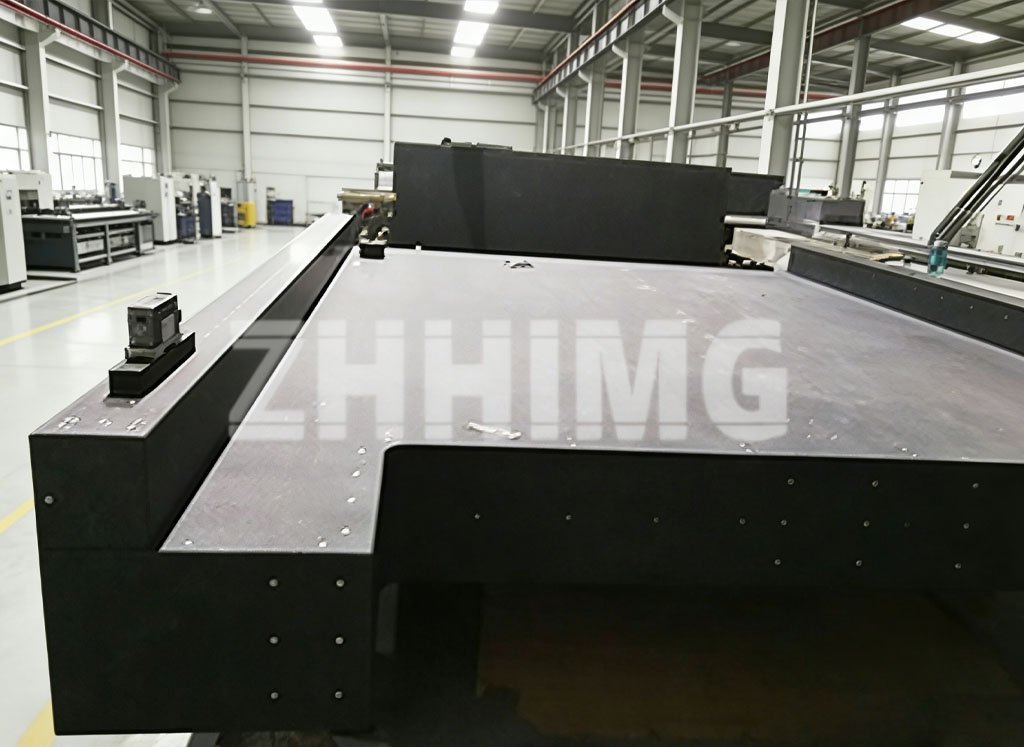
To achieve a true nanometer profile, the component must undergo specialized manual correction, a process known as hand-lapping.
The Hand-Lapping Process: Micro-Level Tactile Feedback
Hand-lapping is a specialized mechanical art where master technicians use abrasive compounds and custom lapping blocks to selectively remove material from high spots on the granite surface.
-
Tactile Sensorial Precision: Expert technicians possess tactile sensitivity developed over decades of manual experience. They can detect surface variations down to single-digit micrometers by feeling the resistance and friction of the lapping block.
-
Iterative Correction: The process is strictly iterative. The technician laps the surface, allows the material to thermally stabilize, measures the topography with electronic metrology tools, and repeats the process until the target flatness is achieved.
-
Nanometer Flatness: Through this manual method, high spots are reduced progressively, allowing large-scale granite surface plates to achieve surface profiles down to nanometer limits—unachievable by automated grinding wheels alone.
Verifying Accuracy via Advanced Metrology and Traceability
Manual skill is ineffective without absolute measurement verification. To validate hand-lapped surfaces, production facilities utilize advanced metrology equipment calibrated to international standards.
-
Laser Interferometry: Systems like Renishaw laser Interferometer are used to map the linear, angular, and flatness errors of guide ways and structural beams over long distances (up to 20 m).
-
Differential Electronic Leveling: Swiss WYLER electronic levels are employed in differential pairs to capture angular pitch and roll deviations down to 0.5μm.
-
Micro-Topography Inspection: Mahr dial indicators (0.5μm resolution), Mitutoyo digital calipers, and high-precision surface roughness testers verify that the micro-texture of the granite matches cleanroom specifications.
The Necessity of National Calibration Traceability
A measurement is only valid if it can be verified by an independent third party. All high-end metrology instruments must hold valid calibration certificates issued by accredited regional institutions, such as the Shandong Institute of Metrology or the Jinan Institute of Metrology.
Crucially, every reference standard used in the factory must features an unbroken chain of traceability back to the National Institute of Metrology (NIM). This ensures that when a procurement engineer from Apple, Samsung, or Bosch reviews the inspection report of a ZHHIMG® granite component, the data is valid under international metrology agreements.
Post time: Jun-15-2026