
In the high-stakes world of precision manufacturing, the foundation of a machine tool is often the most critical factor in determining its ultimate performance. As engineers strive for tighter tolerances and superior surface finishes, the choice of material for the machine base has shifted from traditional metals to more advanced alternatives. Among these, granite has emerged as a premier choice for high-precision applications. This article delves into the technical reasons why granite machine bases are superior in improving stability and reducing vibration, and how these properties translate into tangible benefits for modern industrial processes.
The primary reason for the widespread adoption of granite in machine tool construction is its exceptional dimensional stability. Unlike cast iron or steel, which are subject to internal stresses during the manufacturing process, natural granite is a material that has reached a state of equilibrium over millions of years. When a metal base is cast or welded, it retains residual stresses that can cause the structure to warp or “creep” over time, even with proper heat treatment and seasoning. Granite, however, is virtually free from these internal tensions. Once it is precision-lapped to a specific flatness, it maintains that geometry with remarkable consistency. This long-term stability is essential for machines that must operate with sub-micron accuracy over many years of service.
Thermal stability is another area where granite outperforms traditional materials. In a typical machining environment, temperature fluctuations are inevitable. Spindle heat, friction from moving parts, and changes in ambient air temperature can all cause a machine structure to expand or contract. Metals have a relatively high coefficient of thermal expansion, meaning that even small temperature changes can lead to significant dimensional errors. Granite, on the other hand, has a much lower coefficient of thermal expansion and a high thermal mass. This means it responds slowly to temperature changes and expands far less than metal. For high-precision CNC machines, this thermal inertia ensures that the critical alignments between the spindle and the workpiece remain stable, reducing the need for frequent recalibration and minimizing thermal drift during long production runs.
Perhaps the most significant advantage of granite is its superior vibration damping capability. In any machining operation, vibration is a constant challenge. It can be caused by the cutting action itself, the movement of high-speed axes, or external sources such as nearby machinery or passing vehicles. Vibration leads to chatter marks on the workpiece, reduced tool life, and increased wear on the machine’s bearings and guideways. Granite possesses a dense, non-homogeneous structure that is exceptionally effective at absorbing and dissipating kinetic energy. The damping ratio of granite is significantly higher than that of cast iron or steel, allowing it to suppress vibrations much more quickly. This inherent damping allows for higher cutting speeds and feeds while maintaining a superior surface finish, effectively increasing the productivity of the machine.
The mechanical properties of granite also contribute to its role as an ideal base material. It is incredibly hard and resistant to wear, which is crucial for maintaining the integrity of the mounting surfaces for linear guides and other precision components. Furthermore, granite is non-magnetic and electrically non-conductive, which can be a significant advantage in certain specialized applications, such as semiconductor inspection or electrical discharge machining (EDM). Its resistance to corrosion and chemical attack also means that it is not affected by the coolants and lubricants commonly used in metalworking, ensuring that the base remains in pristine condition throughout the life of the machine.
As manufacturing technology continues to evolve, the integration of granite into machine design is becoming more sophisticated. Engineers are increasingly using hybrid structures that combine the stiffness of granite with the lightweight properties of other materials. For example, a machine might feature a massive granite base for stability and vibration damping, paired with a carbon fiber gantry for high-speed acceleration. This approach allows manufacturers to optimize the performance of each component, resulting in machines that are both incredibly fast and exceptionally precise. The rise of mineral casting, which uses granite aggregates bonded with epoxy resin, has also provided a more flexible and cost-effective way to incorporate the benefits of granite into complex machine structures.
The impact of granite machine bases is particularly evident in the field of micro-machining and ultra-precision metrology. In these applications, where the required tolerances are often measured in nanometers, even the slightest vibration or thermal expansion can be catastrophic. Granite provides the “quiet” and stable environment necessary for these processes to succeed. Whether it is the production of optical lenses, the fabrication of micro-electro-mechanical systems (MEMS), or the inspection of silicon wafers, granite is the foundation upon which these technological marvels are built. Its ability to provide a consistent and reliable reference plane is unmatched by any other material.
In conclusion, the shift toward granite machine bases represents a fundamental understanding of the physics of precision. By prioritizing stability and vibration damping at the foundational level, manufacturers are able to push the boundaries of what is possible in machining and metrology. The natural properties of granite—its long-term dimensional stability, low thermal expansion, and exceptional damping—make it the ideal material for the next generation of high-performance machine tools. As the demand for precision continues to grow across all sectors of industry, the role of granite as the bedrock of manufacturing excellence will only become more prominent. Investing in a granite-based machine is not just a choice of material; it is a commitment to the highest standards of accuracy, productivity, and long-term reliability.
The technical nuances of how granite interacts with modern motion control systems further underscore its importance. In high-speed CNC machines, the acceleration and deceleration of heavy axes generate significant inertial forces. These forces can cause the machine frame to flex or vibrate, leading to positioning errors. A granite base, with its high mass and stiffness, provides a rigid counter-force that minimizes these dynamic distortions. This rigidity is particularly important when using linear motors, which are capable of extremely high accelerations. The stability of the granite base ensures that the motor’s energy is directed into moving the axis rather than shaking the machine, resulting in smoother motion and more accurate path following. This synergy between advanced electronics and stable mechanical foundations is what enables the high-speed, high-precision performance expected of modern industrial equipment.
Furthermore, the environmental benefits of using natural granite should not be overlooked. The process of quarrying and finishing granite is generally less energy-intensive than the smelting and casting of metals. Additionally, granite is a natural material that does not require the toxic coatings or treatments often needed to protect metal bases from corrosion. Its longevity also means that a granite-based machine has a much longer useful life, reducing the need for frequent replacement and the associated environmental impact of manufacturing new equipment. In an era where sustainability is becoming a key consideration for many businesses, the durability and low environmental footprint of granite make it an attractive choice for forward-thinking manufacturers.
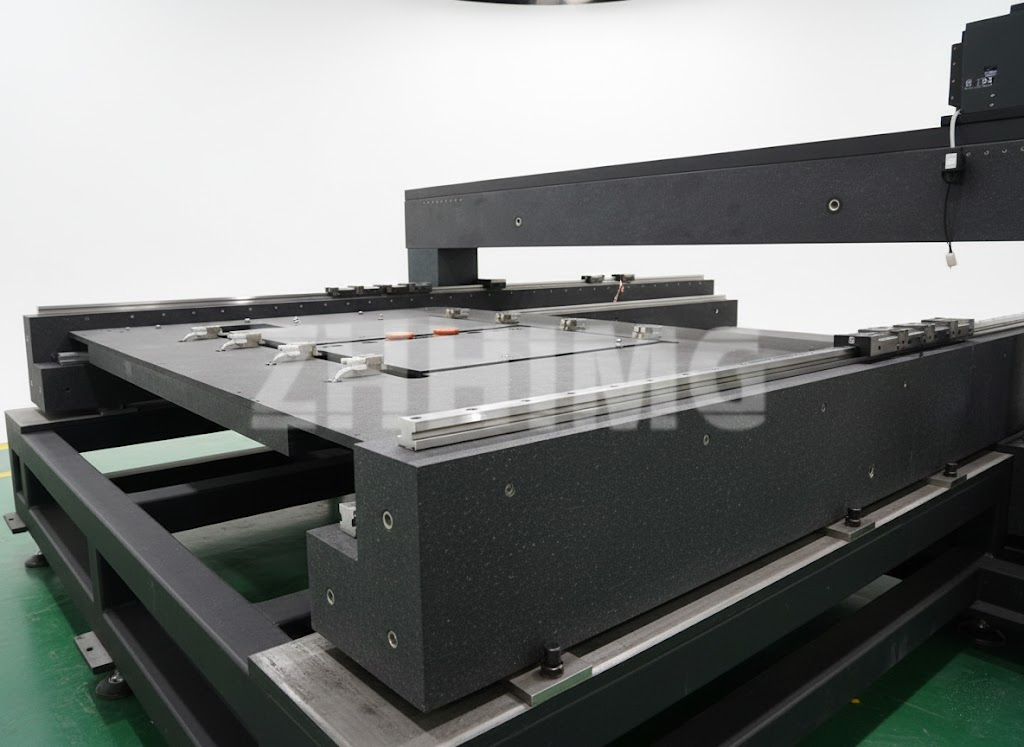
The economic value of granite machine bases also extends to the reduction of maintenance costs and downtime. Because granite does not rust or corrode, there is no need for the regular painting or oiling that metal bases require. Its resistance to wear means that the mounting surfaces for critical components stay accurate for much longer, reducing the need for expensive and time-consuming realignments. In a high-production environment, where every hour of downtime can cost thousands of dollars, the reliability of a granite base can provide a significant competitive advantage. Manufacturers who invest in granite-based machinery often find that the initial higher cost is quickly offset by the savings in maintenance and the increased uptime of their equipment.
The process of integrating granite into a machine design requires a deep understanding of both the material’s properties and the specific requirements of the application. Engineers must carefully consider the placement of mounting points, the distribution of mass, and the interaction between the granite and other materials. For example, when mounting metal components to a granite base, it is essential to account for the different rates of thermal expansion to prevent stress buildup. This is often achieved through the use of specialized mounting hardware or by incorporating expansion joints into the design. The expertise required to successfully design and build granite-based machinery is a testament to the sophistication of the modern machine tool industry.
As we look to the future, the potential for further innovation in granite-based machine design is vast. Researchers are exploring new ways to enhance the properties of granite through the use of advanced coatings or by combining it with other materials in novel ways. For instance, the development of “smart” granite bases with embedded sensors could allow for real-time monitoring of the machine’s structural health and environmental conditions. This data could then be used to optimize the machine’s performance or to predict when maintenance is needed, further increasing the efficiency and reliability of the manufacturing process. The ongoing evolution of granite technology is a clear indication that this ancient material will continue to play a vital role in the future of high-precision engineering.
In the context of global manufacturing trends, the demand for higher precision and greater efficiency is driving the adoption of granite across a wide range of industries. From the automotive and aerospace sectors to the medical and electronics industries, manufacturers are recognizing the benefits of a stable and vibration-free foundation for their production processes. As the complexity of parts increases and tolerances become even tighter, the limitations of traditional materials will become even more apparent, further accelerating the shift toward granite. The ability to produce high-quality parts consistently and reliably is the key to success in today’s competitive global market, and granite provides the foundation upon which that success is built.
In summary, the use of granite machine bases is a clear example of how the choice of material can have a profound impact on the performance and reliability of industrial equipment. By leveraging the unique properties of granite—its exceptional stability, low thermal expansion, and superior vibration damping—manufacturers are able to achieve levels of precision and productivity that were previously unattainable. The journey from a raw block of stone to a high-precision machine base is a testament to the ingenuity and craftsmanship of the modern engineering community. As we continue to push the boundaries of what is possible in manufacturing, granite will remain a steadfast partner, providing the stability and reliability needed to build the world of tomorrow. Whether it is in the production of the latest microchips or the machining of critical aerospace components, the influence of granite is felt across the entire spectrum of modern industry, serving as the silent foundation of our technological progress.
Post time: May-19-2026