
In ultra-precision industries, accuracy is not just a requirement—it is the foundation of quality. Tools made from Grade 000 granite represent the highest level of flatness and dimensional stability available in metrology. These instruments are widely used in calibration laboratories, semiconductor manufacturing, aerospace inspection, and other applications where tolerances are measured in microns or even nanometers.
However, achieving Grade 000 accuracy is only part of the equation. Maintaining that level of precision over time requires strict control of environmental conditions, proper handling procedures, and consistent maintenance practices.
This article provides a comprehensive guide to maintenance tips for precision tools, focusing specifically on how to preserve the accuracy and longevity of granite-based measuring equipment.
Understanding Grade 000 Granite Standards
Grade 000 (also referred to as Grade AA in some standards) represents the highest classification for granite surface plates and precision measuring tools. These tools are manufactured through advanced lapping processes and are certified to extremely tight flatness tolerances.
The defining characteristics of Grade 000 granite tools include:
- Exceptional flatness and surface integrity
- High dimensional stability
- Minimal thermal expansion
- Superior wear resistance
- Non-magnetic and corrosion-resistant properties
Because of these characteristics, even minor environmental or operational deviations can impact performance. This makes proper maintenance essential.
Environmental Control: The First Line of Defense
The accuracy of granite precision tools is highly sensitive to environmental conditions. Maintaining a stable environment is the most critical factor in preserving Grade 000 performance.
Temperature control is particularly important. Granite has a low coefficient of thermal expansion, but even small temperature fluctuations can introduce measurable deviations. Ideally, the working environment should be maintained at a constant temperature, typically around 20°C (68°F), with minimal variation.
Humidity also plays a role, especially in preventing contamination. While granite itself is not affected by moisture, surrounding equipment and measuring instruments may be. A clean, climate-controlled lab environment ensures consistent measurement conditions.
Airflow and vibration should also be minimized. Drafts and nearby machinery can introduce instability, affecting sensitive measurements performed on granite tools.
Proper Handling and Usage Practices
Even though granite is highly durable, improper handling can compromise its accuracy. Precision tools should always be treated as calibrated instruments, not general-purpose work surfaces.
Operators should avoid dragging components across the surface, as this can cause uneven wear over time. Instead, objects should be gently placed and lifted.
Using clean gloves is recommended to prevent contamination from oils, dust, or debris. Foreign particles trapped between the tool and measured object can introduce measurement errors and damage the surface.
It is also essential to distribute loads evenly. Concentrated stress in a single area can lead to localized wear, gradually affecting flatness.
Cleaning Procedures for Granite Precision Tools
Regular cleaning is a fundamental aspect of maintenance. Dust, debris, and residues can accumulate on the surface and interfere with measurement accuracy.
Cleaning should be performed using non-abrasive, lint-free cloths and appropriate cleaning agents specifically designed for precision surfaces. Harsh chemicals should be avoided, as they may leave residues or damage the surface finish.
A consistent cleaning schedule should be established based on usage frequency. In high-precision labs, surfaces may need to be cleaned multiple times per day.
Before and after each measurement session, the surface should be inspected and wiped to ensure it is free of contaminants.
Calibration and Re-Verification
No matter how well a granite tool is maintained, periodic calibration is necessary to ensure continued compliance with Grade 000 standards.
Calibration intervals depend on usage intensity, environmental conditions, and industry requirements. High-usage environments may require more frequent verification.
Professional calibration services use advanced instruments such as electronic levels, autocollimators, and laser interferometers to measure flatness and detect deviations.
If deviations exceed acceptable limits, re-lapping may be required to restore the surface to its original accuracy.
Maintaining detailed calibration records is also important for quality assurance and traceability.
Preventing Wear and Surface Damage
Although granite is highly wear-resistant, it is not immune to damage. Preventive measures can significantly extend the lifespan of precision tools.
Avoid placing heavy or sharp objects directly on the surface. Protective pads or intermediate layers can be used when necessary.
Tools should not be used as general workbenches. Limiting their use strictly to measurement tasks helps preserve surface integrity.
Additionally, avoiding repetitive measurement in the same area can reduce localized wear. Rotating usage zones across the surface ensures more uniform wear distribution.
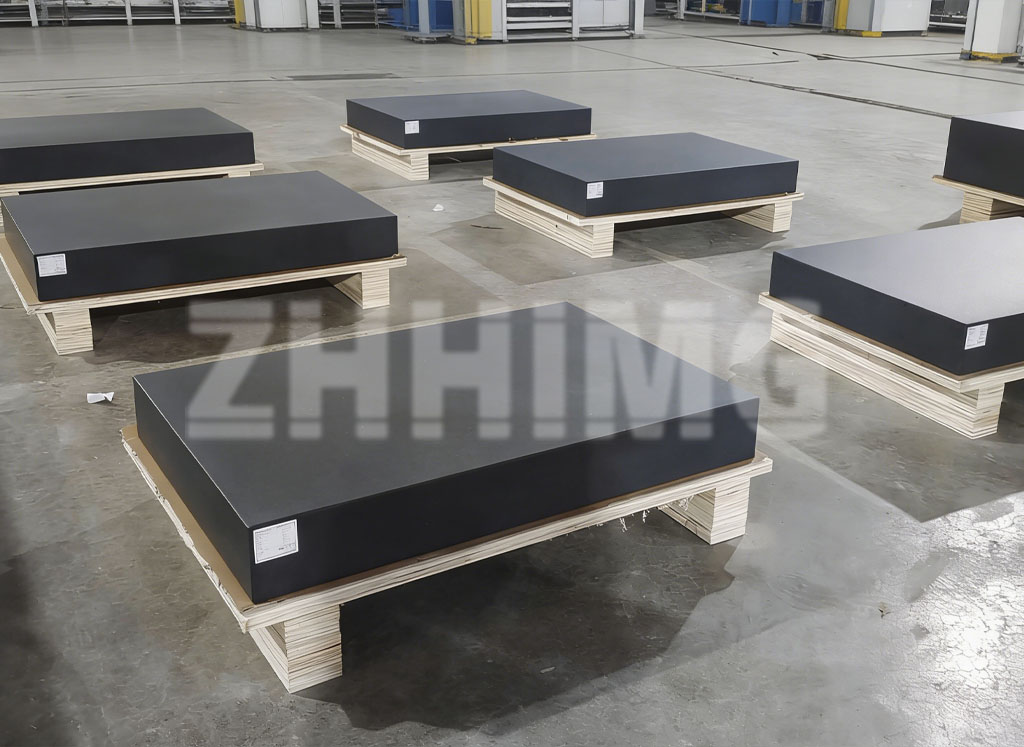
Storage and Protection
When not in use, granite precision tools should be properly stored to prevent contamination and accidental damage.
Protective covers are highly recommended to shield the surface from dust and environmental exposure. In cleanroom environments, specialized covers may be required.
The supporting structure is also critical. Granite tools must be placed on stable, vibration-resistant stands that provide proper support. Uneven support can introduce stress and affect flatness over time.
For portable granite tools, secure storage cases should be used during transportation to prevent impact damage.
Training and Operational Discipline
Human factors are often the weakest link in maintaining precision. Proper training of personnel is essential to ensure that all handling and maintenance procedures are consistently followed.
Operators should understand:
- The importance of surface cleanliness
- Correct handling techniques
- Environmental sensitivity of measurements
- Basic inspection and maintenance routines
Establishing standard operating procedures (SOPs) helps ensure consistency across all users.
Long-Term Maintenance Strategy
Maintaining Grade 000 accuracy is not a one-time effort but an ongoing process. A structured maintenance strategy should include:
- Scheduled cleaning routines
- Regular environmental monitoring
- Periodic calibration and certification
- Controlled usage practices
- Continuous operator training
By integrating these elements into daily operations, laboratories can ensure that their precision tools deliver reliable performance over the long term.
Industry Perspective: Why Maintenance Matters More Than Ever
As industries move toward tighter tolerances and higher precision requirements, the margin for error continues to shrink. In fields such as semiconductor manufacturing and advanced optics, even minor deviations can lead to significant losses.
This makes the maintenance of Grade 000 granite tools not just a technical requirement, but a strategic priority. Proper maintenance ensures:
- Consistent measurement accuracy
- Reduced downtime
- Lower long-term costs
- Compliance with international quality standards
Conclusion
Maintaining the accuracy of Grade 000 granite precision measuring tools requires a combination of environmental control, disciplined handling, regular cleaning, and periodic calibration.
While granite offers exceptional stability and durability, its performance ultimately depends on how well it is maintained. By implementing proper maintenance tips and establishing a structured approach, laboratories can preserve the integrity of their precision tools and ensure reliable measurement results over time.
In high-precision industries, where every micron counts, maintenance is not optional—it is essential.
Post time: Apr-14-2026