
Precision ceramic components offer exceptional hardness, wear resistance, and thermal stability for demanding applications in semiconductor manufacturing, metrology, and high-wear industrial environments.
In certain industrial applications, the demands placed on precision components exceed what even the best metallic or granite materials can reliably provide over extended operating periods. High-wear environments, aggressive chemical processing, extreme temperatures, and non-magnetic requirements all drive designers toward ceramic materials. Precision ceramic components — ranging from structural parts and fixtures to specialized measuring instruments — have become essential in industries where failure is not an option and precision tolerances must be maintained over thousands of operating hours.
Why Ceramics Excel in Demanding Applications
Ceramics as an engineering material class encompasses a range of compositions, each with distinct property profiles. The most commonly used precision ceramics include:
- Alumina (Al₂O₃): Excellent hardness, good chemical resistance, high dielectric strength, widely available and cost-effective
- Silicon Carbide (SiC): Exceptional thermal conductivity, outstanding hardness, excellent corrosion resistance, superior to alumina in thermal shock applications
- Zirconia (ZrO₂): High fracture toughness among ceramics, good thermal insulation, used in applications requiring resistance to mechanical shock
- Silicon Nitride (Si₃N₄): High strength and toughness combined, excellent thermal shock resistance, used in demanding mechanical applications
The hardness of engineering ceramics — typically 1,500 to 2,500 HV (Vickers hardness) — far exceeds that of tool steel (approximately 700 HV) or even hardened chrome steel. This hardness translates directly to wear resistance: ceramic components in sliding or rotating contact maintain their dimensions far longer than metallic alternatives.
Key Properties for Precision Applications
When specifying precision ceramic components, engineers evaluate several critical properties:
Thermal stability varies by ceramic type. Silicon carbide offers excellent thermal conductivity (comparable to aluminum) combined with low thermal expansion, making it dimensionally stable across wide temperature ranges. This property is critical for equipment operating in environments with significant thermal cycling.
Chemical inertness is a significant advantage of most engineering ceramics. Alumina and silicon carbide are highly resistant to attack by most industrial chemicals, including aggressive cleaning agents, acids, and solvents. This makes ceramic components ideal for semiconductor process chambers, chemical processing equipment, and medical device manufacturing.
Non-magnetic response makes ceramics essential in magnetic resonance imaging (MRI) equipment, electron microscopy sample stages, and any application involving strong magnetic fields. Metallic components in these environments can experience magnetic interference or attraction that compromises positioning accuracy.
Dielectric strength is particularly relevant for electrical isolation applications. Alumina ceramics offer dielectric strengths of 15-30 kV/mm, making them suitable for high-voltage insulators and electrical fixture components.
Applications in Semiconductor Manufacturing
The semiconductor industry is one of the largest consumers of precision ceramic components. Semiconductor fabrication processes involve aggressive chemical etching, high temperatures, vacuum environments, and increasingly stringent contamination controls — all conditions where ceramics outperform metallic alternatives.
Ceramic components in semiconductor equipment include:
- Vacuum chamber fixtures and wafer chucks: Alumina or silicon carbide ceramic chucks provide the thermal and chemical resistance required for plasma etching and chemical vapor deposition processes
- Guide components and linear bearings: Ceramic ways and bearing surfaces for wafer handling stages offer the precision and cleanliness required for 300mm and 450mm wafer processing
- Metrology fixtures: Ceramic reference surfaces for optical and electron-beam inspection tools, where sub-nanometer surface quality is required
- Process chamber components: Ceramic focus rings, shield plates, and process kit components that must withstand aggressive plasma chemistry
For these applications, surface quality is often specified in terms of surface roughness Ra values below 0.1 μm, with flatness tolerances measured in micrometers across components measuring hundreds of millimeters in diameter.
Precision Ceramic Measuring Components
Beyond structural parts, ceramics are used for specialized measuring components where their unique properties provide measurement advantages:
Ceramic gauge blocks offer several advantages over steel gauge blocks: near-zero thermal expansion in selected compositions, high wear resistance for long service life, and non-magnetic properties for use in magnetic environments.
Ceramic measurement fingers and probes are used in coordinate measuring machines and inspection systems where high-wear resistance is required. Ceramic styli maintain their geometry through extended use, reducing the frequency of styli replacement and recalibration.
Ceramic surface plates are available as an alternative to granite for specific applications, particularly where non-magnetic response or extreme chemical resistance is required.
Manufacturing Considerations
Precision ceramic components are produced using different manufacturing routes depending on the required tolerances and production volume:
Dry pressing is used for simpler shapes at moderate tolerances (typically ±0.5% of dimension). This process is cost-effective for high-volume production of standardized parts.
Injection molding allows the production of complex ceramic shapes with good dimensional control. Suitable for production volumes where tooling costs can be amortized.
Green machining involves machining ceramic parts before firing, then sintering to final density. This approach allows tighter tolerances than as-sintered machining and is used for precision components.
Grinding and lapping of fired ceramic parts achieves the tightest tolerances. Diamond grinding wheels are required due to the extreme hardness of sintered ceramics. Post-grinding surface finishes of Ra < 0.1 μm are achievable for the most demanding applications.
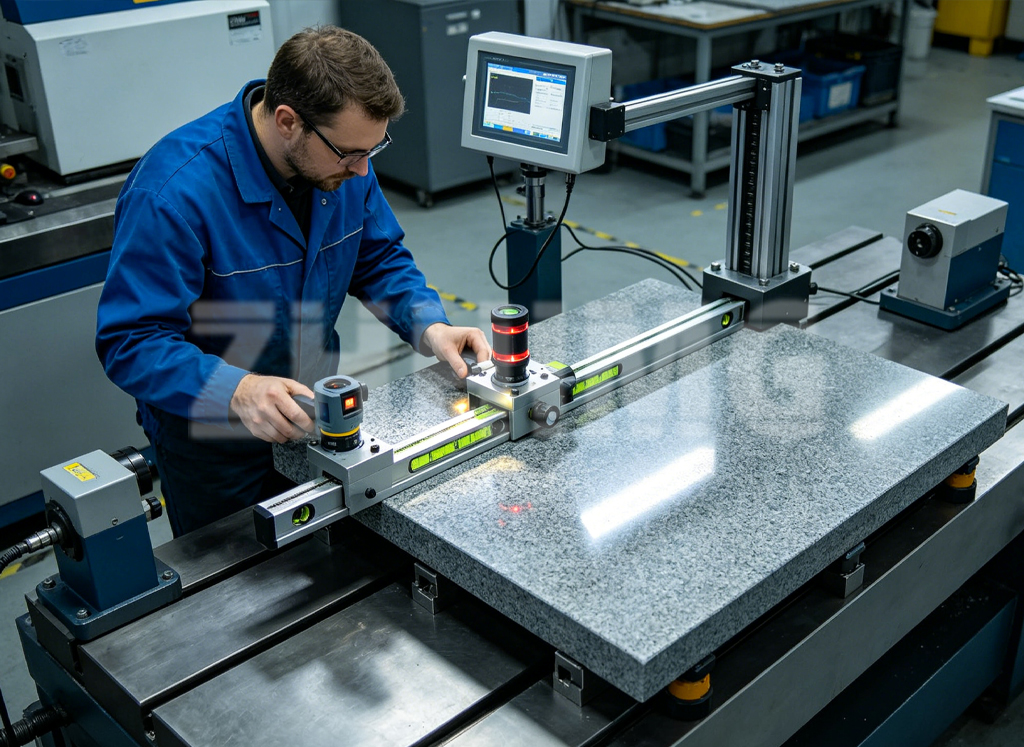
Quality verification for precision ceramic components involves dimensional measurement using coordinate measuring machines or laser interferometry, surface roughness measurement using profilometers, and material property verification through batch testing of representative samples.
Supplier Capability Assessment
When evaluating precision ceramic component suppliers, buyers should consider:
Material expertise: Does the supplier have experience with the specific ceramic composition required for the application? Different ceramics require different processing parameters and grinding techniques.
Size range: What is the maximum dimension the supplier can produce to the required tolerances? Some suppliers specialize in small precision parts while others have capability for large structural ceramics.
Tight-tolerance capability: Can the supplier demonstrate the metrology capability to verify tolerances tighter than 10 μm? This requires environmental controls and measurement systems with sub-micron resolution.
Application experience: Has the supplier worked with ceramics for the specific industry — semiconductor, medical, aerospace, or metrology? Application-specific experience indicates familiarity with the quality standards and documentation requirements of that industry.
Frequently Asked Questions
How do precision ceramic components compare to tungsten carbide?
Ceramics generally offer superior hardness and chemical resistance, while tungsten carbide offers higher fracture toughness and impact resistance. For high-wear applications without impact loading, ceramics typically provide longer service life. For applications involving shock loads or mechanical vibration, tungsten carbide may be more appropriate.
Can ceramic components be joined to metal structures?
Yes. Mechanical fastening, adhesive bonding, and brazing are all used to join ceramic components to metal structures. Each method has specific design requirements and limitations. Ceramic-to-metal brazed assemblies are common in vacuum and semiconductor applications.
What causes ceramic components to fail?
The most common failure mode is fracture from impact or tensile loading that exceeds the ceramic’s fracture toughness. Unlike metals, ceramics do not yield plastically before failure — they fracture when stressed beyond their ultimate strength. Design must ensure that tensile stresses remain below allowable limits, with appropriate safety margins.
Are precision ceramic components expensive?
Ceramics are generally more expensive than equivalent metallic components on a per-unit basis, primarily due to the cost of raw materials and the specialized processing required. However, the total cost of ownership — considering extended service life, reduced maintenance, and improved performance — often favors ceramics for demanding applications.
How should precision ceramic components be handled and stored?
Ceramic components should be handled with clean gloves to prevent contamination of precision surfaces and to protect against skin oils. Components should be stored on soft foam or lint-free cloth padding to prevent chipping. Impacts — even minor ones — can create crack-initiating defects that compromise structural integrity.
Post time: Jun-08-2026