
Precision engineering relies on stable, accurate, and reliable tools. Among these, granite angle plates and granite straight edges play a vital role in ensuring dimensional accuracy, alignment, and quality control across a range of industries—from CNC machining to metrology laboratories. For engineers, quality managers, and procurement specialists, understanding the capabilities, materials, and proper use of these tools is essential.
This comprehensive guide explores the design, applications, advantages, and maintenance of granite angle plates and straight edges, providing insights to help professionals make informed decisions for their precision projects.
What Are Granite Angle Plates and Straight Edges?
Before delving into their specifications, it’s essential to define these fundamental tools:
Granite Angle Plates
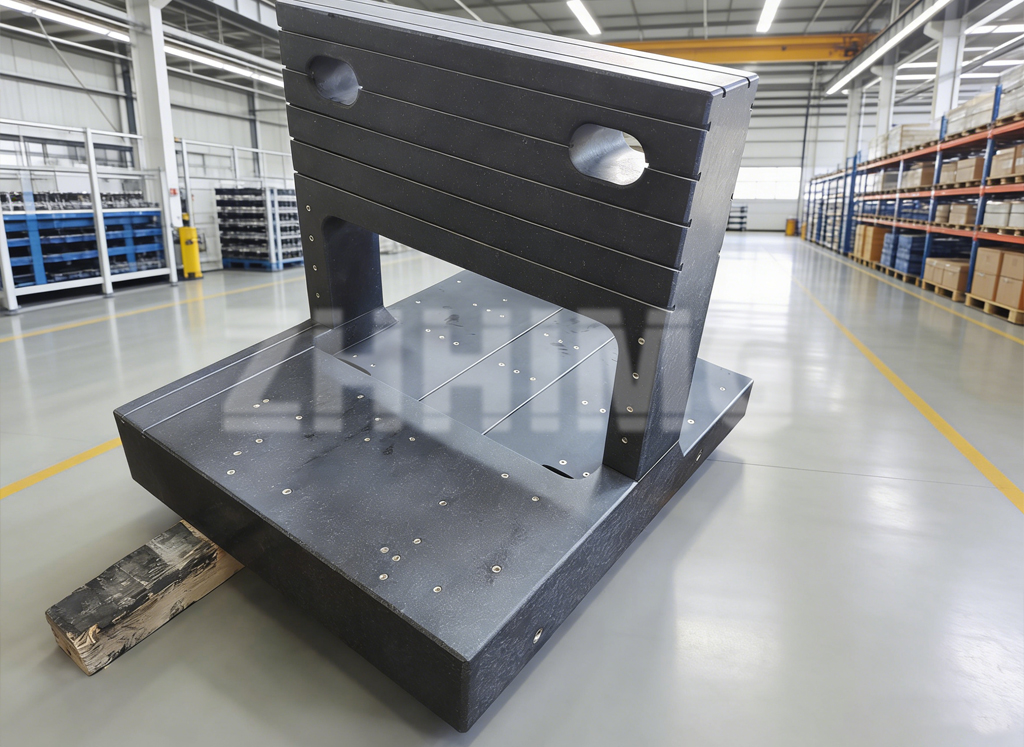
A granite angle plate is a precision tool designed to hold workpieces at exact angles, typically 90° or 45°, during inspection or machining. Unlike metal angle plates, granite versions offer superior stability, thermal resistance, and vibration damping. They serve as reference surfaces for layout, assembly, and inspection.
Key characteristics:
- Flat, smooth surfaces for high-precision work.
- Rigid and non-magnetic, ideal for electronic or sensitive applications.
- Lightweight compared to cast iron while maintaining stability.
Granite Straight Edges
A granite straight edge is a long, flat, and highly accurate surface used as a reference for measuring straightness, aligning machinery, or calibrating instruments. Granite straight edges are preferred over metal alternatives due to their dimensional stability and resistance to corrosion.
Key characteristics:
- Extremely flat and uniform surface.
- Resistant to wear, scratching, and deformation.
- Provides a reliable reference for vertical and horizontal alignment checks.
Why Granite Is the Material of Choice
Granite is not just a stone; it is a precision engineering material with unique properties that make it superior for metrology tools.
Advantages of granite include:
- Vibration Damping: Reduces the effect of machine vibrations during measurement.
- Thermal Stability: Granite expands minimally with temperature fluctuations, ensuring consistent measurements.
- Corrosion Resistance: Unlike steel or cast iron, granite does not rust and withstands chemical exposure.
- Durability: High hardness resists scratches, dents, and wear over time.
For both angle plates and straight edges, these properties make granite a preferred choice in modern precision engineering environments.
Key Specifications to Consider
When sourcing or selecting granite angle plates and straight edges, engineers must verify several critical specifications.
1. Flatness and Tolerance
Flatness is the most critical specification for granite tools. Any deviation can compromise measurement accuracy.
What to check:
- Grade: Common grades include AA, A, and B. AA grade is used for ultra-precision work.
- Measurement methods: Use laser interferometers, CMMs, or comparator systems to verify flatness.
- Tolerance: Depending on the application, tolerances may range from ±0.002 mm to ±0.01 mm.
Impact:
Even minor flatness errors can introduce alignment issues or dimensional inaccuracies in critical applications.
2. Surface Finish
The surface finish affects contact quality and wear resistance.
Specifications:
- Roughness (Ra): Typically between 0.2–0.5 μm for precision applications.
- Polishing: High-grade polishing ensures smooth, reflective surfaces for easy inspection.
- Protective coatings: Sealing agents can prevent staining and micro-cracks.
Impact:
A poorly finished surface may cause inaccurate readings and reduce tool lifespan.
3. Dimensions and Size
Granite tools must meet application-specific size requirements.
Considerations:
- Length and width: Straight edges often range from 300 mm to over 2,000 mm.
- Height and thickness: Angle plates must support workpieces without flexing.
- Weight: While granite is dense, selecting a manageable size reduces installation challenges.
Impact:
Proper sizing ensures usability, stability, and compatibility with other equipment.
4. Material Density and Composition
Not all granite is created equal. High-density granite ensures rigidity and vibration damping.
What to verify:
- Density: Typically between 2.6–2.8 g/cm³.
- Mineral uniformity: Prevents localized weaknesses.
- Porosity: Low porosity avoids moisture absorption and micro-cracks.
Impact:
Inconsistent or low-density granite may deform under load or fail to dampen vibrations effectively.
5. Edge and Corner Quality
Edges and corners must be precise and resistant to chipping.
Specifications:
- Chamfers or rounded edges: Reduce the risk of chipping during handling.
- Right-angle accuracy: For angle plates, verify that angles are exact using calibrated tools.
Impact:
Accurate and durable edges prevent long-term degradation and maintain measurement reliability.
Applications of Granite Angle Plates
Granite angle plates are versatile tools used in various engineering processes:
- Precision Inspection: Holding components at precise angles for measurement verification.
- Machining Setup: Supporting workpieces during milling, drilling, or grinding.
- Assembly Alignment: Ensuring parts are correctly aligned in complex assemblies.
- Metrology Labs: Providing stable references for inspection instruments and CMMs.
By offering high rigidity, low thermal expansion, and corrosion resistance, granite angle plates ensure consistent accuracy over extended periods.
Applications of Granite Straight Edges
Granite straight edges serve as benchmarks for straightness and alignment in multiple applications:
- Machine Alignment: Checking alignment of lathes, mills, and other machinery.
- Calibration: Comparing machine axes and precision tools for straightness.
- Quality Control: Inspecting flatness of workpieces and assemblies.
- Engineering Layouts: Drawing reference lines and angles on components.
The stability and durability of granite make these straight edges reliable over years of use.
Maintenance Tips for Longevity
Proper care ensures granite tools retain accuracy and performance:
General Guidelines:
- Cleaning: Use mild soap and water; avoid harsh chemicals.
- Handling: Prevent impact or dropping; granite is hard but brittle.
- Storage: Store in a dry, temperature-stable environment.
- Calibration: Periodically check flatness and angle accuracy using certified instruments.
Angle Plates:
- Avoid excessive force when clamping workpieces.
- Inspect corners and edges for chips after handling.
Straight Edges:
- Store vertically in racks or padded holders to avoid bending or warping.
- Keep free from dust and debris that may affect contact surfaces.
Choosing the Right Supplier
Selecting a reliable supplier is critical:
- Experience: Look for manufacturers specializing in precision granite tools.
- Quality Assurance: Request flatness certificates, density verification, and calibration data.
- Customization: Ensure the supplier can produce the exact size, angle, and features needed.
- Delivery and Handling: Granite tools are heavy; confirm proper packaging and shipping protocols.
Working with an experienced supplier reduces risk, ensures compliance with industry standards, and improves overall measurement reliability.
Future Trends in Granite Precision Tools
Innovation continues in granite metrology tools:
- Composite Granite: Combining granite with polymer or resin for lighter yet stable bases.
- Enhanced Coatings: Advanced protective layers for chemical resistance and scratch prevention.
- Integrated Instrumentation: Granite plates with embedded sensors for real-time alignment and vibration monitoring.
These developments continue to improve the usability, accuracy, and durability of granite angle plates and straight edges.
Conclusion
Granite angle plates and straight edges are essential tools in precision engineering. By understanding their material properties, specifications, and proper usage, engineers and quality professionals can ensure accurate measurements, efficient machining, and long-term reliability.
When sourcing granite tools, focus on flatness, surface finish, material density, dimensions, and edge quality. Coupled with proper maintenance and a trusted supplier, granite angle plates and straight edges provide the stability, accuracy, and durability needed for modern precision applications.
Investing in high-quality granite tools is an investment in accuracy, productivity, and product quality, making them indispensable assets in any engineering or metrology environment.
Post time: May-06-2026