
Our professional engineering team has recently carried out an all-round and in-depth performance comparison test targeting equipment bases made of cast iron and granite respectively, with the whole evaluation conducted under the strict environmental standards of cleanroom ultra-precision manufacturing workshops. After comprehensive data analysis and practical verification, the team reached a clear conclusion that granite serves as the optimal and preferred base substrate widely applicable to high-end optical component processing, semiconductor wafer inspection as well as advanced nano-scale precision machining scenarios.
Cast iron material comes with multiple inherent drawbacks that restrict high-precision production. It has a relatively high coefficient of thermal expansion and weak vibration damping capacity; meanwhile, it is prone to surface rust corrosion and continuous shedding of tiny metal shavings during long-term operation. Even slight fluctuations in ambient temperature will trigger subtle deformation of cast iron bases, resulting in obvious dimensional deviations of machined parts. Moreover, the fallen metal particles and rust residues will seriously contaminate delicate precision workpieces, bringing hidden dangers to product quality. On the contrary, granite boasts distinctive superior physical characteristics: it delivers ultra-low thermal expansion rate and remarkable vibration absorption performance, which can effectively isolate external vibration interference and avoid machining chatter. Besides, granite is naturally non-magnetic and completely rust-proof. After professional surface treatment, it can fully satisfy strict dust-free and pollution-free requirements of cleanrooms. Premium granite can sustain stable Class 00 ultra-high flatness for many years running, drastically cutting down the frequency of equipment shutdown for re-calibration and improving overall production efficiency.
Admittedly, cast iron holds certain cost merits when applied to heavy-duty rough machining procedures with low precision requirements. However, its inherent material defects make it incapable of fulfilling the stringent micron-level accuracy requirements of ultra-precision manufacturing. Moving forward, our company will fully popularize and standardize granite bases for all types of precision processing and testing equipment in clean workshops. We will also implement unified, complete protection and maintenance specifications for granite bases, covering full six-sided nano waterproof and anti-fouling sealing treatment, regular protective agent re-coating every one to two years, and constant monitoring and regulation of workshop temperature and humidity. This comprehensive material upgrading and standardized management system will steadily enhance the long-term running accuracy of precision equipment, prolong the service cycle of granite bases, and significantly lift the yield rate of high-value finished precision products, laying a solid hardware foundation for the company’s high-end ultra-precision manufacturing business development.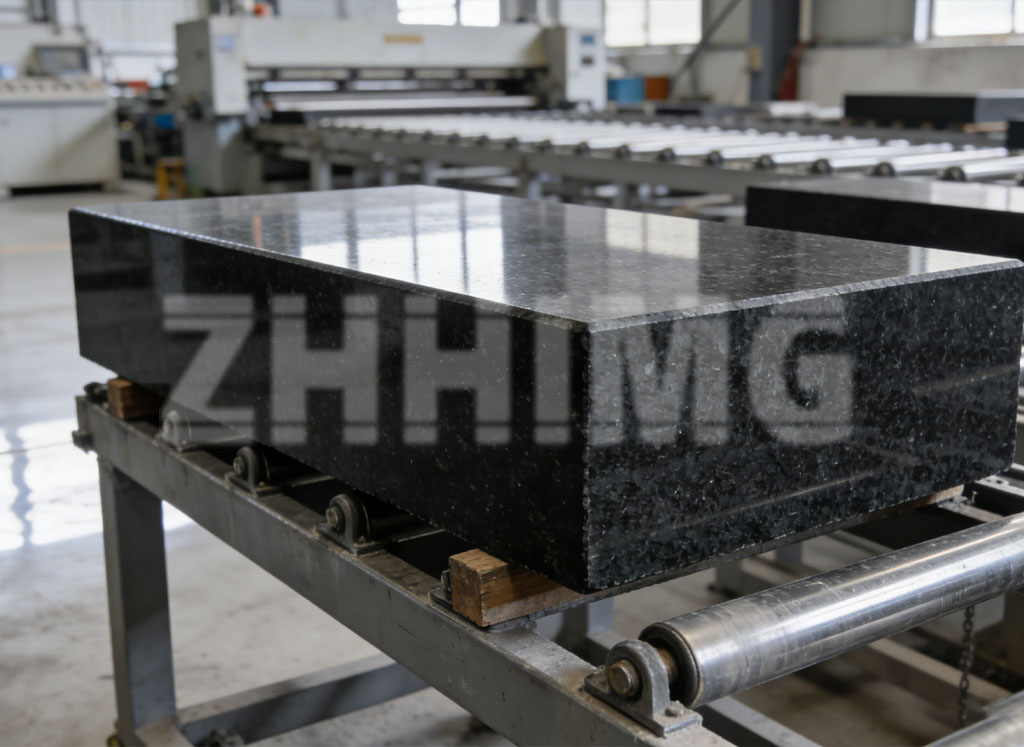
Post time: Jul-15-2026