
As we navigate through 2026, the global manufacturing sector stands at a pivotal intersection of extreme precision and sustainable efficiency. The industry is no longer satisfied with “good enough.” Driven by the explosion of the semiconductor market, the rise of biotechnology, and the relentless pursuit of “Industry 5.0,” equipment manufacturers are facing a new set of demands. Machines must be faster, more accurate, and more energy-efficient, all while operating in environments that are increasingly sensitive to thermal and vibrational noise.
In this high-stakes environment, the choice of structural material—the foundation upon which these machines are built—has become a critical strategic decision. For decades, steel and cast iron were the default choices. However, 2026 has marked a definitive turning point. Data from the first quarter of this year indicates a significant surge in the adoption of natural granite for machine bases, gantries, and structural frames. This article explores why the industry is shifting away from traditional metals and embracing the geological stability of granite.
The Shift: Why Traditional Materials Are Hitting Their Limits
To understand the rise of granite, we must first look at the limitations of the incumbents. In the past, the high tensile strength of steel was its primary selling point. However, as precision requirements tighten to the sub-micron level, the physical properties of metal are becoming liabilities.
The Thermal Problem
In 2026, manufacturing environments are not perfectly static. Even with advanced HVAC systems, temperature fluctuations occur. Steel has a coefficient of thermal expansion of approximately 11.5 × 10⁻⁶/°C. This means that for every degree of temperature change, a steel base expands or contracts significantly. In high-speed machining or precision metrology, this “thermal drift” forces machines to stop and recalibrate frequently, killing productivity.
In 2026, manufacturing environments are not perfectly static. Even with advanced HVAC systems, temperature fluctuations occur. Steel has a coefficient of thermal expansion of approximately 11.5 × 10⁻⁶/°C. This means that for every degree of temperature change, a steel base expands or contracts significantly. In high-speed machining or precision metrology, this “thermal drift” forces machines to stop and recalibrate frequently, killing productivity.
The Vibration Problem
Steel is rigid, but it is also “loud.” It transmits vibration rather than absorbing it. As machines get faster—driven by the new generation of linear motors introduced in 2025—the vibrations generated by the machine’s own movement can interfere with its sensors. Cast iron, often used to dampen vibration, is heavy and prone to corrosion, requiring costly maintenance and coatings.
Steel is rigid, but it is also “loud.” It transmits vibration rather than absorbing it. As machines get faster—driven by the new generation of linear motors introduced in 2025—the vibrations generated by the machine’s own movement can interfere with its sensors. Cast iron, often used to dampen vibration, is heavy and prone to corrosion, requiring costly maintenance and coatings.
The Sustainability Mandate
Furthermore, the 2026 industrial landscape is heavily influenced by green manufacturing mandates. The energy cost of smelting steel and casting iron is massive. Manufacturers are under increasing pressure to reduce the “embodied carbon” of their equipment. Natural stone, which requires only extraction and machining (rather than smelting), offers a significantly lower carbon footprint.
Furthermore, the 2026 industrial landscape is heavily influenced by green manufacturing mandates. The energy cost of smelting steel and casting iron is massive. Manufacturers are under increasing pressure to reduce the “embodied carbon” of their equipment. Natural stone, which requires only extraction and machining (rather than smelting), offers a significantly lower carbon footprint.
The Granite Advantage: Data-Driven Superiority
The shift toward granite is not based on tradition; it is based on hard data. When we compare the physical properties of high-grade granite (such as Black Galaxy or G654) against structural steel, the advantages for precision engineering are clear.
Comparative Material Properties
| Property | Structural Steel | Natural Granite | Advantage |
|---|---|---|---|
| Thermal Expansion | 11.5 × 10⁻⁶/°C | 5.4 × 10⁻⁶/°C | Granite is 2x more stable |
| Vibration Damping | Low (Rings/Resonates) | High (Absorbs Energy) | Granite dampens 10x better |
| Corrosion | Prone to Rust | Inert / Rust-Free | Granite requires no coating |
| Magnetism | Magnetic | Non-Magnetic | Granite is ideal for sensors |
| Maintenance | High (Repainting) | Low (Wipe clean) | Granite lowers TCO |
The “Zero-Warp” Factor
One of the most compelling arguments for granite in 2026 is its dimensional stability. Steel structures are typically welded, a process that introduces internal residual stresses. Over time, these stresses relieve themselves, causing the frame to twist or warp. Granite is a natural material formed over millions of years; it is effectively stress-free. Once machined, it stays flat. This “set it and forget it” reliability is exactly what modern equipment manufacturers need to guarantee long-term accuracy to their customers.
One of the most compelling arguments for granite in 2026 is its dimensional stability. Steel structures are typically welded, a process that introduces internal residual stresses. Over time, these stresses relieve themselves, causing the frame to twist or warp. Granite is a natural material formed over millions of years; it is effectively stress-free. Once machined, it stays flat. This “set it and forget it” reliability is exactly what modern equipment manufacturers need to guarantee long-term accuracy to their customers.
Key Trends Driving Adoption in 2026
Beyond the material properties, specific market trends in 2026 are accelerating the adoption of granite.
1. The “Thin-Plate” Revolution
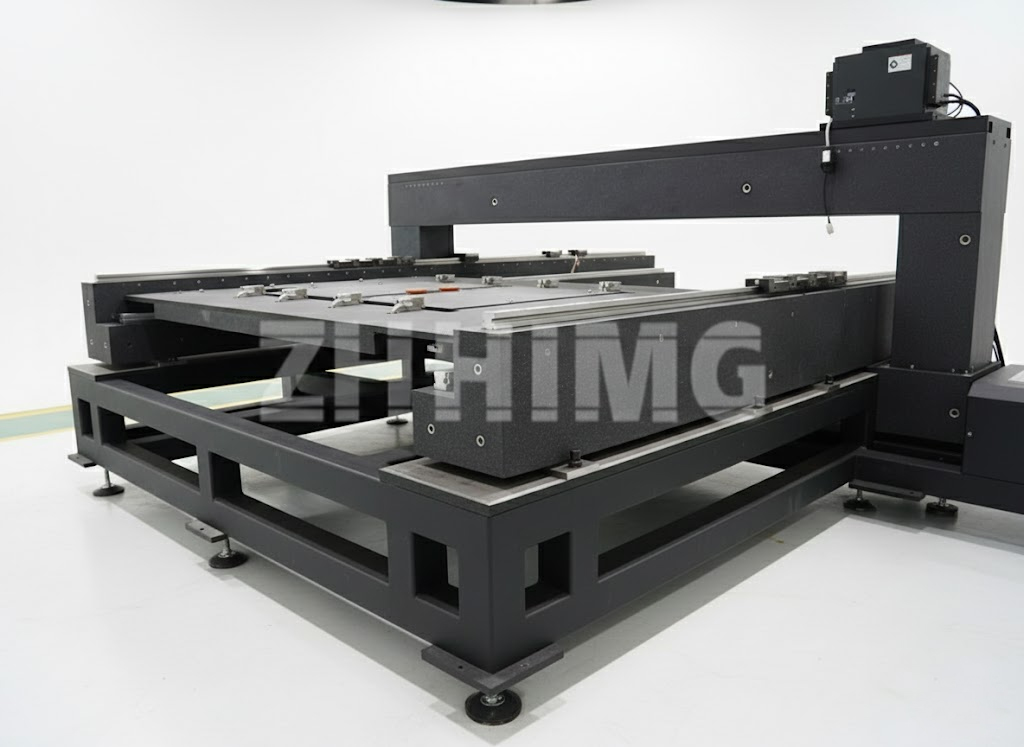
Historically, granite was viewed as “heavy and bulky.” However, advancements in processing technology in 2025 and 2026 have changed this perception. Manufacturers have developed techniques to produce granite thin plates and lightweight structural components that retain the material’s stability but at a fraction of the weight. This has opened the door for granite to be used in dynamic moving parts (like robot arms) rather than just static bases.
Historically, granite was viewed as “heavy and bulky.” However, advancements in processing technology in 2025 and 2026 have changed this perception. Manufacturers have developed techniques to produce granite thin plates and lightweight structural components that retain the material’s stability but at a fraction of the weight. This has opened the door for granite to be used in dynamic moving parts (like robot arms) rather than just static bases.
2. The Rise of “Green” Precision
As mentioned, sustainability is a key driver. In 2026, equipment buyers are scrutinizing the lifecycle cost (LCC) of machinery. Granite components last significantly longer than steel—often 30+ years without degradation. This longevity, combined with the lack of need for rust-prevention chemicals or repainting, aligns perfectly with the ESG (Environmental, Social, and Governance) goals of major corporations.
As mentioned, sustainability is a key driver. In 2026, equipment buyers are scrutinizing the lifecycle cost (LCC) of machinery. Granite components last significantly longer than steel—often 30+ years without degradation. This longevity, combined with the lack of need for rust-prevention chemicals or repainting, aligns perfectly with the ESG (Environmental, Social, and Governance) goals of major corporations.
3. Integration with Additive Manufacturing
While 3D printing (additive manufacturing) is often associated with plastics or metals, 2026 has seen a rise in hybrid manufacturing. We are seeing granite bases that are machined to accept 3D-printed metal inserts or composite interfaces. This allows designers to combine the stability of stone with the geometric freedom of printed metal, creating optimized structures that were previously impossible to build.
While 3D printing (additive manufacturing) is often associated with plastics or metals, 2026 has seen a rise in hybrid manufacturing. We are seeing granite bases that are machined to accept 3D-printed metal inserts or composite interfaces. This allows designers to combine the stability of stone with the geometric freedom of printed metal, creating optimized structures that were previously impossible to build.
Real-World Impact: The Total Cost of Ownership (TCO)
When equipment manufacturers pitch their machines to end-users in 2026, the conversation has shifted from “purchase price” to “Total Cost of Ownership.” Granite plays a starring role in reducing TCO.
Case Example: The Metrology Lab
Consider a high-end Coordinate Measuring Machine (CMM) used in an automotive plant.
Consider a high-end Coordinate Measuring Machine (CMM) used in an automotive plant.
- Steel Base Scenario: The machine requires a 2-hour warm-up every morning to stabilize thermally. It needs annual maintenance to repaint rusted areas.
- Granite Base Scenario: The machine is ready in 15 minutes due to thermal inertia. It never rusts.
Over a 10-year period, the productivity gains from the granite machine (less downtime) and the savings on maintenance often exceed the initial price difference of the materials. In the tight-margin economy of 2026, this math is undeniable.
Future Outlook: The Next Decade of Stone
Looking beyond 2026, the trajectory for granite in equipment manufacturing is steeply upward. We anticipate three major developments in the coming years:
- Smart Granite: Integration of IoT sensors directly into the stone structure. Since granite is an excellent electrical insulator, embedding sensors to monitor strain, temperature, and vibration will become standard for “Industry 5.0″ smart factories.
- Nano-Coatings: The development of hydrophobic and oleophobic coatings specifically for granite will make it even more resistant to oils and coolants, expanding its use in harsh machining environments.
- Global Supply Chain Maturity: As demand grows, the supply chain for high-grade industrial granite is becoming more robust, reducing lead times and making it a viable option for mid-range equipment, not just top-tier metrology tools.
Conclusion
The choice of material is the foundation of machine performance. In 2026, the limitations of steel regarding thermal stability and vibration are simply too great for the precision demands of the modern era. Granite offers a unique combination of geological stability, environmental sustainability, and economic efficiency.
Post time: Apr-20-2026